Prehistoric bear jawbone from Potočka Zijalka cave -- also the oldest musical instrument
Автор: ansambelVEDUN
Загружено: 2014-01-08
Просмотров: 43472
It's been 30 years since Mira Omerzel, also known as Mirit, first found herself among prehistoric bones -- and possible whistles. For this purpose she went to the Institute of Archaeology ZRC SAZU in 1984 to meet Dr Mitja Brodar, son of Srečko Brodar, who discovered an ice-age hunting post in Potočka Zijalka (Potočnik's cave). She started exploring these supposed bone instruments at first with his help and since 1995 in collaboration with Dr Ivan Turk, the finder of the famous bone flute from Divje Babe, which is supposed to be the oldest musical instrument in our country and indeed the world. After that she also undertook a comparative study of folk musical instruments of different cultures, an exploration that lasted for 12 years. She is a co-author of the book Mousterian Bone Flute (1997), which has been read around the world. She received her PhD in 1997 on the subject of the development of musical instruments from prehistory to today.
Together with her husband Matija Terlep, a long-time member of the Trutamora Slovenica ensemble, a graduate engineer and a flautist, who like Mira plays a number of folk instruments, Mirit has also acoustically tested the ancient musical instruments. And the surprises were endless. The jawbone from the Potočka Zijalka cave particularly stunned them, with three holes in the wall above the mandibular (nerve) canal which appear likely to be the work of human hands. Mira and Matija proved that the bear jawbone is not only sound-producing, but actually sounds rather wonderful.
The jawbone's nerve canal is a natural whistle pipe. Jawbones from Potočka Zijalka cave, Mokriška Jama (Mokrica cave) and Betalov Spodmol cave, with snapped off crown outgrowths (and such is the case with the majority of the finds) and with one hole or more (or indeed even without) could all serve as musical instruments. If the crown outgrowth is snapped off, it is easier to get to the natural, sharp jaw flute mouthpiece (a sharp opening into the nerve canal). When the prehistoric hunter sipped the nutritious marrow out of the canal, the jawbone would have become audible as a result. Thus a spontaneous discovery could have led to the deliberate use and making of these prehistoric instruments, which closely linked man with the bear in rituals of worship -- at the time of the Neanderthals and Cro-Magnons, the bear was the most venerated being. The jawbones, or supposed musical instruments, from Potočka Zijalka do indeed date back to the Cro-Magnon period (30,000 to 35,000 years before the present), while the jawbone with one hole from Betalov Spodmol dates back to Neanderthal times (40,000 years ago) and therefore to the same period of time as the now already famous flute from Divje Babe. Many of the finds from Potočka Zijalka were unfortunately destroyed during the bombing of Celje during World War II. It is quite likely that these bear jawbones, which are above all a Slovenian peculiarity, are of the same age (certainly at least the one from Betalov Spodmol) and equally important musical instruments as the flute from Divje Babe, which is today considered among the oldest in the country and indeed the world. All of them are probably the work of human hands. In short, jawbones are instruments if they have holes in them and even if they do not, as even an empty mandibular canal can sound a few tones.
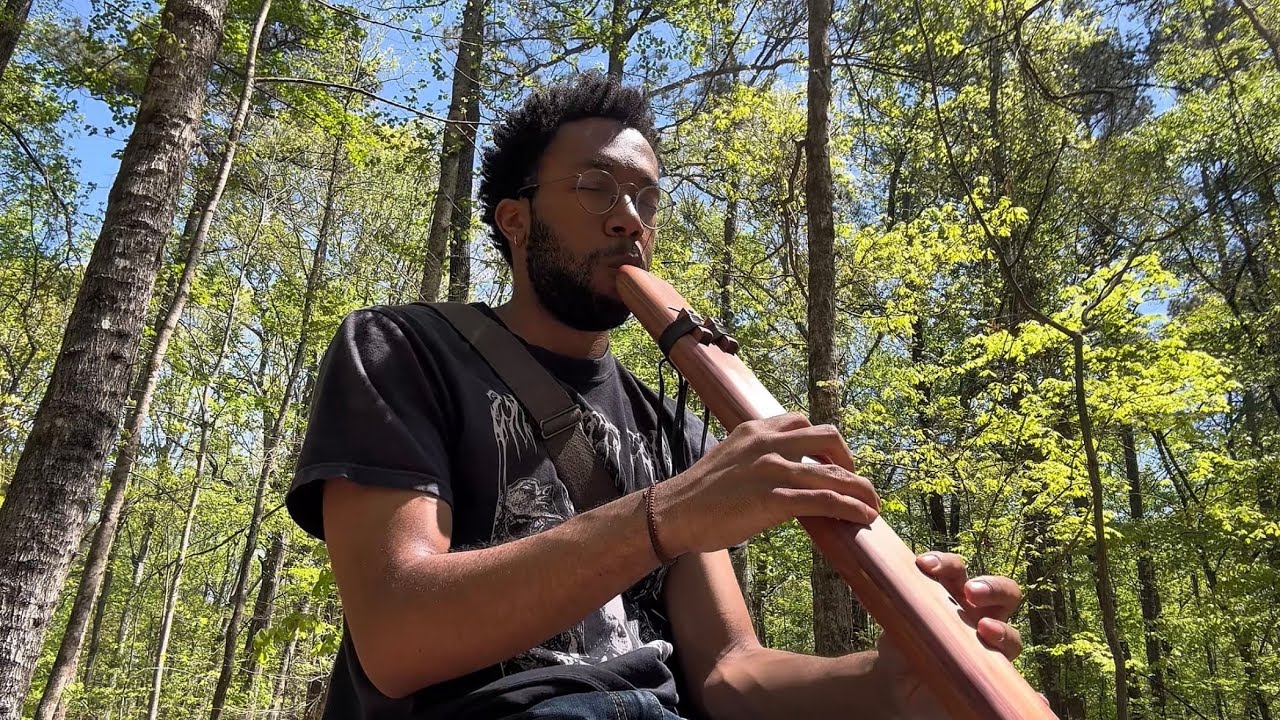
After three decades, Matija Terlep took this carefully constructed replica of a cave bear jawbone with three holes from Potočka Zijalka, made from a jawbone of the same size and age, in his hands and made it acoustically alive again. May the whole world hear its sound, not only a chosen few!

Доступные форматы для скачивания:
Скачать видео mp4
-
Информация по загрузке: