Harry Heft - The ecological approach to perception & action
Автор: perceivingacting
Загружено: 2013-11-13
Просмотров: 19308
The ecological approach to perception & action
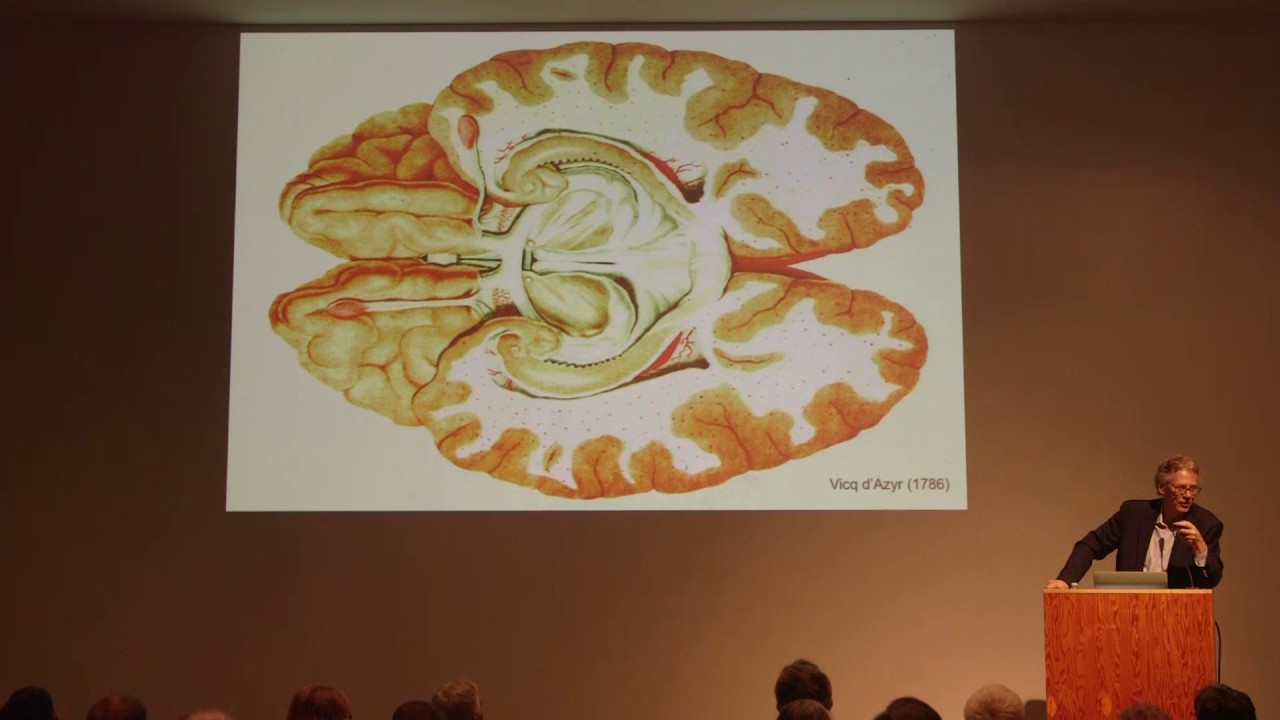
Prof. Harry Heft, Psychology, Denison University
Presentation at the Enaction School conference series in 2010 at Mary Immaculate College, Ireland.
Prof. Heft deftly leads an audience through the arguments needed to understand the key insights and principles behind direct realism (aka ecological realism) and the ecological approach to perception as developed by Gibson and colleagues. Many important issues to the ecological approach are addressed and include the distinction between sensation and perception, information and relations, optic flow, and the importance of action for revealing the information for perception. Importantly, Heft develops the idea of information as fundamentally relational rather than "out there" (an oft-repeated misunderstanding).
41:05 - "The bend in the road is IN the road" - and is, therefore, perceivable - direct realism.
from:
• The Ecological Approach to Perception (Ha...
http://www.enactionschool.com
Harry Heft:
https://sites.google.com/a/denison.ed...
Ecological psychology refers to the theoretical approach and research program in perceptual psychology developed by James J. Gibson beginning in the late 1950s and most fully articulated by the 1970s. The empirical discoveries and conceptual insights that led to the ecological approach to perception were proposed to address recurring shortcomings in the conventional formulation of perception that held sway in philosophy and then psychology for centuries. Any explanation of perceiving must offer an account of why individuals experience the world as it appears. The traditional view adopts a mechanistic "causal theory" of perception, which claims that physical energies (e.g., light) are imposed on the sensory receptors of a passive perceiver, giving rise to elementary, discrete sensations. From this starting point, nonperceptual processes (e.g., memory, inference) intervene to organize the neural products of sensation into the forms and patterns that constitute the perceived environment. For this reason, experience of the environment is assumed to be indirect. What one experiences immediately is not the environment itself but rather a mental construction of it built upon limited sensory stimulation—a position called indirect realism. In contrast, the ecological approach to perception attempts to provide grounds for direct realism. Research and theory within this tradition provide both empirical support and theoretical grounds for the long dismissed claim that the environment is directly perceived without mediation from nonperceptual processes. The approach begins with a dual focus on (a) the nature of the environment to be perceived (the econiche to which organisms have adapted) and (b) the perception-action processes that have developed through phylogenesis and ontogenesis to facilitate the detection of the environment's functionally significant properties (affordances). In the case of vision, ecological psychology offers a rich account of the available higher-order, informational structures at an ecological level of analysis that are available to be perceived by individuals. Perception-action processes operate in the context of an information-rich environment; and while individuals may differ with regard to which information they detect, perceiving can be lawfully tied to specifiable information from an interpersonally shared world. Complementing this program is Eleanor Gibson's ecological approach to perceptual learning and development. Following on the heels of the work of the Gibsons, psychological scientists have been explicating this approach over the ensuing decades, designing research to test its claims and developing the program in new ways. Recent decades has seen extensions of Gibson's ecological psychology writings in several directions. Some have broadened ecological psychology's foundations by examining it more fully in the light of biological, evolutionary thinking and sociocultural processes. Rich connections have also been drawn between ecological psychology and dynamical systems models of explanation, especially in the domain of developmental processes. Notably, Neo-Gibsonians at the Connecticut school of ecological psychology have been working fruitfully to formalize several theoretical aspects of ecological psychology, in part, by drawing on considerations of motor dynamics and the thermodynamics of physical systems.
from:
Heft, H., & Richardson, M. (2013). "Ecological Psychology." In Oxford Bibliographies in Psychology. Ed. Dana S Dunn. New York: Oxford University Press. http://www.oxfordbibliographies.com

Доступные форматы для скачивания:
Скачать видео mp4
-
Информация по загрузке: