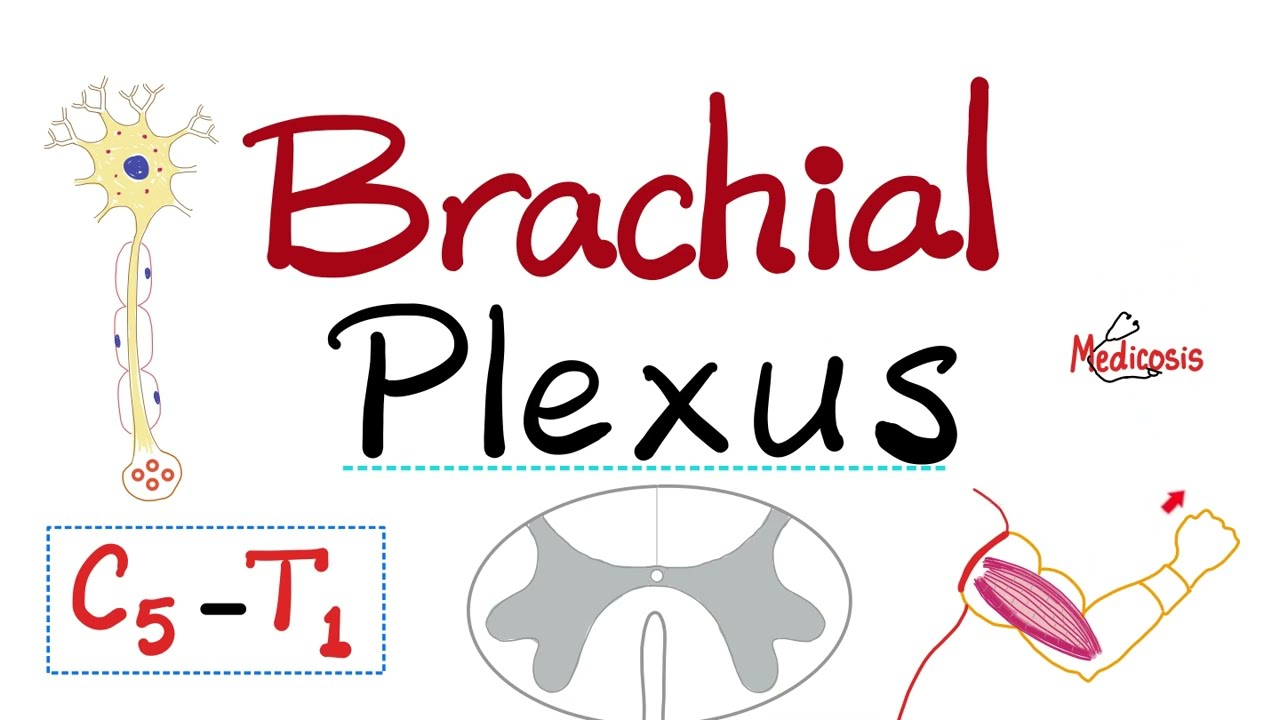
Brachial Plexus Injuries: Erb’s & Klumpke’s Palsy
Автор: nabil ebraheim
Загружено: 2025-03-02
Просмотров: 5921
Join this channel to support the channel
/ @nabilebraheim
Brachial Plexus Injuries: Erb’s & Klumpke’s Palsy
The spinal nerves of C5 to T1 are referred to as the roots of the brachial plexus.
Erb’s Palsy and Erb’s Point
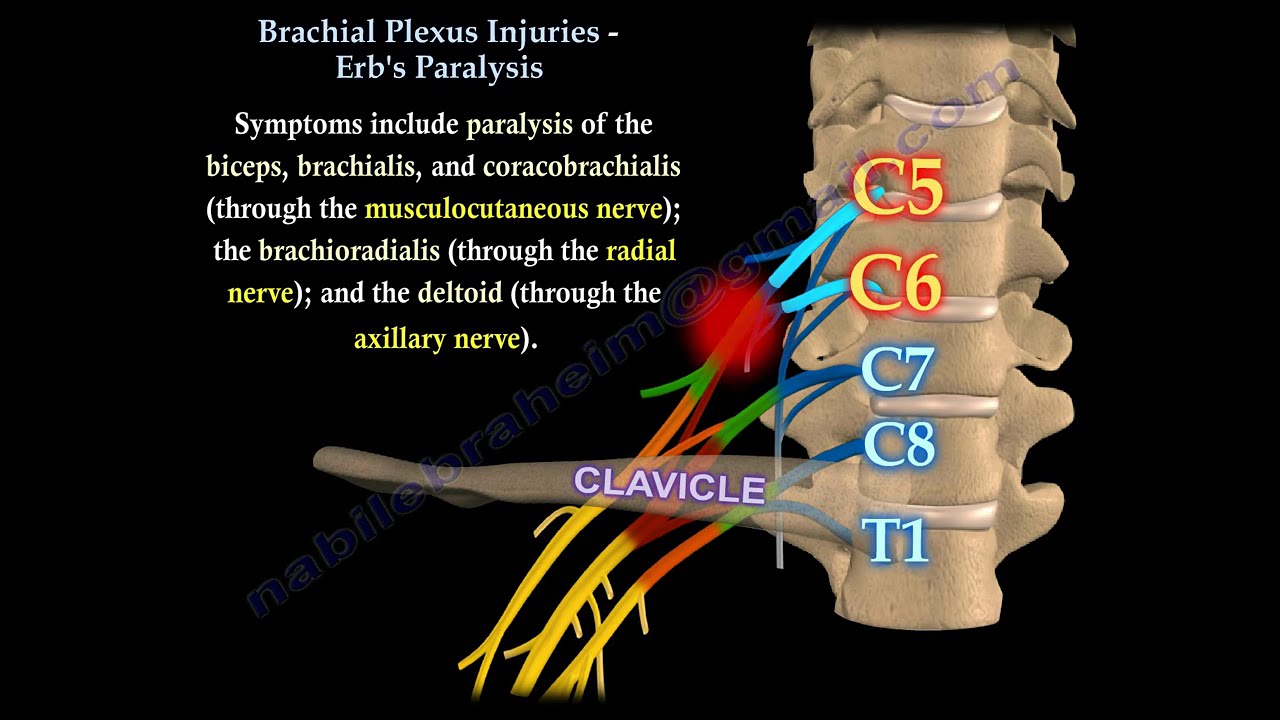
Pressure over the red-marked area in the video elicits Duchenne–Erb paralysis.
Injury to Erb’s point commonly occurs at birth or from a fall onto the shoulder.
Erb’s palsy results from brachial plexus lesions involving the C5 and partly C6 nerve roots.
Symptoms of Erb’s Palsy:
Paralysis of the following muscles:
Biceps, brachialis, coracobrachialis (via the musculocutaneous nerve)
Brachioradialis (via the radial nerve)
Deltoid (via the axillary nerve)
Functional Deficits:
Impaired shoulder abduction
Loss of external rotation
Weak elbow flexion
Decreased sensation in the thumb and index finger
Normal scapular control
Obstetric Brachial Plexus Injuries
1. Erb’s Palsy (C5-C6 Lesion, sometimes C7)
Most common birth-related neuropraxia (about 48% of cases)
Best prognosis among brachial plexus birth injuries
Paralysis of:
Shoulder external rotation (ER)
Shoulder abductors
Biceps ("Waiter’s Tip" posture)
Common risk factors:
Large babies
Shoulder dystocia
Forceps delivery
Breech birth
Prolonged labor
Recovery rate: 80%-90% of affected children achieve normal or near-normal function → Follow the recovery of the biceps.
Persistent Horner’s sign (ptosis, miosis, anhidrosis) indicates a proximal preganglionic injury and suggests a poor prognosis.
2. Klumpke’s Paralysis (C8-T1, sometimes C7 involvement)
Caused by forceful shoulder abduction
Weakness in:
Intrinsic hand muscles
Long flexors and extensors of the fingers
These lesions are usually preganglionic
Look for associated Horner’s syndrome
Sensory deficit along the medial aspect of the arm, forearm, and hand
3. Pan-Plexus Paralysis (C5-T1, Complete Injury)
Flaccid arm
Involves both motor and sensory loss
Worst prognosis
QUIZZES
1. Which spinal nerve roots form the brachial plexus?
A. C1 to C5
B. C3 to C7
C. C5 to T1 ✅
D. C6 to T2
Explanation: The brachial plexus originates from the ventral rami of C5 to T1 spinal nerves.
2. What is the most common cause of Erb’s palsy?
A. Direct trauma to the shoulder
B. Injury at birth, especially with shoulder dystocia ✅
C. Cervical spine fractures
D. Blunt force trauma to the clavicle
Explanation: Erb’s palsy is commonly caused by excessive lateral traction on the neck during delivery, especially in shoulder dystocia.
3. Which muscles are affected in Erb’s palsy?
A. Biceps, deltoid, brachioradialis ✅
B. Triceps, pectoralis major, rhomboids
C. Flexor carpi ulnaris, lumbricals, interossei
D. Trapezius, latissimus dorsi, serratus anterior
Explanation: Erb’s palsy results from C5-C6 injury, affecting muscles supplied by the musculocutaneous, radial, and axillary nerves.
4. What is the characteristic arm posture seen in Erb’s palsy?
A. Flexed elbow with supinated forearm
B. Extended elbow with pronated forearm and wrist flexion ✅
C. Shoulder adduction with internal rotation
D. Hyperextended elbow with wrist drop
Explanation: Erb’s palsy presents as a "Waiter’s Tip" posture, where the shoulder is adducted and internally rotated, the elbow is extended, the forearm is pronated, and the wrist is slightly flexed.
5. Which nerve is primarily responsible for elbow flexion?
A. Axillary nerve
B. Musculocutaneous nerve ✅
C. Radial nerve
D. Ulnar nerve
Explanation: The musculocutaneous nerve innervates the biceps and brachialis, which are responsible for elbow flexion.
6. Which condition is associated with a "claw hand" deformity?
A. Erb’s palsy
B. Klumpke’s palsy ✅
C. Radial nerve injury
D. Median nerve injury
Explanation: Klumpke’s palsy (C8-T1 injury) affects the intrinsic hand muscles, leading to a claw hand deformity.
7. Which sensory distribution is affected in Klumpke’s palsy?
A. Lateral arm and forearm
B. Medial arm, forearm, and hand ✅
C. Posterior shoulder and upper arm
D. Radial side of the hand and forearm
Explanation: C8-T1 injuries affect the medial arm, forearm, and hand.
8. What additional sign may indicate a preganglionic brachial plexus injury?
A. Horner’s syndrome ✅
B. Radial deviation of the wrist
C. Scapular winging
D. Wrist drop
Explanation: Horner’s syndrome (ptosis, miosis, anhidrosis) suggests a proximal preganglionic lesion, often seen in severe brachial plexus injuries.
9. Which injury carries the worst prognosis among brachial plexus lesions?
A. Erb’s palsy
B. Klumpke’s palsy
C. Pan-plexus paralysis ✅
D. Radial nerve compression
Explanation: Pan-plexus paralysis (C5-T1 injury) results in complete motor and sensory loss, with poor recovery potential.
10. What is the primary function of the deltoid muscle?
A. Shoulder abduction ✅
B. Shoulder external rotation
C. Elbow extension
D. Wrist supination
Explanation: The axillary nerve innervates the deltoid, which is responsible for shoulder abduction
Доступные форматы для скачивания:
Скачать видео mp4
-
Информация по загрузке:






![The Brachial Plexus II: Animated Review [HD]](https://imager.clipsaver.ru/mKbk_ey_dEs/max.jpg)