Популярное

Музыка Кино и Анимация Автомобили Животные Спорт Путешествия Игры Юмор

Интересные видео

2025 Сериалы Трейлеры Новости Как сделать Видеоуроки Diy своими руками

Топ запросов

смотреть а4 schoolboy runaway турецкий сериал смотреть мультфильмы эдисон
dTub
Скачать

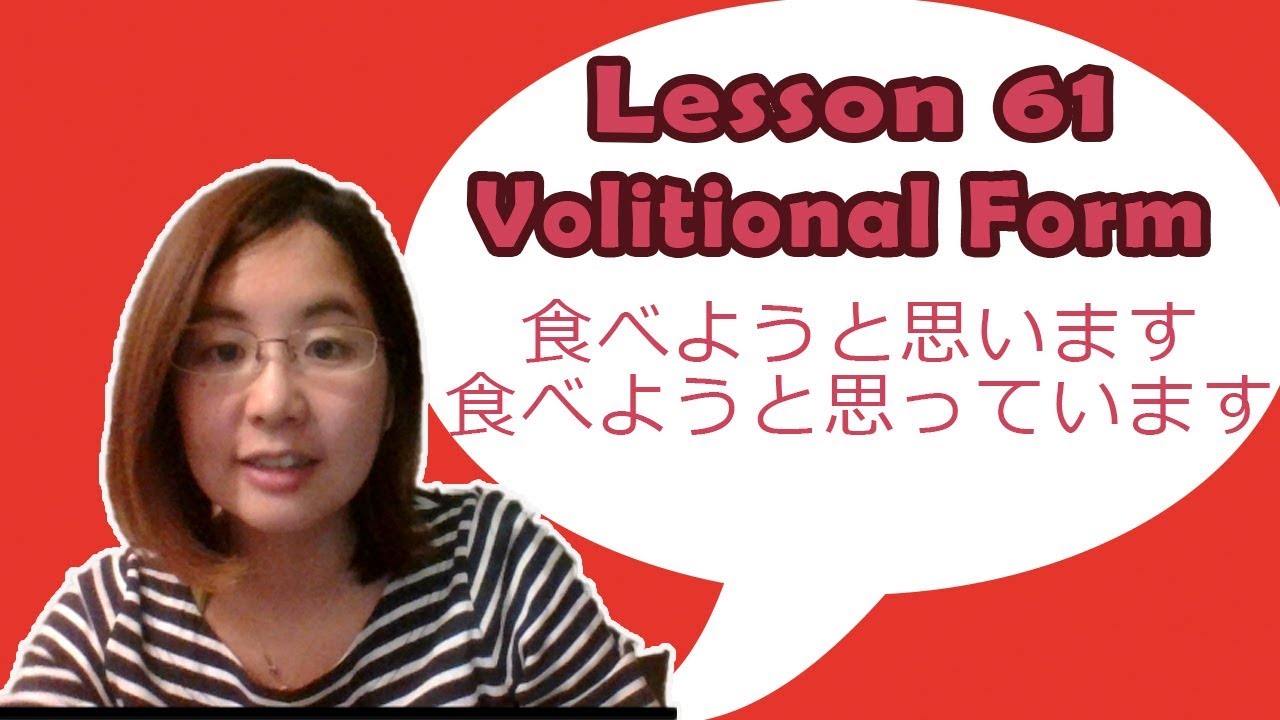
# 62 Learn Japanese - Volitional Form (行こう、食べよう、しよう)+ と思います、と思っています

Автор: Masa Sensei

Загружено: 2018-11-27

Просмотров: 16096

Описание:

In this video, you will learn Volitional Form (行こう、食べよう、しよう)+ と思います、と思っています.

◆Patreon◆
⇒  / maasasensei  

◆Facebook◆
⇒  / masasenseijapaneselesson  

◆Instagram◆
⇒  / masasensei  
⇒@masasensei

◆Tiktok◆
⇒@masasensei

◆italki◆
If you would like to have an online lesson, please register from here!
https://www.italki.com/teacher/3243745

=========================================================

41 Learn Japanese - "Plain Style" to omoimasu (I think that...)
   • # 41 Learn Japanese - "Plain Style" to omo...  

=========================================================
つもりです(tsumori desu): to Intend to Do

Verb + つもりだ

The function is to express what you intend to do. One important point here is that the decision should have been made a while ago. Therefore, you cannot use this for decisions made on the spot.

お酒をやめるつもりです。
osake o yameru tsumori desu
I intend to quit drinking.

明日は家にいるつもり です。
ashita wa ie ni iru tsumori desu.
As for tomorrow, I intend to stay at home.

海外の大学に行くつもりです。
kaigai no daigaku ni iku tsumori desu
I intend to go to a foreign university.


Adding “to omou” or “to omotte iru” (~と思う, ~と思っている) after a verb that is in Volitional Form changes the meaning from “let’s [verb]” to “I am thinking that I will [verb].” Since “to omou” means “I think,” you can picture this grammar pattern as expressing a volitional thought or feeling that you are holding in your mind.

For example, a person who has said “let’s do it” to themselves, internally. The difference between “to omou” (which is present/future tense) and “to omotte iru” (which is progressive tense) in this pattern is that the former implies a new thought (something you have just now begun to think that you will do). The latter implies a longer-term thought (something that you’ve been thinking for a while that you will do).

お母さんに手紙を書こうと思います。
Okaasan ni tegami o kakou to omoi masu
(I think I will write a letter to my mother).

お母さんに手紙を書こうと思っています。
Okaasan ni tegami o kakou to omotte imasu
(I’m thinking I will write a letter to my mother).


お酒をやめようと思います。
osake o yameyou to omoimasu.
I intend to quit drinking.

明日は家にいようと思います。
ashita wa ie ni iyou to omoimasu.
As for tomorrow, I intend to stay at home.

海外の大学に行こうと思います。
kaigai no daigaku ni ikou to omoimasu.
I intend to go to a foreign university.

来年結婚しようと思います。
rainen kekkon shiyou to omoimasu.
I intend to get married next year.
# 62 Learn Japanese - Volitional Form (行こう、食べよう、しよう)+ と思います、と思っています

Поделиться в:

Доступные форматы для скачивания:

Скачать видео mp4

  • Информация по загрузке:
Скачать аудио mp3

Похожие видео

# 63 Learn Japanese - Volitional Form ~つもりです、~予定(よてい)です

# 63 Learn Japanese - Volitional Form ~つもりです、~予定(よてい)です

Ask

Ask "What do you think?" in Japanese and state your opinions with 思う (おもう) Omou

# 44 Учите японский язык - но токи, на токи токи (как сказать «когда».. ) ~ время (токи)

# 44 Учите японский язык - но токи, на токи токи (как сказать «когда».. ) ~ время (токи)

# 116 Learn Japanese - こんな/そんな/あんな/どんな、こんなに/そんなに/あんなに/どんなに(こそあど言葉 Kosoado kotoba)

# 116 Learn Japanese - こんな/そんな/あんな/どんな、こんなに/そんなに/あんなに/どんなに(こそあど言葉 Kosoado kotoba)

Slow & Easy Japanese Conversation Practice - Learn Japanese 7

Slow & Easy Japanese Conversation Practice - Learn Japanese 7

# 208 Учите японский язык【だって】Я слышал, что; даже; потому что - Грамматика N3 и N2 -

# 208 Учите японский язык【だって】Я слышал, что; даже; потому что - Грамматика N3 и N2 -

# 60 Learn Japanese - How to use Conditional Form (と、たら、ば、なら)

# 60 Learn Japanese - How to use Conditional Form (と、たら、ば、なら)

# 133 Learn Japanese 【Volitional Form+とする/とします】to try to, attempt to, be about to

# 133 Learn Japanese 【Volitional Form+とする/とします】to try to, attempt to, be about to

How to express an obligations in Japanese: “-NAKEREBA NARIMASEN”, Grammar78

How to express an obligations in Japanese: “-NAKEREBA NARIMASEN”, Grammar78

IKU (行く) - Basic Japanese Verbs Conjugation

IKU (行く) - Basic Japanese Verbs Conjugation

Three Levels of Command in Japanese: て-form commands, なさい,  な-commands, imperative form. Lesson 83

Three Levels of Command in Japanese: て-form commands, なさい, な-commands, imperative form. Lesson 83

ば form /Conditional form (How to conjugate)

ば form /Conditional form (How to conjugate)

JLPT N4 Грамматика: ~よと思う(~you to omotteiru): Как сказать

JLPT N4 Грамматика: ~よと思う(~you to omotteiru): Как сказать "Я планирую сделать..." по-японски

JLPT N4 Grammar: ~させる (

JLPT N4 Grammar: ~させる ("to make someone do ~" in Japanese)

日文教學_初級日語#50|日語語法解釋  動詞的意向形、意向形と思います、意向形と思っています【日本人老師yuka教你日語】japanese language lesson

日文教學_初級日語#50|日語語法解釋 動詞的意向形、意向形と思います、意向形と思っています【日本人老師yuka教你日語】japanese language lesson

VOLITIONAL VERB + OMOTTEIRU (思っている) vs OMOU (思う), Grammar N4-51

VOLITIONAL VERB + OMOTTEIRU (思っている) vs OMOU (思う), Grammar N4-51

# 108 Learn Japanese - Honorific expression (尊敬語 そんけいご) and Humble expression (謙譲語 けんじょうご)

# 108 Learn Japanese - Honorific expression (尊敬語 そんけいご) and Humble expression (謙譲語 けんじょうご)

# 43 Learn Japanese -

# 43 Learn Japanese - "Plain Style" + deshou, kamo shiremasen (it probably... It may be that...)

会話練習【~ようとしない】日本語文法

会話練習【~ようとしない】日本語文法

How to say I can /I can't / I could / I couldn't (Japanese potential form)

How to say I can /I can't / I could / I couldn't (Japanese potential form)

© 2025 dtub. Все права защищены.


  • Контакты
  • О нас
  • Политика конфиденциальности


Контакты для правообладателей: infodtube@gmail.com