Il Nuraghe Sa Domu 'e s'Orku di Domusnovas - Archeologia in Sardegna
Автор: Federica Selis
Загружено: 2012-07-29
Просмотров: 4992
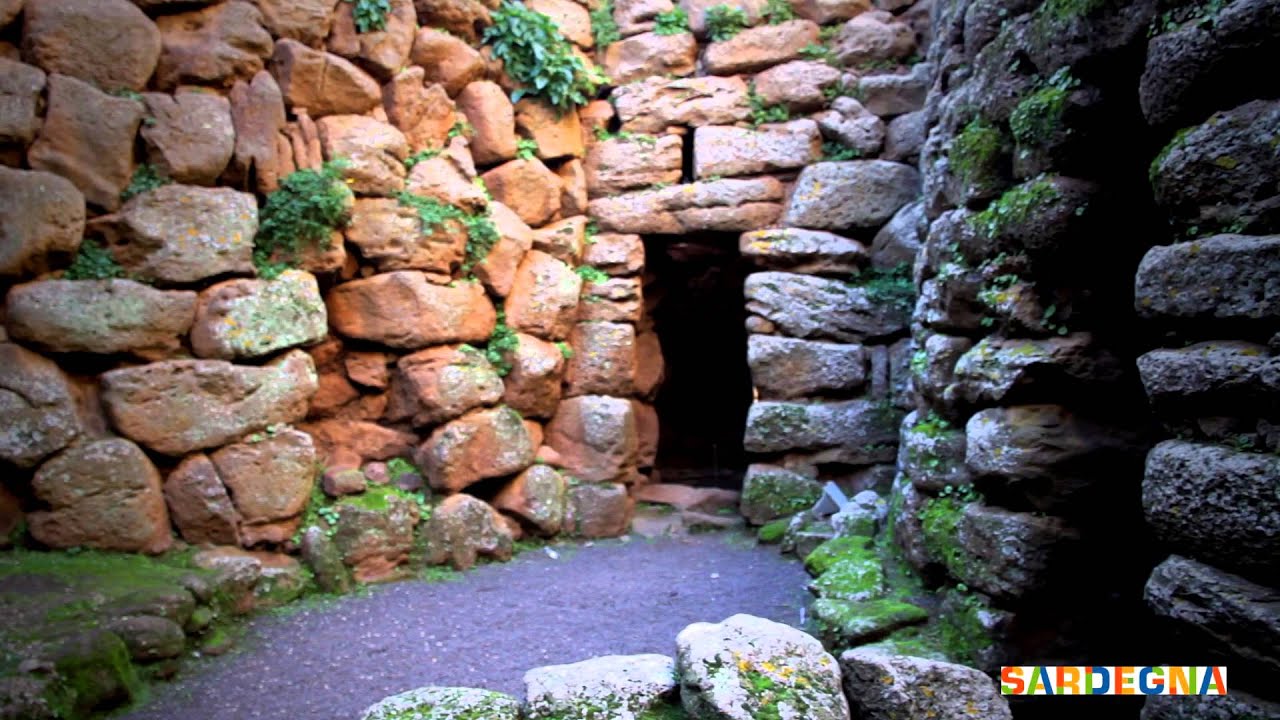
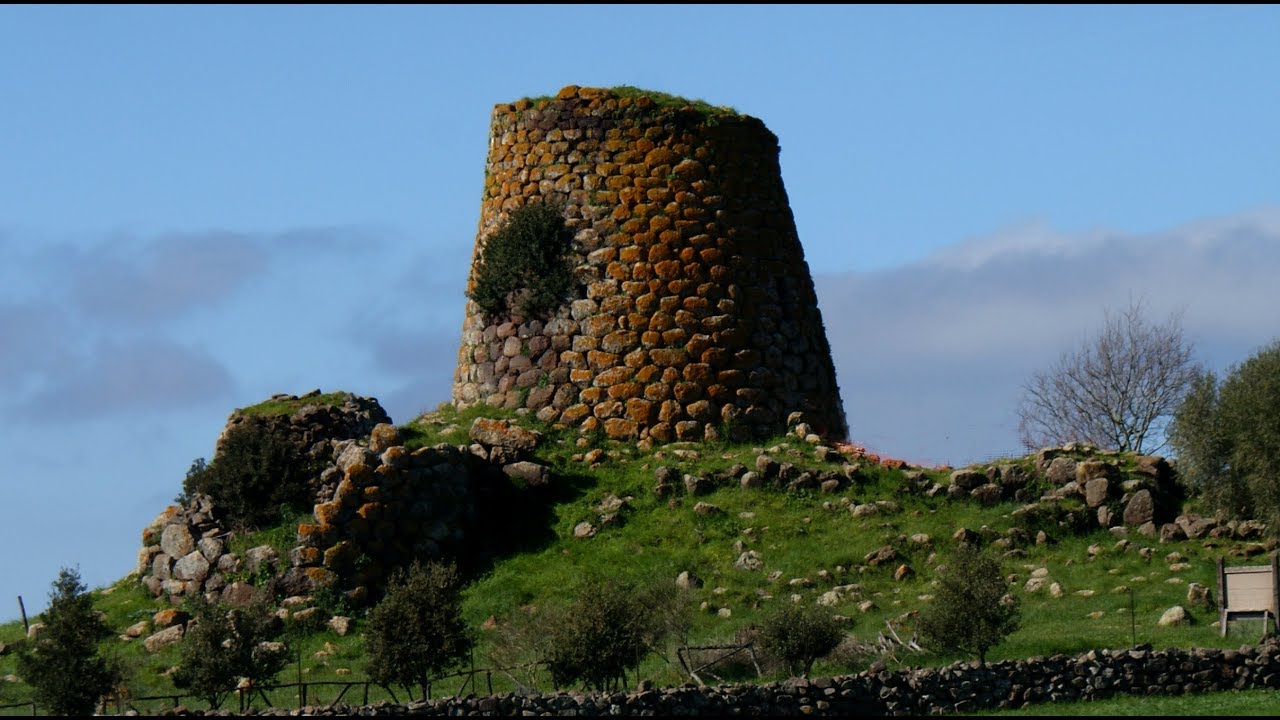
The giant structure, made entirely of limestone from the area, is located on a hillside front entrance of the valley of the Grotto of St. John, a mineral deposit now abandoned, inhabited since the Age of copper and close to the water basin of the rivers Cixerri-Arriali-Murtas. The complex shows different building phases: the plant (XVII sec.aC), which coincides with the building of the tower to which approaches a bastion polylobated containing a courtyard, and the next one (XIV century BC.), Which saw the development dell'antemurale turreted composed of at least five towers. Plant and the complexity reminds a lot of the Nuraghe Arrubiu Orroli and Serucci Gonnesa and as such is probably much older than the most well-known canonical structures. The part had to be archaic in origin an ancient protonuraghe dismantled in order to be readjusted. Now, instead, consists of a keep A circular opening with architrave facing south which leads, through a corridor covered by platbands, toward the room highly elliptical and now uncovered. Along the corridor opens, on the right, the scale counterclockwise leads to the upper level now collapsed. The room is still cluttered with collapse and has two openings adjacent to the right leading to a mezzanine. The bastion shows elliptical and heads south freeing a front yard. It consists of a curved curtain leaning north portion of the keep while in the south, what was the old protonuraghe, was dismembered into three portions: the tower-B cell to the southwest, the tower-cell C to the southeast, the tower D to the south. In the southeast and southwest directions, the sides of the tower D, the inputs were opened to the courtyard and in front of the tower. All this body presents itself formed by boulders polyhedral matched with "honeycomb", tucked by a number of wedges, and is surrounded - except in the north-east section - by a barbican composed of 5 towers and six curtains. These towers, consisting of sub rectangular blocks arranged in a more orderly rows, are dubbed L, N, F, G and H, respectively, and have north-northwest, west, southwest, south, and southeast. On the eastern curved curtain opens access to land between the rampart and the rampart. The latter draws two distinct portions around the bastion called M and L I. The curiosity of the tower is that, presenting with four slits to the outside, performs an access corridor angular deeper than a meter and a half wide and about 60 cm , suggesting it - in consideration of the fact that it is detached from the main body - a furnace for metals. The structure seen around a large settlement, vast as that of Su Nuraxi Barumini, even with isolates places south dell'antemurale.

Доступные форматы для скачивания:
Скачать видео mp4
-
Информация по загрузке: