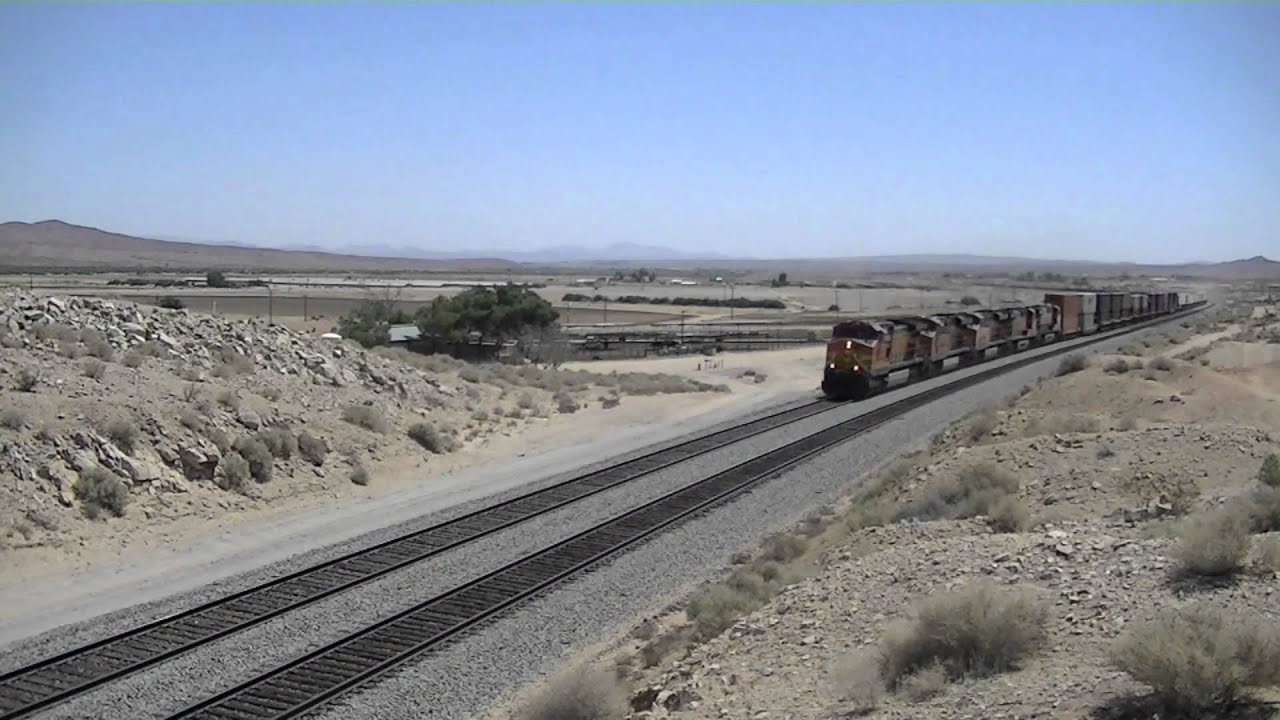
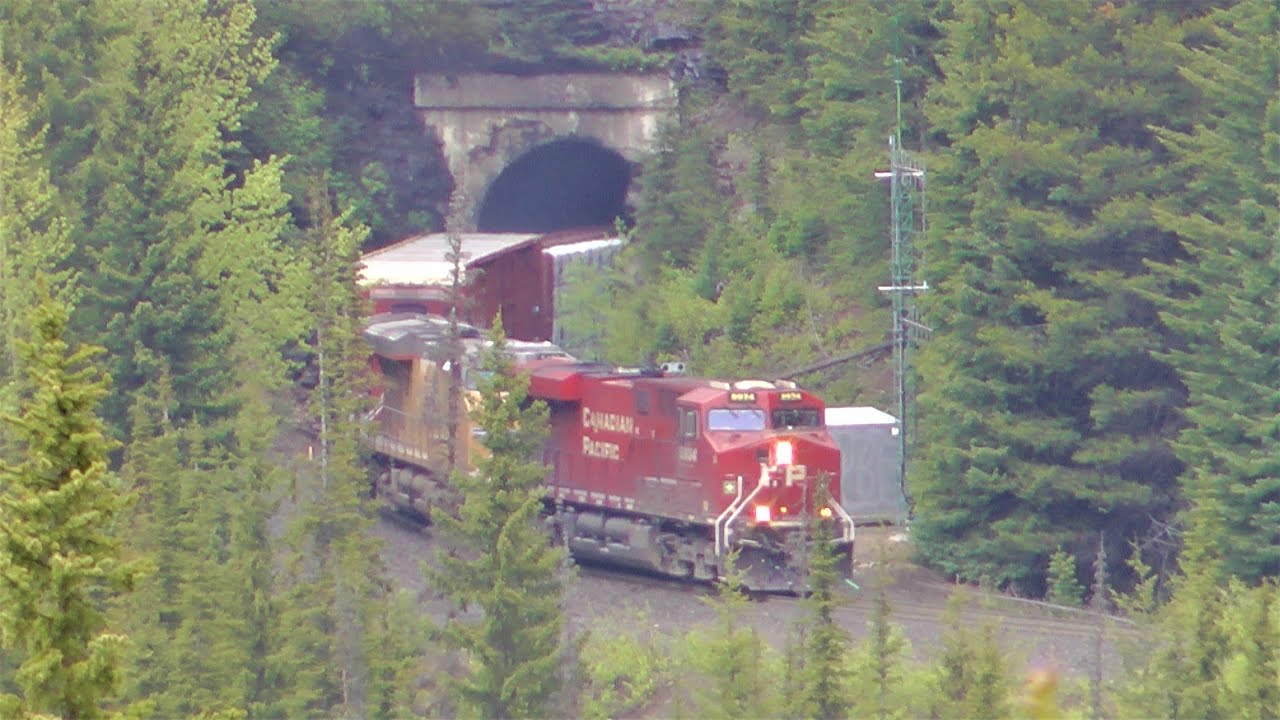
Huge Spiral Tehachapi Loop Train in California. USA
Автор: Just roads and nature
Загружено: 2023-02-05
Просмотров: 122
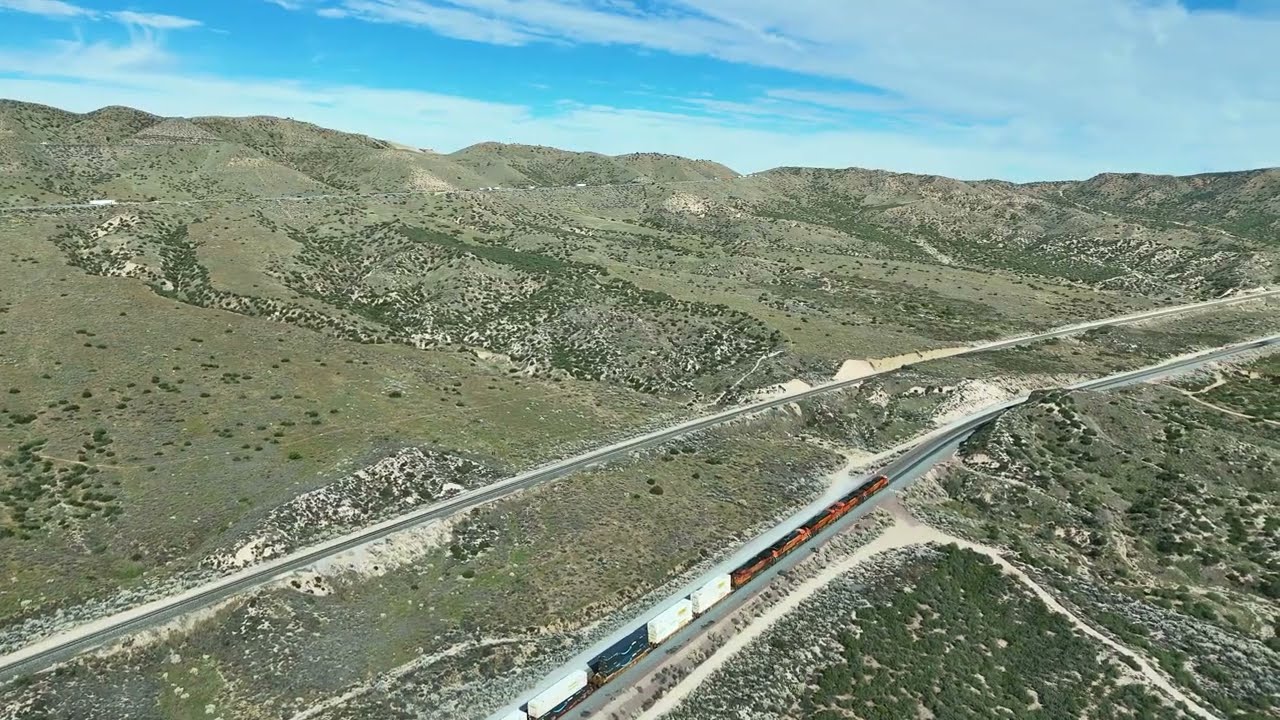
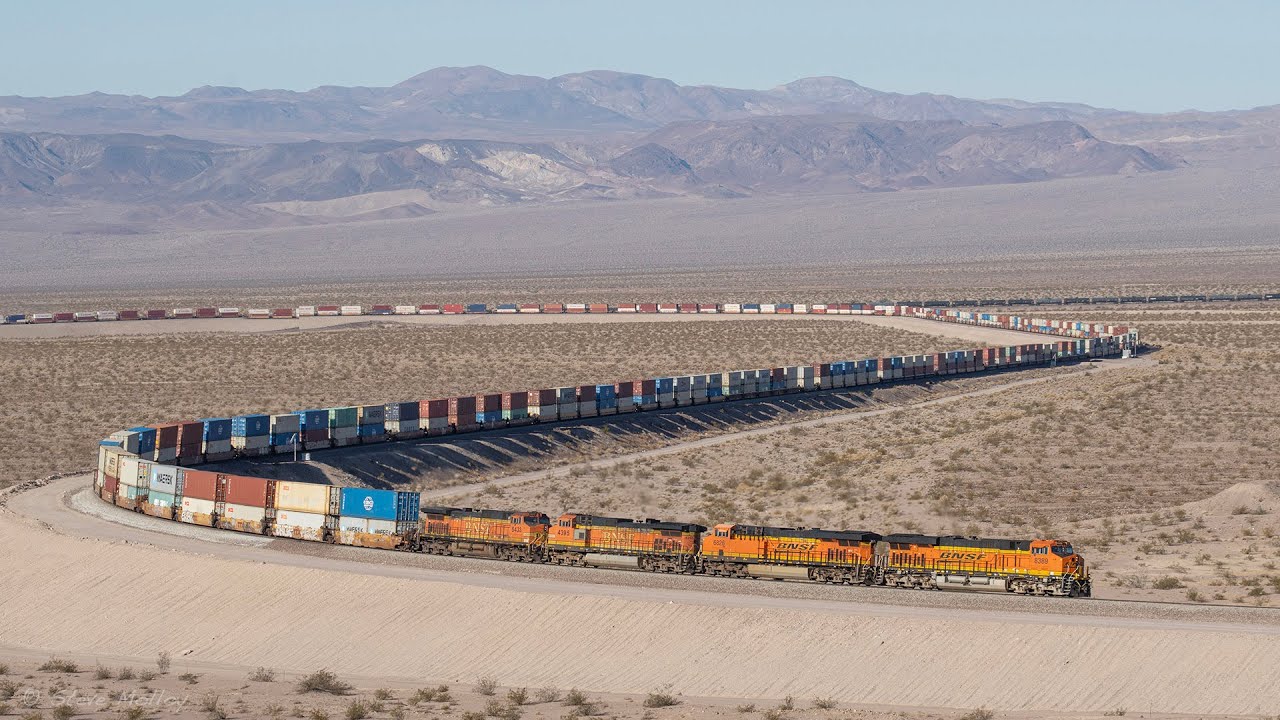
The Tehachapi Loop is a 3,779 feet (0.72 mi; 1.15 km) long spiral, or helix, on the Union Pacific Railroad Mojave Subdivision through Tehachapi Pass, of the Tehachapi Mountains in Kern County, south-central California. The line connects Bakersfield and the San Joaquin Valley to Mojave in the Mojave Desert.
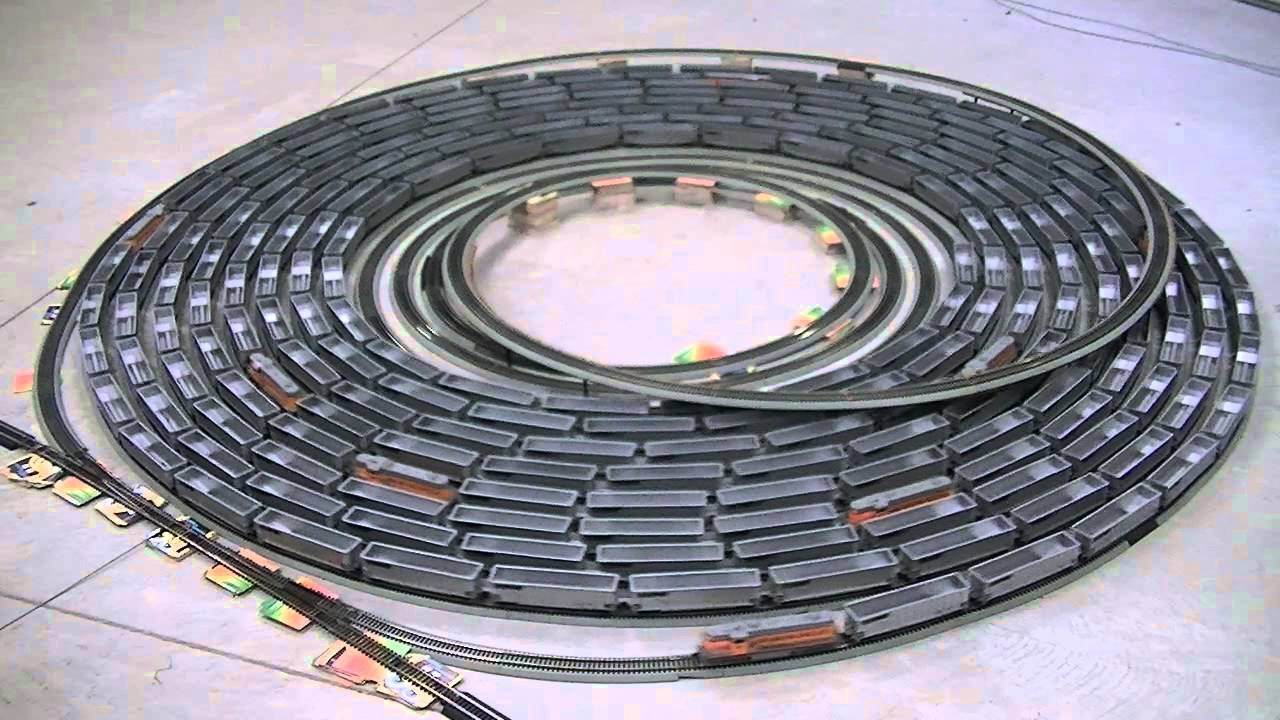
Rising at a steady two-percent grade, the track gains 77 feet (23 m) in elevation and makes a 1,210-foot (370 m) diameter circle. Any train that is at least 3,800 feet (1,162 m) (approx. 56 60’(67'11") box cars) long passes over itself going around the loop. At the bottom of the loop, the track passes through Tunnel 9, the ninth tunnel built as the railroad was extended from Bakersfield.
The line averages about 36 freight trains each day; passenger services such as Amtrak's San Joaquin are banned from using the loop, while the Coast Starlight can only use it as a detour. Its frequent trains and scenic setting make the Tehachapi Loop popular with railfans. In 1998, it was named a National Historic Civil Engineering Landmark. It is also designated as California Historical Landmark
One of the engineering feats of its day, the Loop was built by Southern Pacific Railroad to ease the grade over Tehachapi Pass. Construction began in 1874, and the line opened in 1876.Contributors to the project's construction include Arthur De Wint Foote and the project's chief engineer, William Hood.
The siding on the loop is known as Walong after Southern Pacific District Roadmaster W. A. Long.
The project was constructed under the leadership of Southern Pacific's civil engineers, James R. Strobridge and William Hood, using a predominantly Chinese labor force. The Tehachapi line necessitated 18 tunnels, 10 bridges, and numerous water towers to replenish steam locomotives. Between 1875 and 1876 about 3,000 Chinese workers equipped with little more than hand tools, picks, shovels, horse-drawn carts and blasting powder cut through solid and decomposed granite to create the helix-shaped 0.72-mile (1.16 km) loop with grades averaging about 2.2 percent and an elevation gain of 77 feet (23 m). In 1882, the line was extended through Southern California and the Mojave Desert with 8,000 Chinese men working under Strobridge and another man.
A large white cross, "The Cross at the Loop", stands atop the hill in the center of the loop in memory of two Southern Pacific Railroad employees killed on May 12, 1989, in a train derailment in San Bernardino, California.
The Tehachapi Depot Museum is located in the nearby town of Tehachapi.
The Loop became the property of the Union Pacific Railroad in 1996, when the Union Pacific and Southern Pacific systems merged. Trains of the BNSF Railway also use the loop under trackage rights.
Although Southern Pacific ran passenger trains on the Loop for years, it banned passenger service there soon after handing its trains to Amtrak in 1971. Union Pacific has maintained the ban since taking over Southern Pacific. As a result, Amtrak's San Joaquin train is unable to directly serve Los Angeles until a bypass is constructed or the federal government of the United States or the California State Legislature compel the railroad to allow passenger service to resume. Amtrak operates Thruway Motorcoach buses for passengers wanting to travel between the Central Valley and Los Angeles.
An exception is made for the Coast Starlight, which uses the line as a detour if its normal route is closed.
GPS: 35.199962,-118.536587
Taking on @TomSpurlock

Доступные форматы для скачивания:
Скачать видео mp4
-
Информация по загрузке: