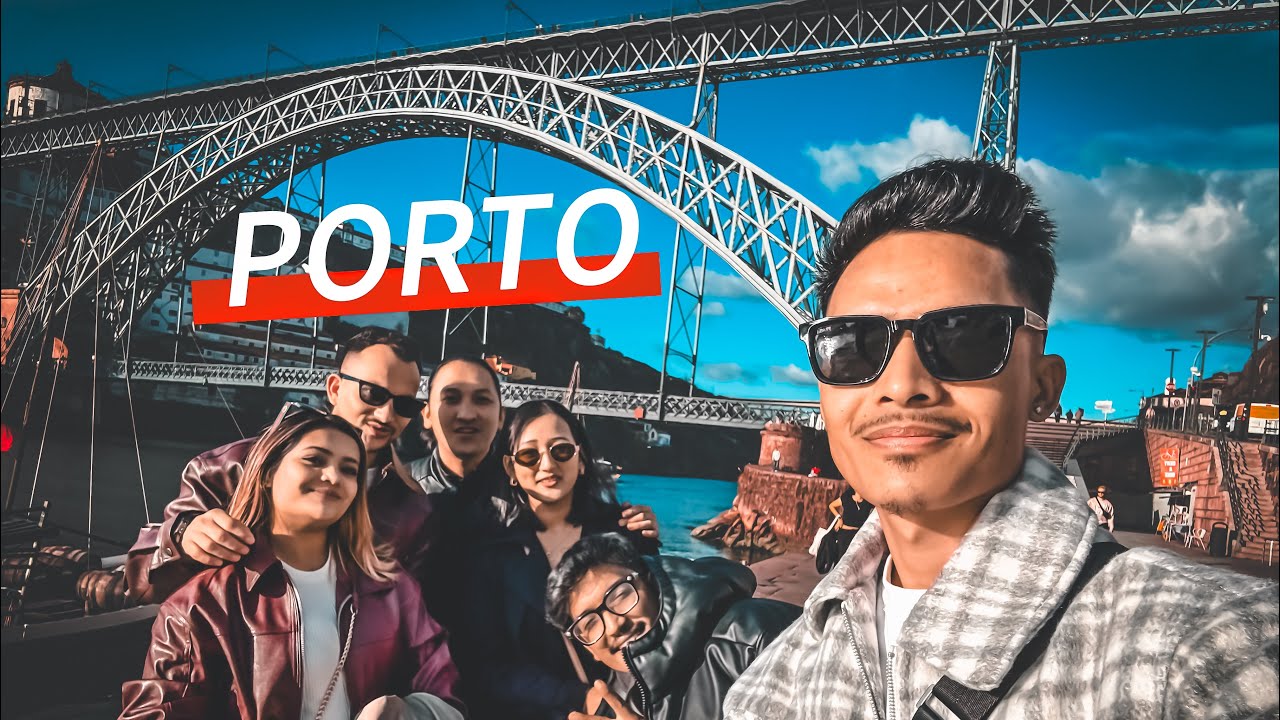
Amazing City Of Porto-Dom Luís I Bridge, one of the most iconic symbols of Porto,Portugal,🇵🇹पोर्चुगल
Автор: JEMS-TRAVEL VLOGS
Загружено: 2025-11-26
Просмотров: 149
🇵🇹 Dom Luís I Bridge — Complete History
🔧 Origins and Need for Construction
• Before the Dom Luís I Bridge, the main fixed crossing between Porto and Vila Nova de Gaia was the Ponte Pênsil (Suspension Bridge), opened in 1842.
• As Porto grew, the suspension bridge became insufficient for heavy traffic, especially carts, goods, and the rising population.
• In 1879, the Portuguese government launched a competition for a new iron bridge with two decks — a major engineering challenge at the time.
⸻
🏗️ Design and Construction
• The winning project came from the Belgian company Société de Willebroek.
• The design was made by Théophile Seyrig, a Belgian engineer who had previously worked with Gustave Eiffel.
• Construction started on 21 November 1881.
• The bridge is made of iron and has two levels (upper and lower decks), supported by a massive metal arch.
Record-breaking design
• The main arch spans 172 meters, which made it the longest iron arch in the world when it was completed.
• Total metal used: about 3,045 tons.
⸻
🎉 Inauguration
• Upper deck: opened on 31 October 1886.
• Lower deck: opened between 1887–1888.
• The bridge was named after King Luís I of Portugal.
Note on the name
There is a popular local legend that Porto residents removed the “Dom” (D.) from the name because the king did not attend the inauguration — but this is not historically confirmed. Newspapers at the time already used “Luiz I Bridge” without the honorific.
⸻
🚍 Use and Evolution Over Time
• For more than 100 years, both decks were used by cars, pedestrians, and public transport.
• 1908: electric trams began crossing the upper deck.
• 1959–1993: trolleybuses also used the bridge.
• 1944: tolls were removed; the bridge became free to use.
• 1950s: a major renovation (led by engineer Edgar Cardoso) widened the decks and removed old electrical systems.
⸻
🏛️ Modern Adaptations and Heritage Status
• 1982: declared a Structure of Public Interest (patrimonial protection).
• 2003: the upper deck was closed to cars and adapted for the Porto Metro system.
• 2005: the Metro’s Line D started using the upper deck. Today the upper deck serves metro trains + pedestrians only.
• Lower deck: still used for buses, pedestrians, and cyclists.
UNESCO
In 1996, the bridge and Porto’s historic center were classified as a UNESCO World Heritage Site.
⸻
🌉 Cultural and Symbolic Importance
• The Dom Luís I Bridge is one of the most iconic symbols of Porto, often featured on postcards and tourism materials.
• It played a key role in connecting Porto and Gaia, stimulating commerce, especially the Port wine trade.
• Its modern use with the metro shows how the city preserved a 19th-century engineering masterpiece while keeping it fully functional.
…..
#porto
#portugal
Доступные форматы для скачивания:
Скачать видео mp4
-
Информация по загрузке: