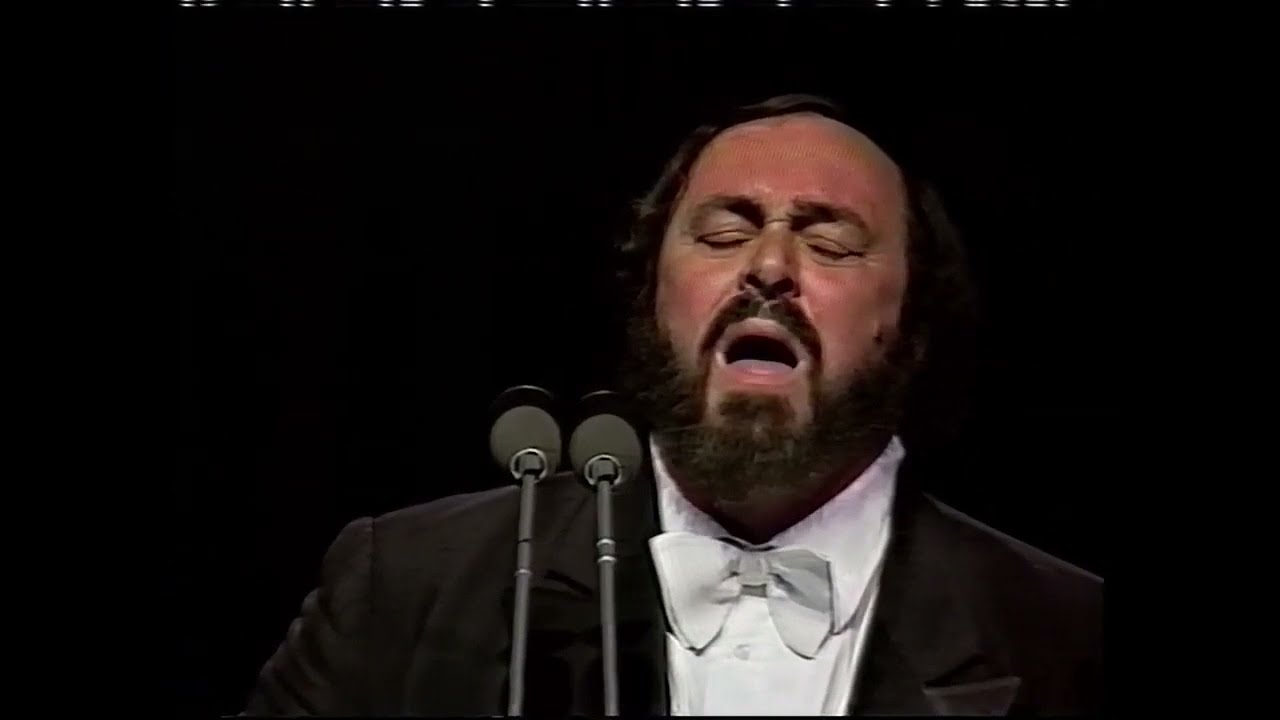
Italian Tenor Giuseppe Anselmi: Vesti la giubba (1913)
Автор: CurzonRoad
Загружено: 2011-03-14
Просмотров: 9993
Italian tenor Giuseppe Anselmi (1876-1929) / Vesti la giubba / I Pagliacci (Leoncavallo) / Recorded: 1913 --
(from wikipedia)
Giuseppe Anselmi (November 16, 1876, Nicolosi - May 27, 1929, Zoagli), an Italian operatic tenor. He became famous throughout Europe during the first decade of the 20th century for his stylish performances of lyric roles. He never sang in the United States.
Anselmi came from the Catania area on the east coast of Sicily. He studied violin and piano at the Naples Conservatory as a teenager, and then joined an operetta troupe with which he toured Italy and the Middle East. The music publisher Giulio Ricordi allegedly heard him and advised him to undergo vocal instruction with Luigi Mancinelli, one of Italy's leading conductors. According to some sources, Anselmi's first appearance on stage in an operatic role happened as early as 1896, when he sang Turiddu (Cavalleria rusticana) in Greece. His Italian operatic debut took place in Genoa in 1900, and his career took off quickly from there. He appeared initially at the Teatro San Carlo, Naples, in late December of that year and, in 1901, at the Royal Opera House, Covent Garden, London. Engagements at La Scala, Milan, and the Monte-Carlo Opera ensued in 1904 and 1908, respectively. He was much admired at the Teatro Colón in Buenos Aires, and also sang in Brussels, Berlin and Vienna prior to World War I.
His greatest triumphs, however, occurred in the cities of St Petersburg (often opposite lyric soprano Lina Cavalieri), Warsaw and, in particular, Madrid, where he even eclipsed the famous tenor Enrico Caruso in popularity. Although his style of singing was not liked at first by the London critics, he soon became a favorite with audiences in the British capital, and he sang intermittently at Covent Garden until 1909.
Anselmi's operatic career tailed off at the end of World War I. He spent his remaining years teaching and composing in Italy. He also gave the odd concert. Anselmi died in 1929 of pneumonia, at Zoagli in the Italian province of Liguria. He had retained a deep affection for Madrid, and he bequeathed his heart to that city, where it was exhibited inside an urn at the Teatro Real museum.
Commentators often describe Anselmi (and his famous contemporary Alessandro Bonci) as being among the last exponents of the old bel canto method of Italian singing, which was largely supplanted in Italy during the early 1900s by a more forceful mode of vocalism associated with Wagner's music dramas and verismo opera.
Michael Scott (in the Record of Singing, published in London in 1977) notes, however, that if Anselmi were a exponent of bel canto it must have been when that school was in decline. Anselmi's treatment of much of the bel canto repertoire has relatively sketchy runs and ornaments (compared with the accuracy displayed by such exceptional vocalists as Adelina Patti, Nellie Melba, Pol Plançon, Mario Ancona, Mattia Battistini, and the great Handelian Peter Dawson—all of whom were genuine remnants of the bel canto tradition). Indeed, Anselmi was as capable of agitation as any true-blue verismo tenor (listen, for example, to his recording of the aria Vesti la giubba from Pagliacci.)
Anselmi was a good-looking man with an arresting stage presence, which made him extremely popular with many opera-goers. He was sometimes referred to as Il tenore di donne (the tenor of/for women) which apparently had a double meaning; details of his personal life have never emerged.
He possessed a sweet-toned if rather throaty and fluttery lyric tenor voice, which he employed with memorable grace and elegance when on his best behaviour. His upper range extends upwards to a high B on disc but his lowest notes are not so secure. There is a clear division between the registers. Anselmi often clears his throat at the beginning of his recordings (famously in the Fonotipia recording of Amor ti vieta) and even during phrase (as in the Fonotipia recording of Apri la tua finestra). Anselmi's intonation is sometimes suspect, too—most notably in the recitative to his famed Fonotipia recording of Quando al sere al placido from Verdi's Luisa Miller, where his forced top notes are pushed sharp. (See: Scott, Steane, et al.).
Anselmi was noted for his performances as Almaviva and Don Ottavio, but he also excelled in the roles of Edgardo, Ernesto (in Don Pasquale), Duca di Mantua, Alfredo, Faust, Enzo, Cavaradossi, Loris and Lensky, among others. His recordings were made between 1907 and 1913 for Fonotipia Records in Milan, and then Edison Records in London.
******************************

Доступные форматы для скачивания:
Скачать видео mp4
-
Информация по загрузке: