Before the Dinosaurs: The Lost Secrets of the Trilobites ! Earth History DOCUMENTARY
Автор: Wondody | Мир Одиссеев
Загружено: 2025-12-03
Просмотров: 3351
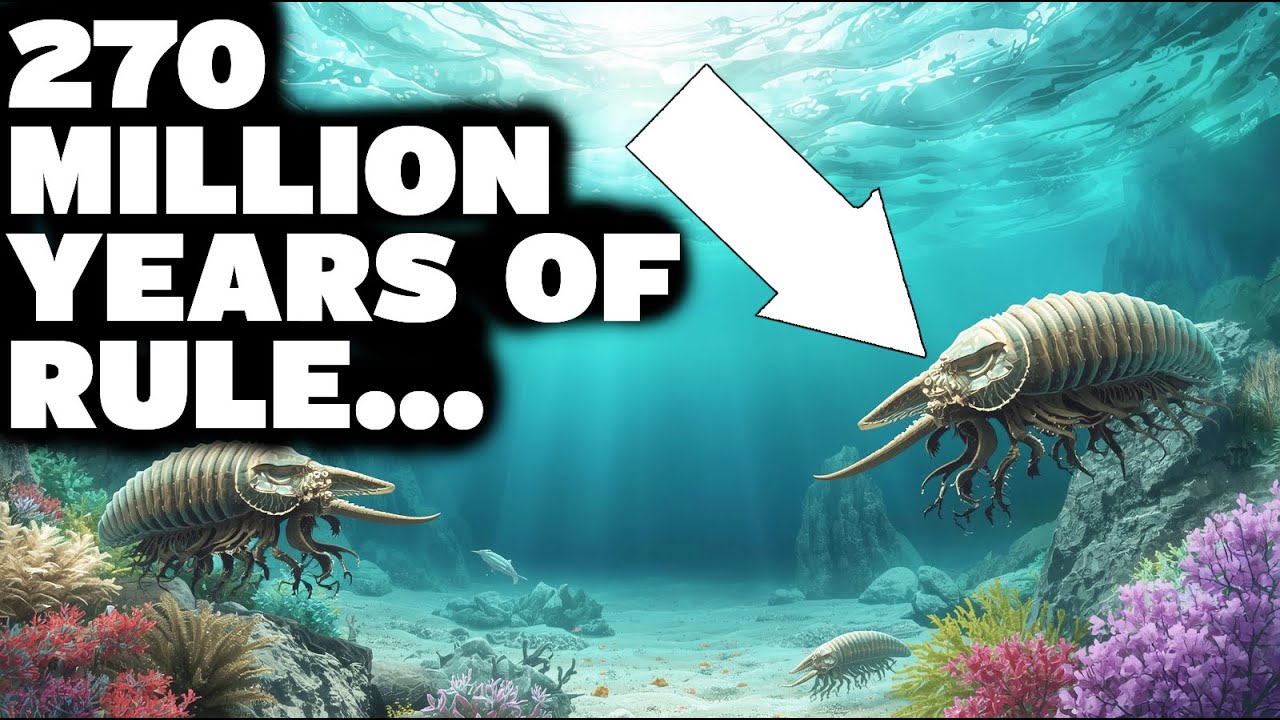
The story of the trilobites is one of the most extraordinary chapters in the history of life on Earth. These ancient marine creatures emerged more than 520 million years ago, during the explosive rise of complex animal life known as the Cambrian radiation. For the next 270 million years, they dominated the oceans, evolving into thousands of species and adapting to nearly every marine environment. Their long reign, diversity, survival strategies, and ultimate extinction make trilobites essential to understanding early Earth’s ecosystems and the evolution of complex life.
Trilobites were among the first animals with hard exoskeletons, giving them an immense advantage in a world still experimenting with new body plans. Their articulated armor protected them from predators while allowing mobility across seafloors, reefs, and open waters. With compound eyes made of calcite crystals—some of the earliest sophisticated vision systems ever evolved—they could navigate, hunt, and avoid danger in ways no creature before them could. These adaptations are part of what made trilobites one of the most successful groups in the Paleozoic oceans.
As Earth’s continents shifted and seas rose and fell, trilobites diversified into astonishing forms. Some developed spines like underwater porcupines to deter predators. Others flattened their bodies to glide along sandy seafloors. Certain species grew elaborate horns or frills, while deep-sea forms evolved huge eyes or, in some cases, lost their eyes entirely. From warm tropical seas to cold abyssal depths, trilobites filled ecological niches as scavengers, predators, filter feeders, and burrowers. Their evolution mirrors the dramatic changes in ancient marine environments, making them powerful indicators of paleoclimate and geological history.
The world of the trilobites was filled with competition and danger. Early arthropod predators roamed the oceans, and later, the rise of armored fishes increased the pressure on trilobite populations. Still, they persisted through multiple mass extinctions, including the Late Ordovician and Devonian crises. Their ability to roll into a ball—a behavior still seen in modern pill bugs—helped protect their soft undersides. Their diverse reproductive strategies and wide geographic spread contributed to their survival for hundreds of millions of years.
Yet even these resilient creatures could not withstand the catastrophic events at the end of the Permian period, often called the Great Dying. Around 252 million years ago, massive volcanic eruptions, runaway climate change, ocean acidification, and collapsing food chains eliminated more than 90 percent of marine species. Trilobites, which had already been declining, disappeared entirely. Their extinction marked the end of an era and paved the way for a new evolutionary chapter, eventually leading to the rise of reptiles, dinosaurs, and later mammals.
Today, trilobites remain crucial to science. Fossils found across every continent reveal details about ancient oceans, sedimentary environments, and evolutionary timelines. The patterns on their shells show growth stages similar to those in modern arthropods. Their eyes help researchers study the origins of vision. The diversity of their forms helps paleontologists reconstruct continental movements and extinction events. In many ways, trilobites provide a blueprint for understanding how life adapted, diversified, and survived in prehistoric seas.
Beyond science, trilobites continue to fascinate the public. Their alien appearance, intricate designs, and connection to Earth’s most ancient past capture the imagination. They stand as symbols of resilience, evolution, and the deep history of the planet. To explore the world of trilobites is to travel back to oceans older than forests, older than insects, older even than the first creatures that dared to walk on land.
Доступные форматы для скачивания:
Скачать видео mp4
-
Информация по загрузке: