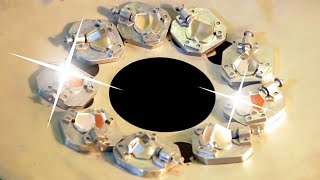
Basic Concept of USBL & Underwater Positioning
Автор: Offshore Surveys
Загружено: 2021-03-25
Просмотров: 15601
USBL (Ultra Short Baseline) is one of the most widely used dynamic acoustic positioning systems in offshore and subsea operations. In this video, we break down how USBL works, what components it uses, and how it helps track underwater objects like towfish, ROVs, divers, and subsea structures with precision.
🔍 What you’ll learn:
📍What USBL is and how it differs from LBL systems
📍Key components: transceiver, transponder/beacon, and navigation control unit
📍How acoustic pulses are transmitted and received to calculate range and angle
📍Frequency ranges and their impact on tracking distance and resolution
📍Real-world applications: pipeline monitoring, mattress placement, diver tracking, and more
📍How cone angle affects data quality and positioning accuracy
📍Depth-rated beacon accuracy and how to choose the right one
📍What data USBL observes: vertical angle, horizontal angle, slant range
📍How onboard systems convert USBL data into delta X, Y, Z coordinates
📍Critical setup requirements: gyrocompass, motion sensor, sound velocity profile
📍Importance of USBL calibration and how it corrects alignment errors
📍Comparison with LBL systems and when to use each
👉Whether you're a surveyor, offshore engineer, or student of marine geodesy, this video offers a clear and practical guide to USBL systems and their role in underwater positioning.
👍 Like, 💬 Comment, and 🔔 Subscribe for more offshore surveying tutorials and geospatial insights.
#USBLPositioning #AcousticTracking #UnderwaterSurvey #ROVTracking #OffshoreEngineering #SubseaMapping #LBLvsUSBL #MarineGeodesy #SurveyingTutorial #AlwaysBeCurious

Доступные форматы для скачивания:
Скачать видео mp4
-
Информация по загрузке: