Genesis - Robbery, Assault & Battery Solo - Sheet Music + PDF
Автор: Elektrik Hob
Загружено: 2017-09-01
Просмотров: 26726
PDF can be found at https://www.buymeacoffee.com/ElektrikHob
Some useful gumpf; click on SHOW MORE (just below).
The bass, drums and vocals are taken from the 2007 DVD 5.1 mix.
I managed to isolate the drums & bass by phase-inverting the rear channels and messing around with the levels. The vocals are straight from the centre channel.
Everything else is all my own work :)
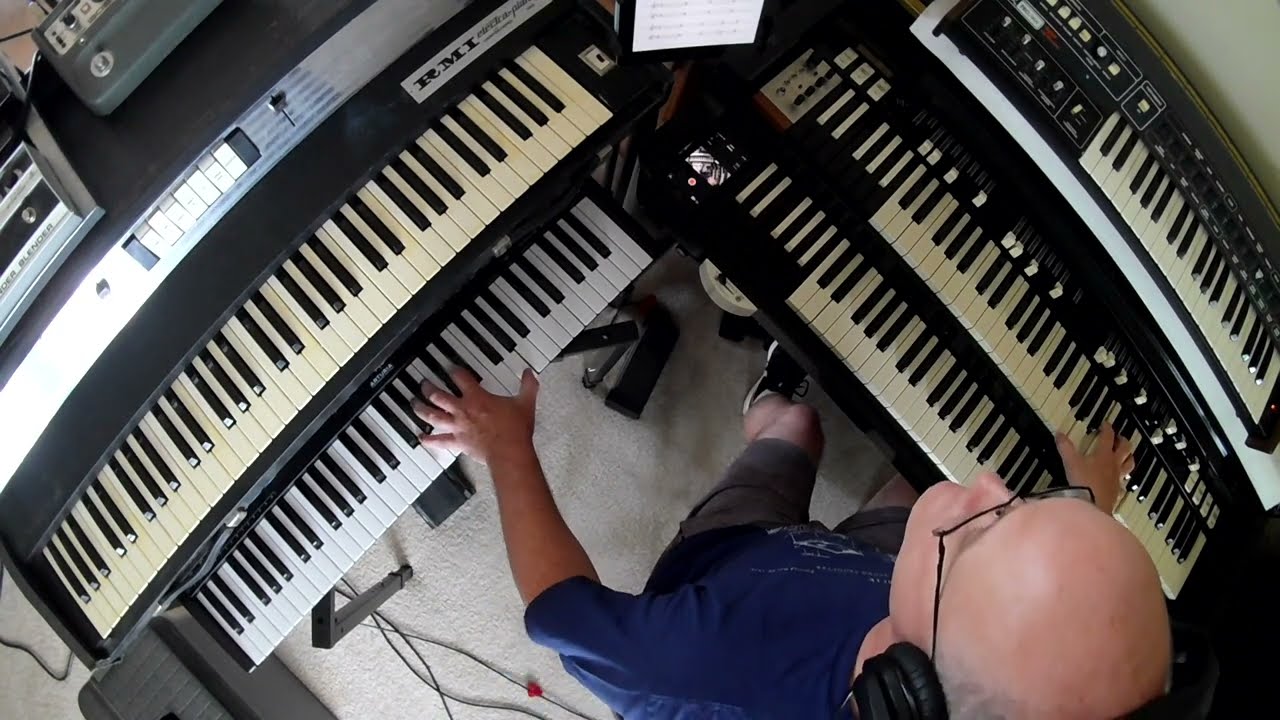
The sounds I used are emulations of the following keyboards:
ARP Pro-Soloist Synth, Hammond Organ, RMI Electra Piano, Acoustic Grand Piano, Mellotron Strings & Choir - plus a random synth to emulate Steve's one sustained note in bars 13-17...!
These are referred to in the score at various points.
On the studio version, the left hand parts are all doubled up on two different instruments.
e.g. RMI + Organ or Strings + Organ etc.
On the live versions from 76 & 77, this wasn't possible due to the technology available at the time.
So Tony would have to compromise by using just one of the Hammond, RMI and Mellotron that he used live.
My mix is similar to the studio in that regard but the score is aimed at a single instrument though you can do as I do and use a keyboard that can play the two sounds simultaneously.
You may want to play around with some of the chord inversions to get the best dual-effect.
The right hand solo stuff is played back using just one sound, just like the live versions.
To be honest, I'm not a huge fan of the choice of lead patches on the studio version anyway :)
Besides, I feel that they're nowhere near as important to the track as were all the different patches used in the Cinema Show.
I suspect Tony just used one sound live simply because there wasn't enough time to change patches easily! :)
Ok, now on to the dots.
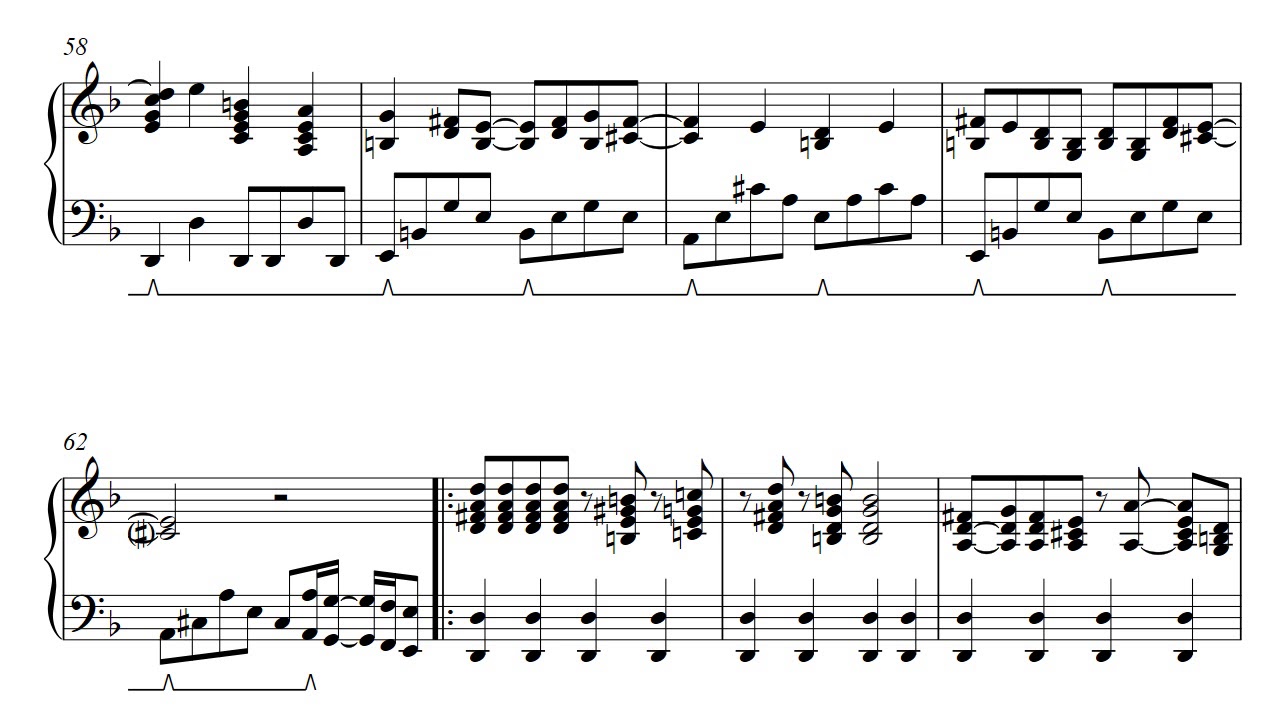
The first page is a transcription compromise!
Whilst the actual pitches are correct, DO NOT take every note to be EXACTLY the length as written!
Just let the score be a guide as to what the notes are, but let your ears determine the rhythm.
The most obvious example of this is bar 8.
Basically Tony is shoe-horning a 9-beat riff (bars 6 & 7) into an 8-beat bar, hence the speeding up of the notes thru the course of the bar. The score is just there to give an indication of this and not to be taken literally! :)
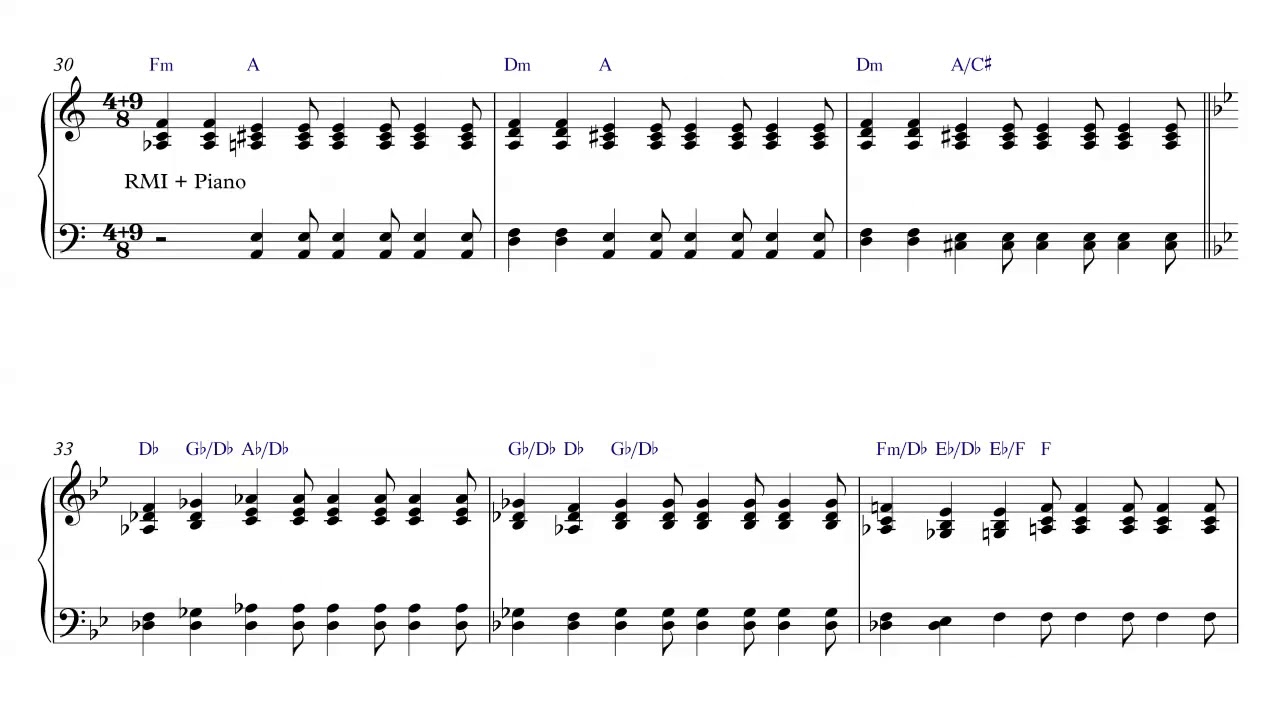
The left hand is bass clef for the RMI; the organ sound is an octave higher.
Page 2 - that organic wall of sound!
It's actually really easy to grok once you spot Tony's legendary cross-hand technique in operation again! :)
The black notes are the main theme and also the notes he plays on the Seconds Out version where he uses a Space Echo FX unit (that may have been added afterwards...) to have the echo repeats build up the chordal effect.
The grey notes that gradually make an appearance are just different inversions of the two sets of chords.
They're not meant to be played live although David Myers (ex of the Musical Box) describes a method he used at • Genesis -The Musical Box Kit Tour, 2 of 2 ... .
Good luck with trying to play it that way…! Possible (I've tried) but fiendishly difficult!! :)
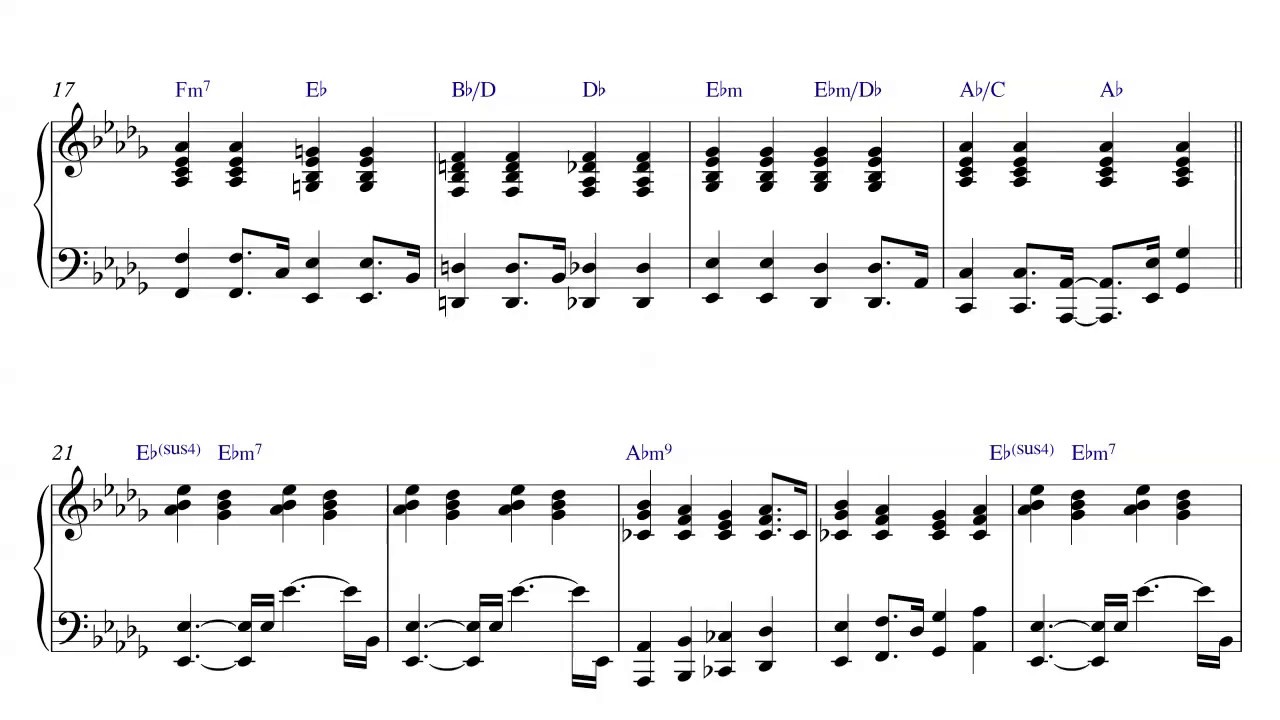
Page 3 - not much to report here except…
Bar 24, note 6 in the right hand - the Cb.
On the original (and all the live versions I have, so he obviously meant it) Tony plays a Bb.
Quite simply, I prefer the Cb - I feel it fits the chord better and produces a better sequence/symmetry with bar 25.
If you wish to be 100% faithful to the original, then a Bb it is :)
Page 4 - This is how I believe Tony played it live on the RMI. If, on your keyboard, you can velocity switch in an octave higher acoustic piano on the strong beats of each bar, then you'll get an effect that is very similar to the original.
Page 5 - No apologies for bigging-up the Choir sound on my recording!
I LURVE that reverb-swamped Mellotron 8-voice choir sound and for me, along with the 12-string guitars and the bass pedals, it's one of THE defining aspects of the 'Genesis Sound'. That bit in the Cinema Show solo; Afterglow live on Seconds Out; the ending of Entangled; Silent Sorrows in Empty Boats. All majestic uses of THAT sound! :)
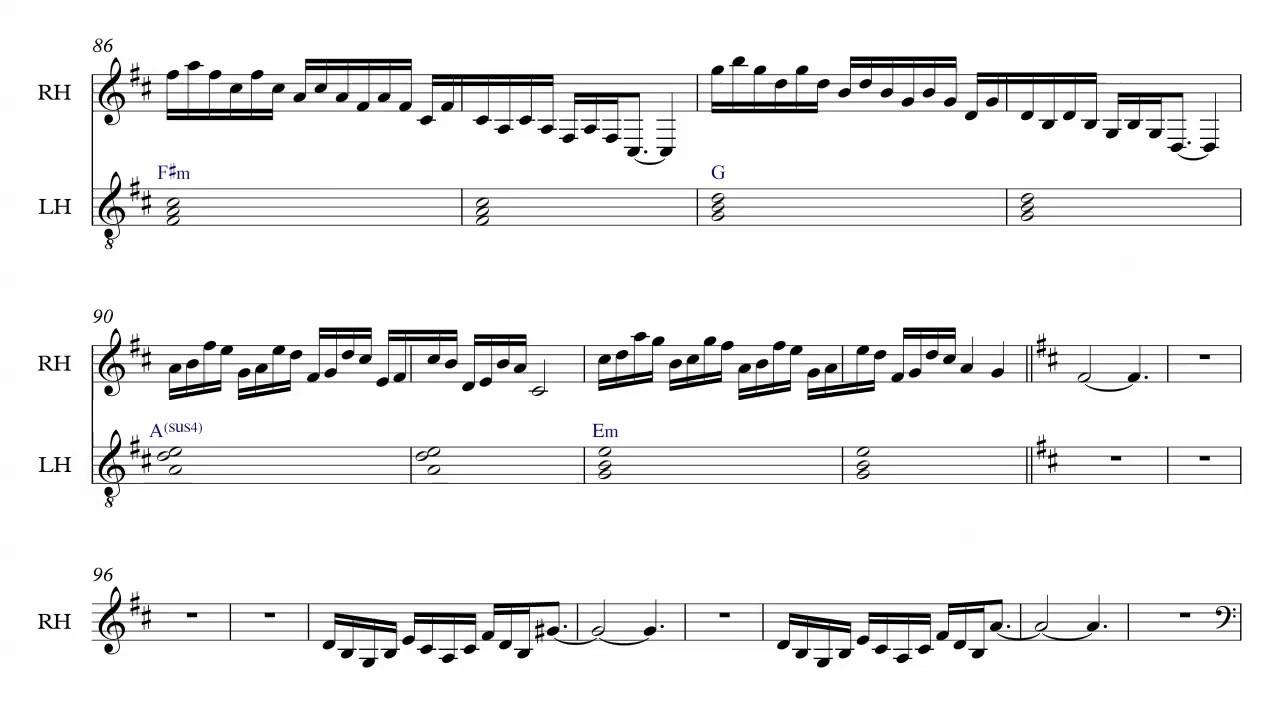
The left hand is treble clef for the Choir; the RMI sound is an octave lower and the notes are as written in the score.
If you want to play it with just the choir sound, then in bars 47-48, just play one Bb7 (no root) chord (F, Ab, D) followed by one Cm chord each time and in bar 49 simply hold that Bb7 (no root) chord for the whole bar. i.e. don't play the quick chord changes
Usual rules apply for sustained left-hand chord notes; i.e. not written but use your discretion :)
A good example is bars 17-20: each chord only has one different note to the preceding one.
So the other two notes are simply held on from one chord to the next.
As always, have fun! :)
It's scored using Sibelius 7.5 and the programming/audio was done with Presonus Studio One 3 with my usual instrument & processing plugins.
Доступные форматы для скачивания:
Скачать видео mp4
-
Информация по загрузке:






![David Bowie - Jump They Say (Official Video) [HD]](https://imager.clipsaver.ru/xPZWgCLMsW8/max.jpg)
![Emerson, Lake & Palmer - The Great Gates Of Kiev (Live in London) [Official Audio]](https://imager.clipsaver.ru/d-933iO904M/max.jpg)