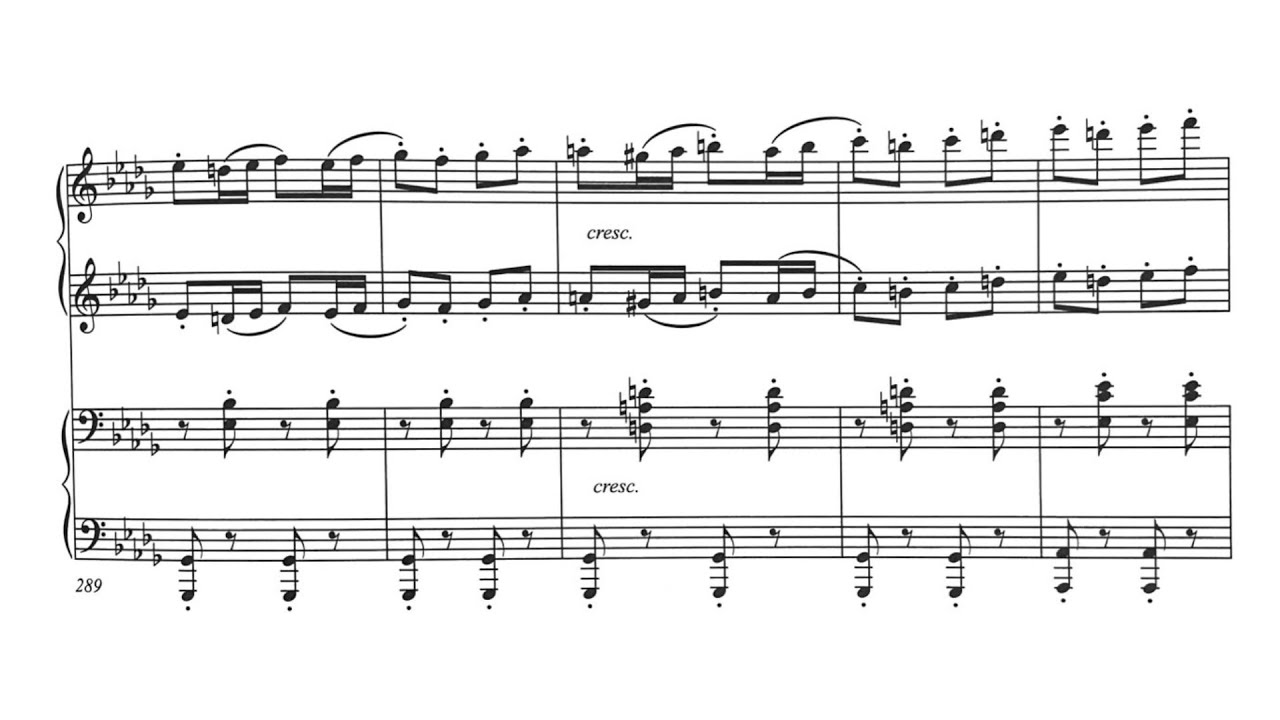
Karol Szymanowski - Symphony No. 1 Op. 15 (Wit)
Автор: Polish Scores
Загружено: 2023-06-27
Просмотров: 2512
Karol Szymanowski - Pierwsza symfonia
First performed in 1909
Conductor: Antoni Wit
Orchestra: Warsaw Philharmonic Orchestra
0:00 - I. Allegro Patetico
11:52 - II. Finale: Allegetto con moto. Grazioso
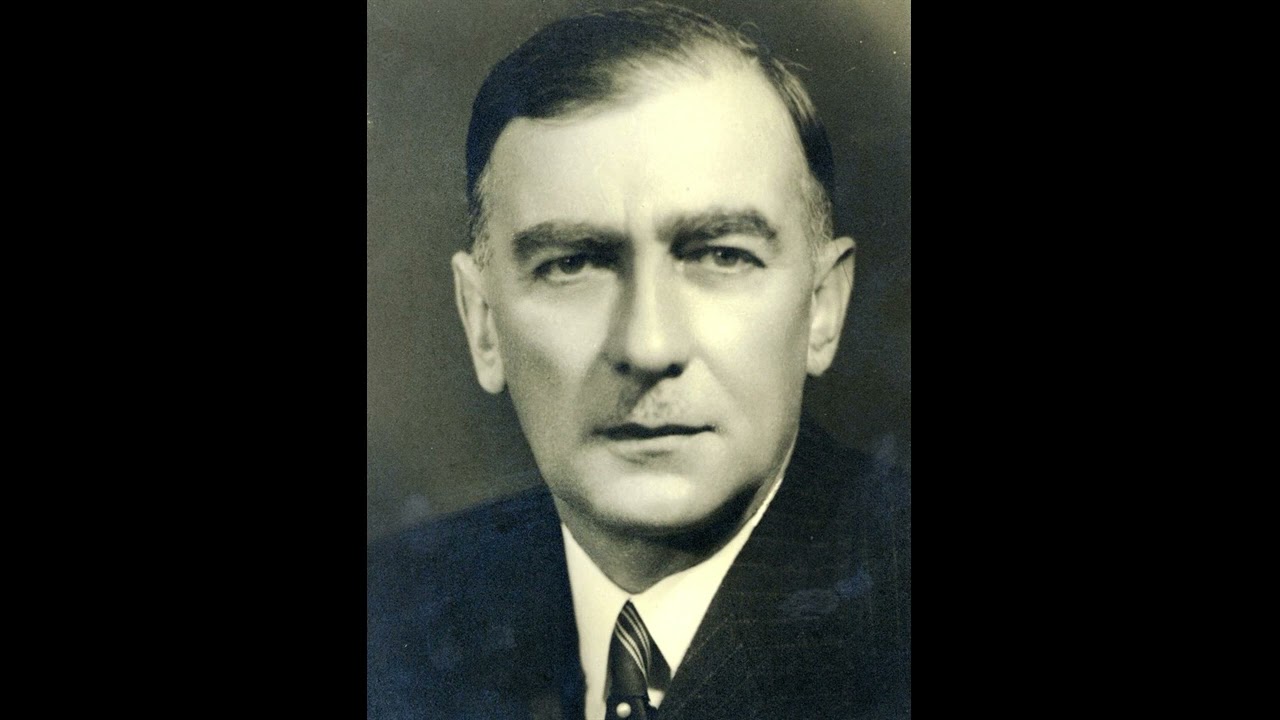
Among the titans of the early 20th century, one can count Scriabin, Ravel, Debussy, Schoenberg, Mahler, and Strauss all of whom were experimenting almost in parallel with each other. Karol Szymanowski, while initially influenced by Scriabin and Strauss, began a new strain of experimentation later in his career, merging the rich chromatic language of Strauss with Scriabin's mysticism and his own blend of orientalism to create a new musical language that bordered on atonality. Amazingly, Szymanowski carried on musical mysticism to new heights, achieving some of the most evocative effects since Scriabin. Later, he enchanted Polish folk material, bringing it to totally new ground.
Karol grew up in a musical home, writing music and poetry. His father, Stanisław, had discriminating tastes, and he had invited Liszt and Tausig among others into his home to perform [1]. There was often music, poetry and philosophy in Szymanowski's home. Stanisław was the only one to recognize Karol's musical gifts, and when the time came, he insisted that his sons study in Warsaw instead of St. Petersburg where Feliks Blumenfeld, a family tie, had ins in all of the most progressive musical circles [1]. Once he made it to Warsaw, he met both Zygmunt Noskowski and Emil Młynarski. After meeting the young Szymanowski, Noskowski determined that the young man would benefit most from private lessons with himself and with Marek Zawirski. While Noskowski looked upon Szymanowski as a "Musical Son," Szymanowski was highly critical of both Żeleński's and Noskowski's inability to capture the "instinctive musical feeling of the nation." Szymanowski's encounter with Strauss was transformative for his education, and he began seriously studying Strauss's music.
After studying in Warsaw, he travelled to Italy and North Africa, absorbing the music there. Eventually the German hold on him began to wane. By studying his symphonies, one can easily see the increasing departure from the influence of Strauss and Reger [2]. The second symphony saw him begin to break away, and by the third symphony, his voice was totally his own. He paved the way for extreme spiritual expression in the Polish symphony and provided a predecessor to Stravinsky's Symphony of Psalms and, distantly, Górecki's own third symphony [2]. Importantly, Szymanowski did not desire to break free for its own sake, but to create something that the whole of Humanity could recognize and find value in [1].
Symphony No. 1
Szymanowski's first symphony is something really quite interesting to dissect as it relates to Szymanowski's development. There are marked similarities with the rest of his symphonic output that indicate that his own personal voice is embedded in the work in spite of its leaning on Strauss. Bolesławska-Lewandowska remarks that it reveals "a heavy orchestration, a lack of structural clarity, and not yet original musical language. [3]" Szymanowski himself called it "a kind of contrapuntal-harmonic-orchestral monster." While it retains the opus number 15 and was premiered in Warsaw, it was not published for many years because of Szymanowski's dissatisfaction with it.
To be frank, the complete condemnation of this work is overly critical. Szymanowski combines a predilection for expressionistic moments (8:38) with a heavy use of solo violin, both of which feature in all of his other symphonies. Stefan Keym, in his survey of "Per Aspera ad Astra" in the Polish Symphony, noted the deceptive apotheosis in the final bars of the first movement in this symphony [3]. After a promising call by the horns (9:34), the orchestra jumps into F-major, seeming to indicate that the storm has passed, but the bassoons introduce an Ab, making the ending minor. Keym calls it "ambitious and highly original." Despite this, it does follow after the common trope of "Per Aspera ad Astra" in the Symphony in its finale. After a callback to the tortured first movement, the ending begins with soaring hope (17:54) which then sours before ending on the F. While this first symphony does not compare with Szymanowski's late works, it is still an incredible piece that does, in fact, earn its creator's signature and its listener's attention.
[1] A. Wightman. Karol Szymanowski: His Life and Work. Ashgate Publishing. 1999.
[2] B. Bolesławska-Lewandowska. Symphony and symphonic thinking in Polish music after 1956. 2009.
[3] K. Stefan. "The Tradition of ‘per aspera ad astra’ in Polish Symphonic Music from Zygmunt Noskowski to Karol Szymanowski." Muzyka 54, Nr. 3-4, p. 21-44. 2009.

Доступные форматы для скачивания:
Скачать видео mp4
-
Информация по загрузке:





![Paweł Mykietyn - Symphony No. 2 [w/score]](https://imager.clipsaver.ru/FF2Fh2s3NCI/max.jpg)