Interest Rates Explained /Fundamental analysis for fixed income / Bloomberg Interview
Автор: Nina - Voice of Passionate Professionals
Загружено: 2019-07-22
Просмотров: 1504
interest rates explained / Bloomberg Interview/Bloomberg fixed income/Fixed Income Investing/Interest Rates Explained/The Fed/Federal Reserve: Do you want to get a finance degree? Become a financial analyst? You want to understand markets? Why monetary policy is improtant? What are interest rates? What is the Federal Reserve (Fed)? How to know where Interest Rates will go? What is interest rate cut? Interest Rates Explained/Fundamental analysis for fixed income/Understanding Financial Markets & Fed
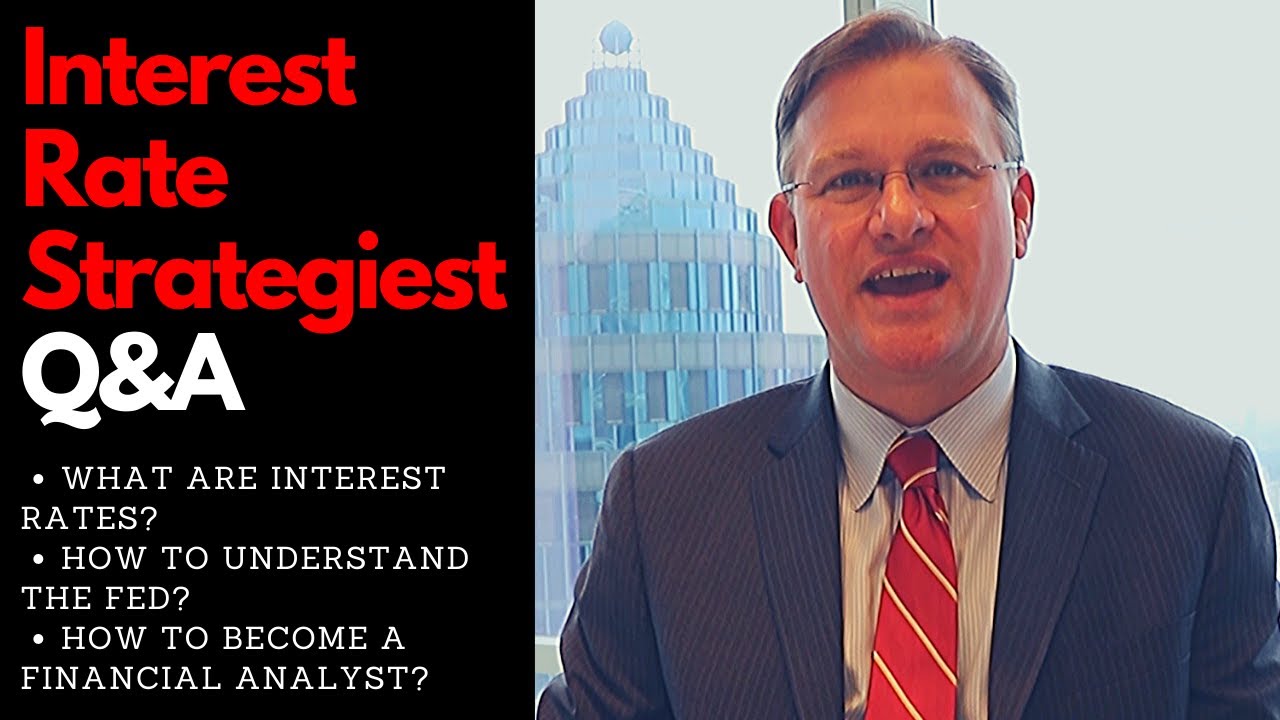
Insightful Q&A with Ira Jersey, Chief US Interest Rate Strategist at Bloomberg Intelligence. Useful, if you want to become a financial analyst/equity research analyst or if you consider to get a finance degree.
Ira Jersey is the Chief U.S. Interest Rate Strategist at Bloomberg Intelligence, a division of Bloomberg LP, and is based in Princeton, NJ. He provides both top-down and bottom-up perspectives on U.S. Treasury and related derivative markets including the impact of the Federal Reserve, Congressional policy and budgets, and issuance. He regularly appears on Bloomberg TV and radio. His work can be found at BI RATES on the Bloomberg Terminal.
Prior to joining Bloomberg Intelligence, Ira was a Strategist for the taxable fixed income teams at Oppenheimer Funds. He spent more than decade in fixed income research at Credit Suisse Securities and RBC Capital Markets most recently as the Head of U.S. Interest Rate Strategy at Credit Suisse. Early in his career he held positions at Morgan Stanley Dean Witter and The Vanguard Group. Ira Jersey knows a lot about financial markets and interest rates.
More about Ira: / irajersey
An interest rate is the percentage of principal charged by the lender for the use of its money. The principal is the amount of money loaned. Since banks borrow money from you (in the form of deposits), they also pay you an interest rate on your money. Anyone can lend money and charge interest, but it's banks that do it the most. They use the deposits from savings or checking accounts to fund loans, and they pay interest rates to encourage people to make deposits. Banks charge borrowers a slightly higher interest rate than they pay depositors so they can profit. At the same time, banks compete with each other for both depositors and borrowers. The resulting competition keeps interest rates from all banks within a narrow range of each other.
The Federal Reserve (Fed) conducts the nation’s monetary policy to promote maximum employment, stable prices, and moderate long-term interest rates in the U.S. economy; promotes the stability of the financial system and seeks to minimize and contain systemic risks through active monitoring and engagement in the U.S. and abroad; promotes the safety and soundness of individual financial institutions and monitors their impact on the financial system as a whole.
Being a financial analyst is one of the most popular career paths in finance. This is largely because analysts can work in a range of industries and also because the field has some great benefits, including a high earning potential. If you’re a business or finance major, a financial analyst role is definitely worth considering. Even if you’re not currently majoring in a related discipline, you might be interested in finding out more about this role and deciding whether it could be a good fit for you.
💡 More fun interviews with finance professionals: https://bit.ly/2y7sLSY
💗 Subscribe, if you don't want want to miss future interviews: https://bit.ly/2U7k4o5
✍️ Contact: profwithamic@gmail.com
#InterestRates #FinanceJobs #Fed #Bloomberg
Thank You for watching What are interest rates? Federal Reserve? How to understand markets? FINANCE DEGREE insights. Useful, if you want to become a financial analyst or if you consider to get a finance degree.
Доступные форматы для скачивания:
Скачать видео mp4
-
Информация по загрузке:





![A Day in the Life of Asset Management Firm Founder, former Hedge Fund Manager [Quant Finance]](https://image.4k-video.ru/id-video/9aUFvKqXtZI)


