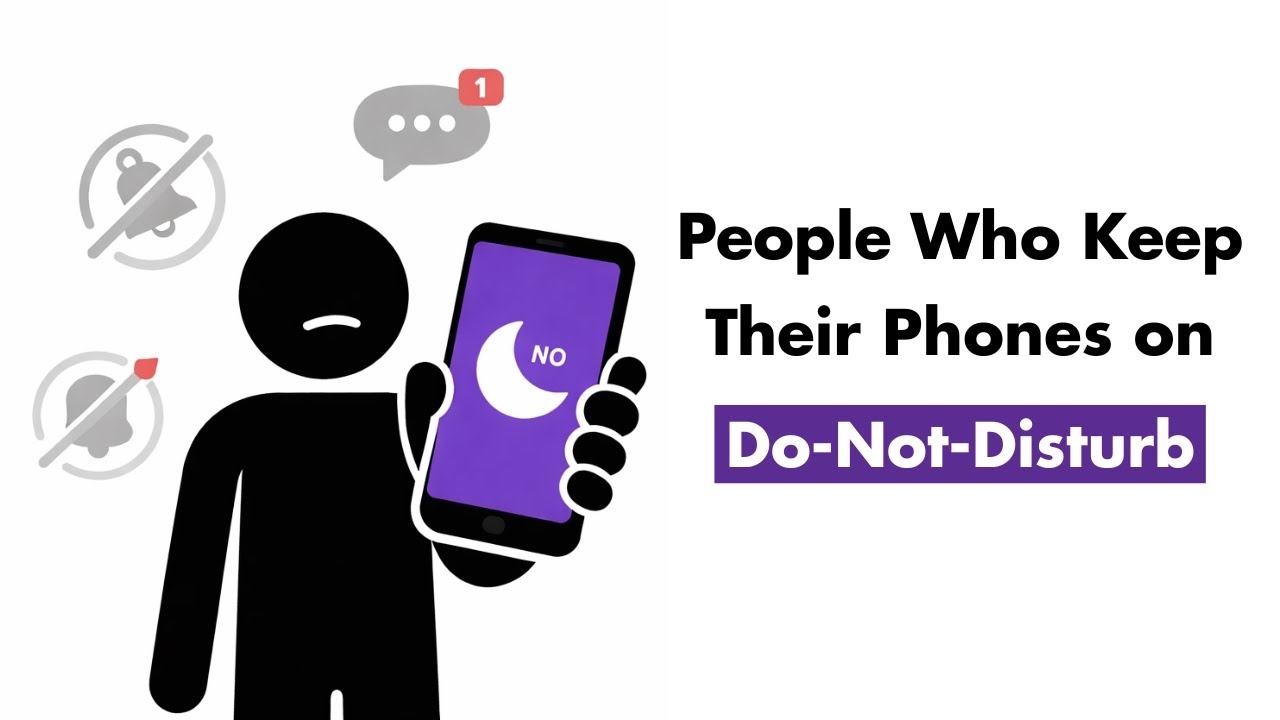
The Psychology of People Who Keep Their Phone on Do-Not-Disturb (DND)
Автор: SelfWhuut
Загружено: 2026-01-05
Просмотров: 24
Some people unlock their phone 110 times a day and wonder why they can't focus. Others just turned on Do Not Disturb and accidentally rewired their entire nervous system. The gap between these two groups isn't about willpower or discipline — it's about understanding what constant notifications actually do to your brain.
This breaks down the psychology behind DND mode: attention regulation that mimics ADHD symptoms in healthy people, interruption costs that steal 23 minutes of focus every time your phone buzzes, and stress hormones that can't tell the difference between a predator and a meme notification. From social anxiety management to FOMO resistance, people who use DND aren't avoiding connection — they're just controlling when their brain gets hijacked by someone else's agenda.
🔔 Want more of this? SUBSCRIBE now: / @selfwhuut
You'll figure out why setting digital boundaries isn't antisocial, it's self-preservation. And why treating your attention like a public resource is messier than you think.
🔔 Stick around till the end — because the shift from reactive to intentional attention changes everything about how your brain operates. Hit SUBSCRIBE if you're tired of your phone deciding when you get to think. At SelfWhuut, we don't just explain phone habits... we crack the code on why your nervous system treats notifications like actual threats. Whuut else did you expect?
#DoNotDisturb #PhonePsychology #DigitalBoundaries #AttentionSpan #SelfWhuut #FOMO #StressManagement #HumanBehavior #MentalClarity #Productivity
TIMELINE:
00:00 - Intro
00:35 - Attention Regulation
01:15 - Digital Boundaries
01:55 - Interruption Costs
02:35 - Social Anxiety & FOMO
03:15 - Stress Response
03:55 - Taking Control
04:30 - Final Thoughts
What people are searching:
why do people use do not disturb all the time
psychology of phone notifications
why phone calls give me anxiety
how notifications affect focus and concentration
understanding digital boundaries and mental health
psychology behind FOMO and constant connectivity
why reducing phone interruptions improves productivity
stress hormones and smartphone use
how to take control of phone habits
Research Behind This:
Studies on notification-induced attention dysregulation, interruption recovery time (University of California), cortisol responses to digital stimuli, and asynchronous communication preferences are documented in journals like Computers in Human Behavior, Journal of Experimental Psychology, and Cyberpsychology, Behavior, and Social Networking. Searchable via PubMed, Google Scholar, and PsycINFO databases.
Доступные форматы для скачивания:
Скачать видео mp4
-
Информация по загрузке: