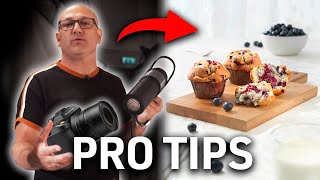
How to Photograph Food at Home with One Light Setup
Автор: That Ginger Photographer
Загружено: 2021-04-05
Просмотров: 6579
This weeks video is all about photographing food with only one light setup. I've upgraded to the Godox TT685 Flash, and X Pro trigger. I’ve got more content coming up just like this! Consider subscribing!
Improve food photography with this 🔥 • Food Photography Tips to EASILY Improve Yo...
Food Photography Tips on Location - • PHOTOGRAPHER EXPLAINS - 7 TIPS for Food Ph...
Three Food Photography Lighting Setups - • PHOTOGRAPHER EXPLAINS: How to light food p...
Sometimes food photography only calls for one light, whether that’s a flash setup or its a continuous light, it’s always nice to have a bit of control over a scene. I’m sharing my tips here of what I do to help my pictures just that little bit more during food photography.
Remember, you don't always have to use a flash and a soft box to light your images, you can also use continuous light, or simply use natural light by setting the food near a large window and use that natural light in your favour!
I really hope you enjoy this, and i'm going to be uploading some more commercial photography videos soon!
That Ginger Photographer x
00:00 - Intro / Sitting on my Camera
00:35 - Why One Light setup Photography
01:42 - Lighting Setup
02:20 - Another Lighting Setup
02:41 - Using a Reflector
03:30 - Changing Composition in Food Photography
03:58 - Food Photography Props + Composition
05:22 - Different Flash and Soft-box Positions
06:14 - Tips for Commercial Food photography Clients
Food photography has become increasingly popular in recent years, as people share their culinary creations on social media platforms. However, achieving professional-looking food photographs can be a daunting task, especially for beginners. One way to simplify the process is by using a one-light setup, which allows you to create beautiful images with minimal equipment. In this video, we will explore the fundamentals of photographing food using a one-light setup. From understanding lighting techniques and composition, you will gain the knowledge and skills necessary to capture stunning food images.
Section 1: Understanding Lighting
1.1 Natural Light vs. Artificial Light: Understand the differences between natural and artificial light sources, and how they can impact your food photography. Learn when and how to make the best use of each.
1.2 The Role of Shadows: Explore the significance of shadows in food photography and how they can add depth, dimension, and visual interest to your images. Experiment with different lighting angles to create compelling shadows.
1.3 Types of Artificial Lights: Gain an understanding of various artificial lighting options, including continuous lights and strobes. Learn their advantages, disadvantages, and how to select the right one for your one-light setup.
1.4 Modifying Light: Discover different light modifiers, such as diffusers and reflectors, and their impact on food photography. Learn how to control and shape light to achieve the desired mood and texture in your images.
Section 2: Setting Up Your One-Light Setup
2.1 Choosing the Right Light: Select an artificial light source that suits your needs, considering factors such as budget, portability, and available space. Set up your light source in a position that complements your composition.
2.2 Light Placement and Angles: Understand the concept of key light, fill light, and backlight. Experiment with different light placement and angles to create different moods and highlights on your food subject.
2.3 Controlling Light Intensity: Explore techniques for controlling the intensity of your one light, such as adjusting the distance from the subject or using light modifiers. Learn how to balance light and shadows for optimal results.
Section 3: Composition and Styling
3.1 Background and Props: Select suitable backgrounds and props that enhance the visual appeal of your food. Consider color, texture, and composition to create a cohesive and engaging scene.
3.2 Rule of Thirds and Framing: Understand the rule of thirds and how to apply it effectively in food photography. Experiment with different framing techniques to create visual interest and draw the viewer's eye to the main subject.
3.3 Depth and Layers: Learn how to create depth and layers in your food photographs. Use foreground and background elements to add visual interest and tell a story.
3.4 Textures and Details: Capture the textures and details of your food to make it more enticing. Pay attention to food styling techniques, such as adding garnishes or using props to enhance the overall presentation.
Conclusion
Photographing food with a one-light setup opens up endless creative possibilities, even for beginners. Remember to experiment, practice, and develop your own unique style over time. With patience and dedication, you will be able to capture the beauty, texture, and flavors of your culinary creations in stunning photographs that will leave a lasting impression on your audience.

Доступные форматы для скачивания:
Скачать видео mp4
-
Информация по загрузке: