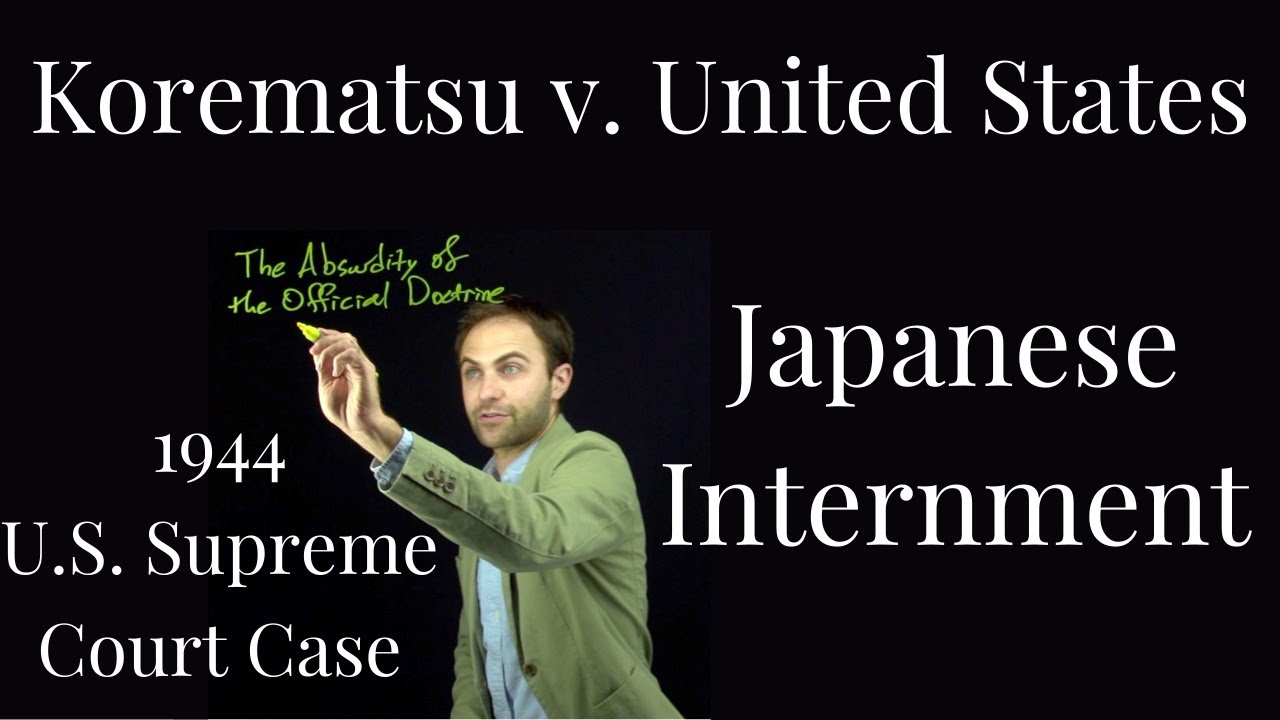
When the Supreme Court Justified Japanese Internment Camps | Korematsu v. United States
Автор: Mr. Beat
Загружено: 2018-07-27
Просмотров: 248543
I wrote a new book all about the Supreme Court. Order your copy here: http://amzn.to/45Wzhur or visit https://www.iammrbeat.com/merch.html.
Patreon: / iammrbeat
Donate on Paypal: https://www.paypal.me/mrbeat
Mr. Beat's band: http://electricneedleroom.us
Mr. Beat on Twitter: / beatmastermatt
Mr. Beat on Facebook: / iammrbeat
In episode 36 of Supreme Court Briefs, after the United States government forces Japanese American citizens into relocation centers during World War II, one man refuses and gets himself into some big trouble.
Produced by Matt Beat. All images and video used under fair use, original content, or found in the public domain. Music by Sans Amp.
Check out cool primary sources here:
https://www.oyez.org/cases/1940-1955/...
Other sources used:
https://en.wikipedia.org/wiki/Koremat...
https://www.wnycstudios.org/story/rad...
https://bellocollective.com/radiolabs...
Reading Through History: The Great Supreme Court Cases, by Jake Henderson and Robert Marshall
https://amhistory.si.edu/perfectunion...
https://www.tabletmag.com/jewish-news...
https://www.smithsonianmag.com/histor...
http://time.com/5324434/supreme-court...
Photo credits:
Nick Youngson
Lorie Shaull
Fibonacci Blue
Pearl Harbor, Hawaii
December 7, 1941
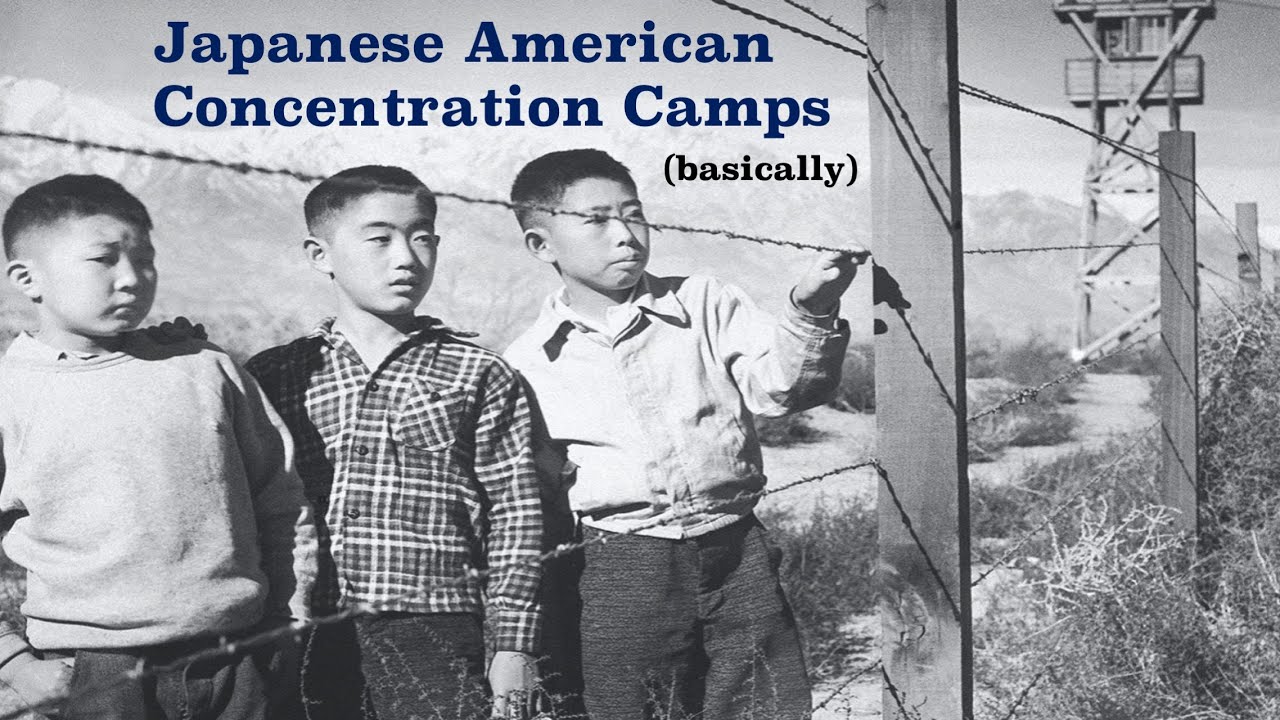
Japan drops bombs on an American naval base, killing more than 2400 Americans, and injuring 1000 more. In response, the United States declares war on Japan, officially entering World War II. Increasingly, Americans viewed anyone of Japanese heritage suspiciously. Japanese Americans had already faced racism and discrimination in the country for nearly 100 years. After the Pearl Harbor attack, that racism and discrimination went to the next freaking level, as many thought Japanese Americans might be more loyal to Japan than the United States, sharing military secrets with them and stuff or trying to sabotage the war effort. Despite there being no evidence whatsoever that this was happening, Japanese American persecution increased. People bought Jap-hunting licenses. Life Magazine published an article illustrating how to tell the difference between a Japanese person and Chinese person by the shape their nose and height.
In California, the racism and paranoia seemed to be worse. A barber shop there advertised “free shaves for Japs” with a disclaimer that read “not responsible for accidents.” A funeral parlor advertised “I’d rather do business with a Jap than an American.” Several people called for removing all Japanese Americans from western states and forcing them to live in concentration camps somewhere else. President Franklin Roosevelt, who had a record of being racist against the Japanese, agreed with this idea. He signed Executive Order 9066. It ordered the roundup of 120,000 Americans of Japanese descent to 1 of 10 concentration camps, called officially “relocation centers.” It also said Japanese Americans weren’t allowed to be in California at all, as well as much of Oregon, Washington, and Arizona, unless they were in one of the camps, of course.
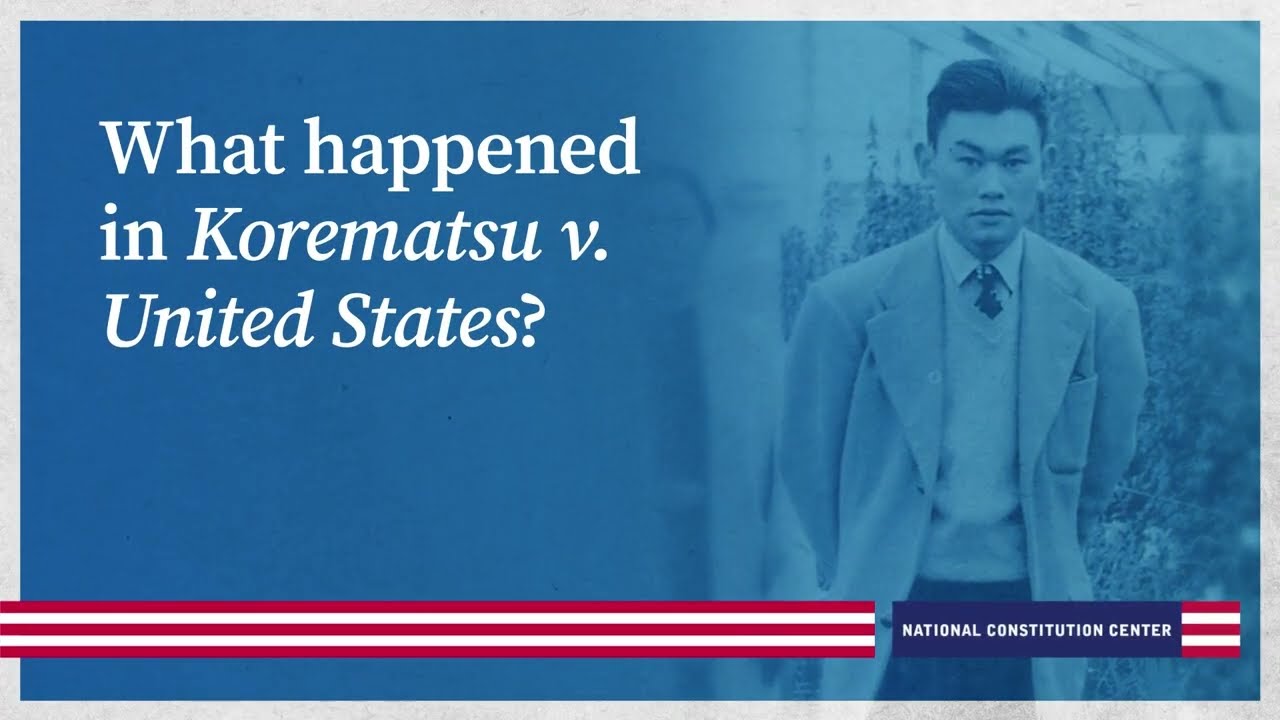
Fred Korematsu was one of the Japanese Americans who said the heck with Executive Order 9066. He stayed in California. He had a girlfriend who was not Japanese American there he didn’t want to leave, and just thought Roosevelt’s order was wrong. So after his entire family left for one of the camps, he stayed behind, became a welder, and tried not to stand out too much. He changed his name and got a fake ID. Later, he even tried to have plastic surgery on his eyes to look less Japanese. The plastic surgeon who worked on him didn’t do the procedure but took his money anyway. Shortly after this, someone reported him and he was arrested. After his arrest, he never saw his girlfriend again, by the way. Eventually, Korematsu found himself in federal prison. The American Civil Liberties Union, or ACLU, reached out to him there and offered to represent him in court.
Korematsu said heck yeah. Together, they argued that Executive Order 9066 went against the Due Process Clause of the Fifth Amendment. In court, Korematsu’s loyalty to the United States was never in question. Still, in federal court in San Francisco, he was convicted, given five years of probation, and sent to a concentration camp in Utah.
He appealed to the U.S. Court of Appeals, who agreed with the lower court. He then appealed again, and the Supreme Court agreed to hear the case, hearing arguments in October 1944, with the war still raging on. During arguments, the Court considered a similar case from the previous year called Hirabayashi v. United States. That one upheld Executive Order 9066.

Доступные форматы для скачивания:
Скачать видео mp4
-
Информация по загрузке: