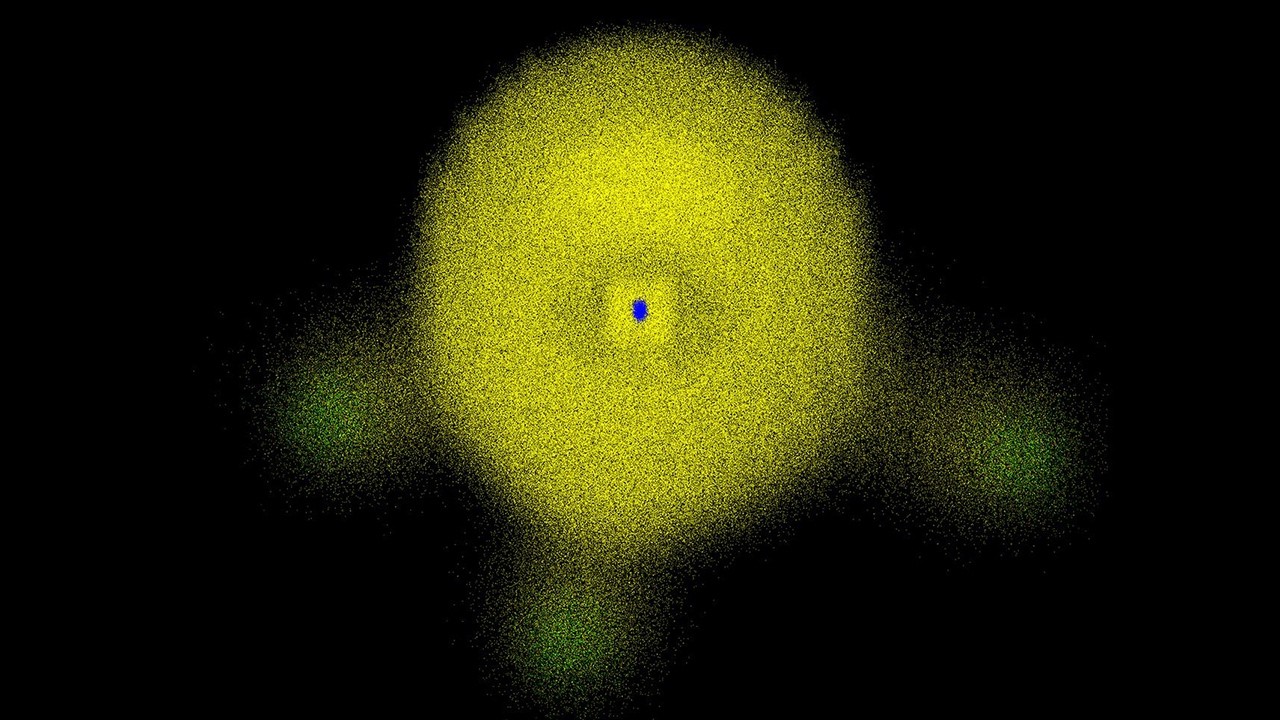
How Fragile Matter Emerges from Extreme Chaos at the Large Hadron Collider
Автор: SciTech World
Загружено: 2025-12-28
Просмотров: 35
n the most extreme laboratory conditions ever created—far hotter than the core of the Sun—matter appears to do something counterintuitive. Instead of fragile atomic nuclei surviving the inferno, physicists have now shown that they are born later, after the violence has subsided. Experiments at CERN’s Large Hadron Collider (LHC) have finally resolved a long-standing puzzle: how delicate particles such as deuterons and their antimatter counterparts can exist at all in such an extreme environment.
When protons collide inside the LHC, they generate tiny fireballs with temperatures more than 100,000 times greater than those at the Sun’s center. In this early stage, matter exists as an ultra-hot, dense soup of fundamental particles. Under these conditions, weakly bound nuclei like deuterons—made of just one proton and one neutron—should not survive. The force holding them together is simply too fragile to withstand the heat. Yet experiments repeatedly detected both deuterons and antideuterons, posing a major challenge to existing theories.

Доступные форматы для скачивания:
Скачать видео mp4
-
Информация по загрузке: