How to subtract instrumental broadening (βi) from XRD data using origin
Автор: SAYPhysics
Загружено: 2021-04-25
Просмотров: 12039
#XRDDataAnalysis #InstrumentalBroadening #OriginLabTutorials
0:10 what is instrumental broadening (βi) in XRD data
2:25 what factors contribute to the instrumental broadening in XRD data
3:00 X-ray machine optics cause instrumental broadening in XRD data
6:20 how to subtract instrumental broadening from XRD
8:10 how instrumental broadening affect XRD parameters
Origin and Excel Files:
https://drive.google.com/file/d/1Bqv1...
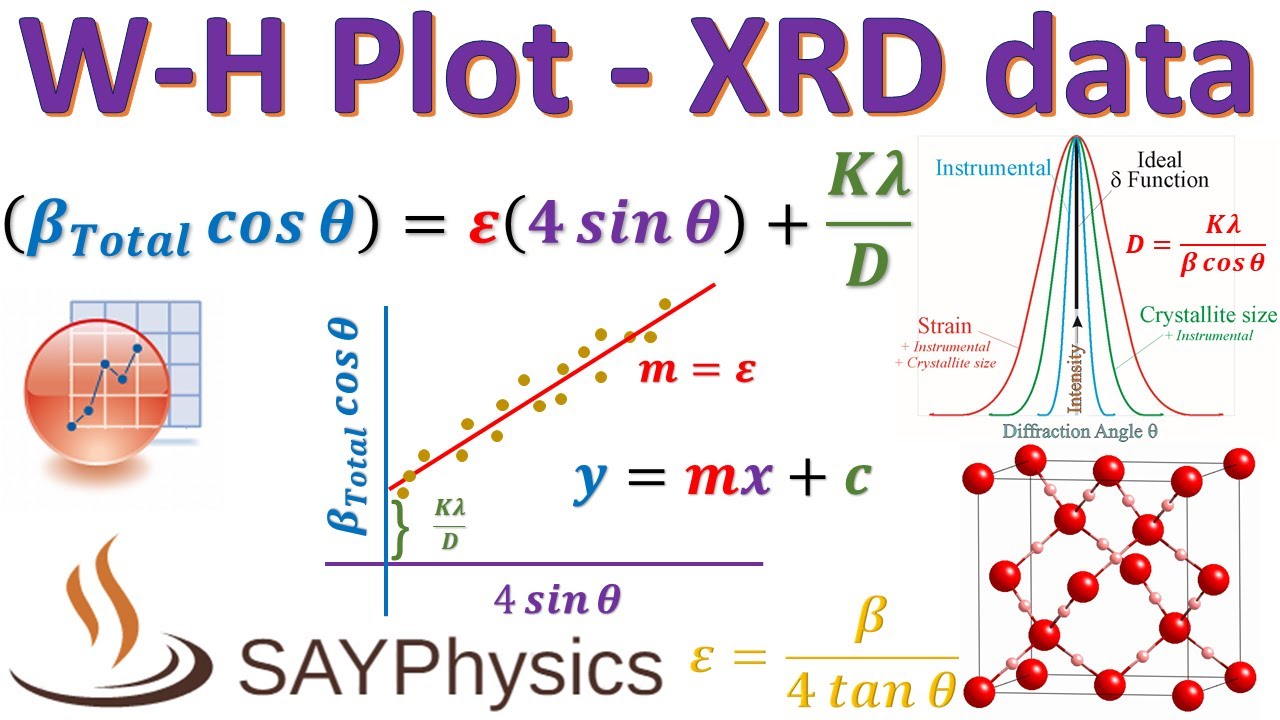
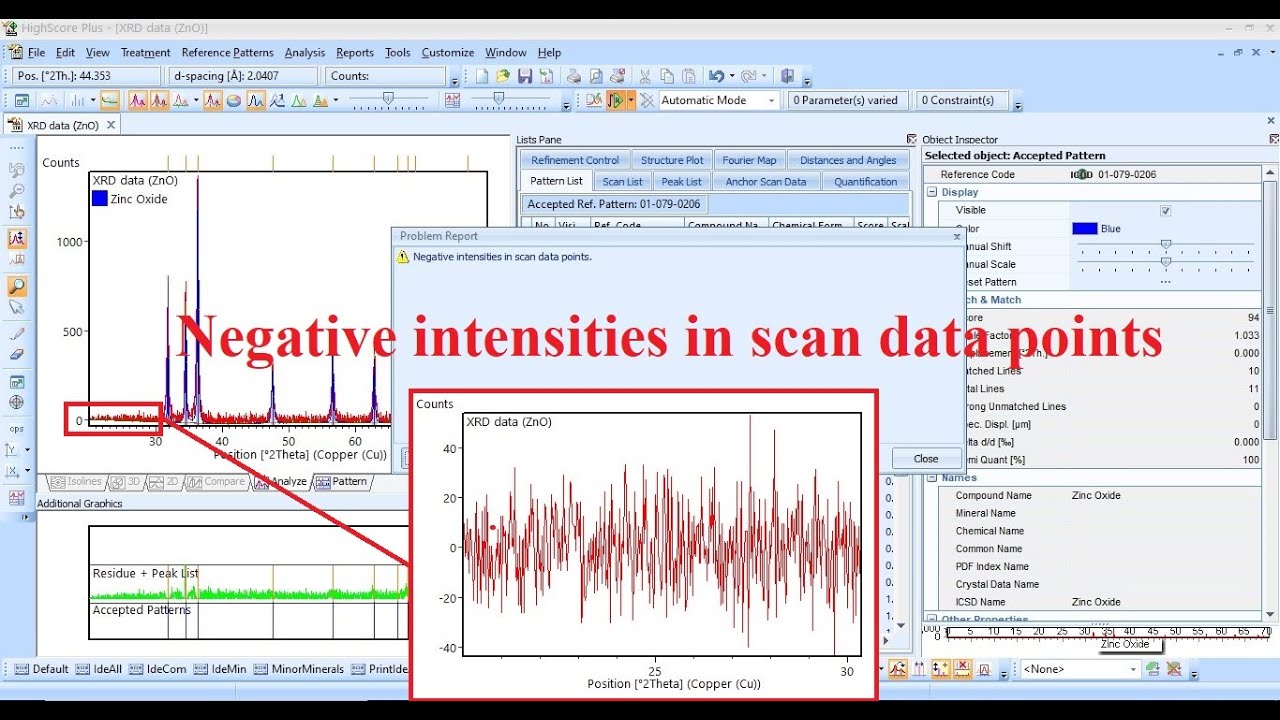
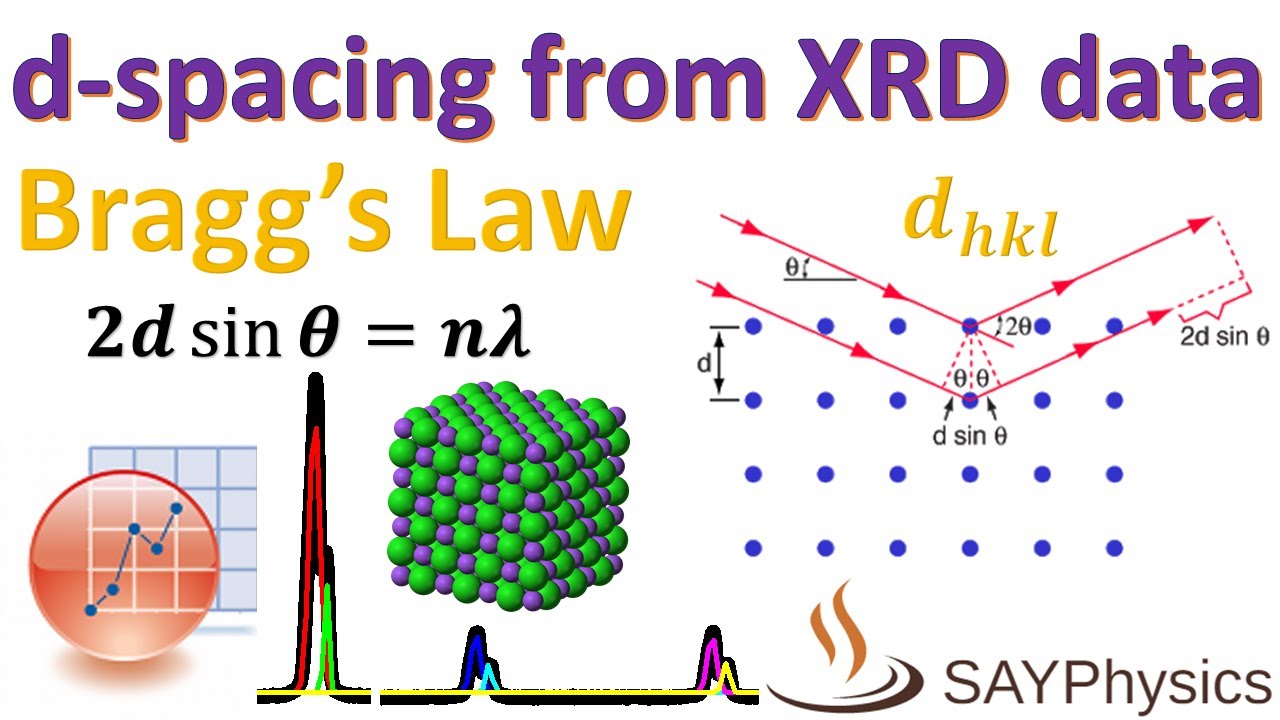
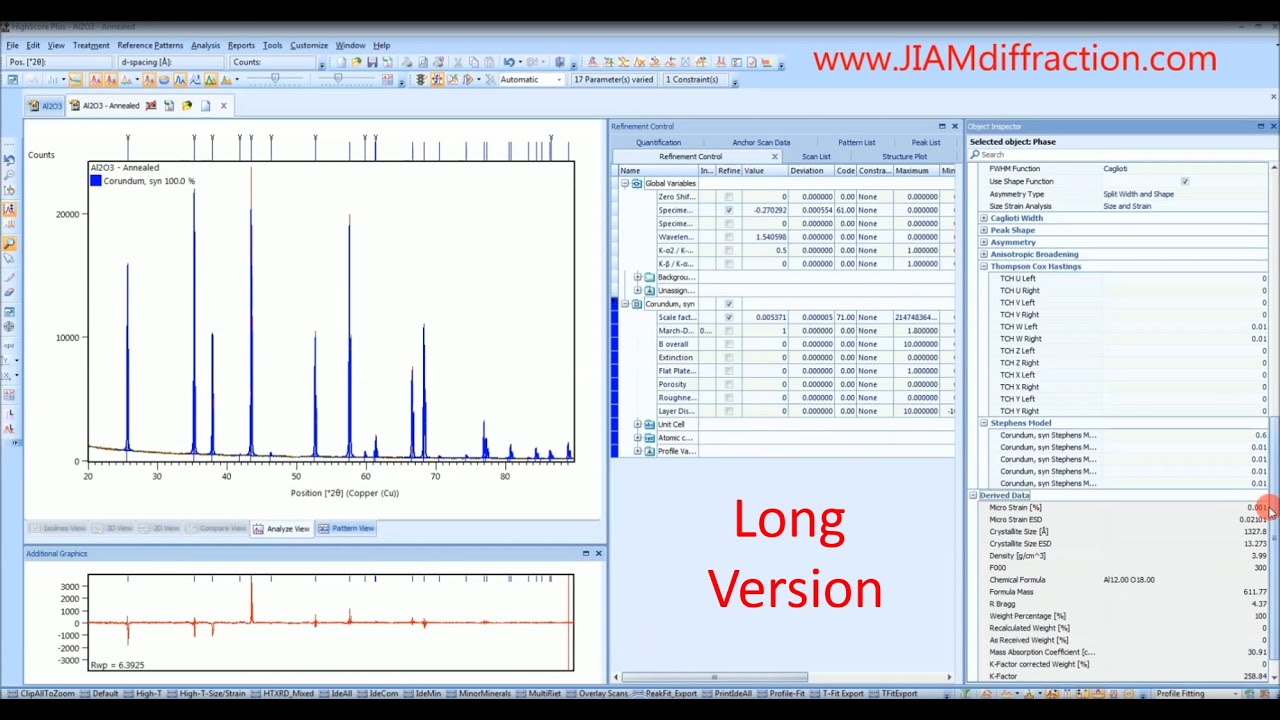
In this video tutorial, you will learn how to subtract instrumental broadening (βi) from XRD data using Origin. Instrumental broadening is a common issue in XRD data that can affect the accuracy and precision of your results. By subtracting the instrumental broadening, you can obtain more reliable data and improve the quality of your XRD analysis. In this tutorial, we will take you step-by-step through the process of subtracting the instrumental broadening using Origin, a powerful data analysis software. We will cover all the essential tools and techniques required to perform this analysis, including data manipulation, curve fitting, and data visualization. By the end of this tutorial, you will have a solid understanding of how to subtract instrumental broadening from XRD data using Origin.
"XRD data analysis", "instrumental broadening subtraction", "OriginLab tutorials", "XRD data manipulation", "curve fitting", "data visualization", "XRD analysis", "X-ray diffraction", "instrumental broadening correction", "XRD data processing", "Origin software", "data analysis techniques", "scientific data analysis", "XRD peak analysis", "XRD data interpretation", "XRD data reduction", "data analysis software", "scientific software", "scientific computing", "data analysis tools".
All XRD Video Tutorials:
1. Baseline correction for XRD and FTIR data
• Baseline correction for XRD and FTIR in or...
2. How to smooth XRD graph
• How to smooth XRD graph in origin
3. How to calculate the crystallite size from XRD data
• How to calculate crystallite size from XRD...
4. How to put negative hkl indices in XRD graph
• How to add negative hkl indices to XRD gra...
5. How to plot and match XRD data in WinXPow
• How to plot XRD data in origin - From mach...
6. How to calculate crystallinity index from XRD data
• How to calculate crystallinity index from ...
7. How to calculate d-spacing (interplanar spacing) from XRD data
• How to calculate d-spacing (interplanar sp...
8. How to calculate lattice constants from XRD data
• How to calculate d-spacing (interplanar sp...
9. How to calculate microstrain from XRD data
• How to calculate microstrain from XRD data...
10. How to calculate dislocation density from XRD data
• How to calculate dislocation density from ...
11. How to subtract instrumental broadening (Kα1 and Kα2 overlap) from XRD data
• How to subtract instrumental broadening (K...
12. How to subtract instrumental broadening (βi) from XRD data
• How to subtract instrumental broadening (β...
13. Williamson-Hall Plot | W-H Plot | Crystallite Size | Microstrain | XRD data
• How to subtract instrumental broadening (β...
14. Williamson-Hall Plot | W-H Plot | Crystallite Size | Microstrain | XRD data
• Williamson-Hall Plot | W-H Plot | Crystall...
15. Modified W-H Plots | UDM-USDM-UDEDM | Crystallite Size | Microstrain | Energy Density
• Modified W-H Plots | UDM-USDM-UDEDM | Crys...
References:
http://prism.mit.edu/xray
Article References
https://link.springer.com/article/10....
D. Balzar, N. Audebrand, M. Daymond, A. Fitch, A. Hewat, J.I. Langford, A. Le Bail, D. Louër, O. Masson, C.N. McCowan, N.C. Popa, P.W. Stephens, B. Toby, “Size-Strain Line-Broadening Analysis of the Ceria Round-Robin Sample”, Journal of Applied Crystallography 37 (2004) 911-924
•S Enzo, G Fagherazzi, A Benedetti, S Polizzi,
–“A Profile-Fitting Procedure for Analysis of Broadened X-ray Diffraction Peaks: I. Methodology,” J. Appl. Cryst. (1988) 21, 536-542.
–“A Profile-Fitting Procedure for Analysis of Broadened X-ray Diffraction Peaks. II. Application and Discussion of the Methodology” J. Appl. Cryst. (1988) 21, 543-549
•B Marinkovic, R de Avillez, A Saavedra, FCR Assunção, “A Comparison between the Warren-Averbach Method and Alternate Methods for X-Ray Diffraction Microstructure Analysis of Polycrystalline Specimens”, Materials Research 4 (2) 71-76, 2001.
•D Lou, N Audebrand, “Profile Fitting and Diffraction Line-Broadening Analysis,” Advances in X-ray Diffraction 41, 1997.
•A Leineweber, EJ Mittemeijer, “Anisotropic microstrain broadening due to compositional inhomogeneities and its parametrisation”, Z. Kristallogr. Suppl. 23 (2006) 117-122
•BR York, “New X-ray Diffraction Line Profile Function Based on Crystallite Size and Strain Distributions Determined from Mean Field Theory and Statistical Mechanics”, Advances in X-ray Diffraction 41, 1997.

Доступные форматы для скачивания:
Скачать видео mp4
-
Информация по загрузке: