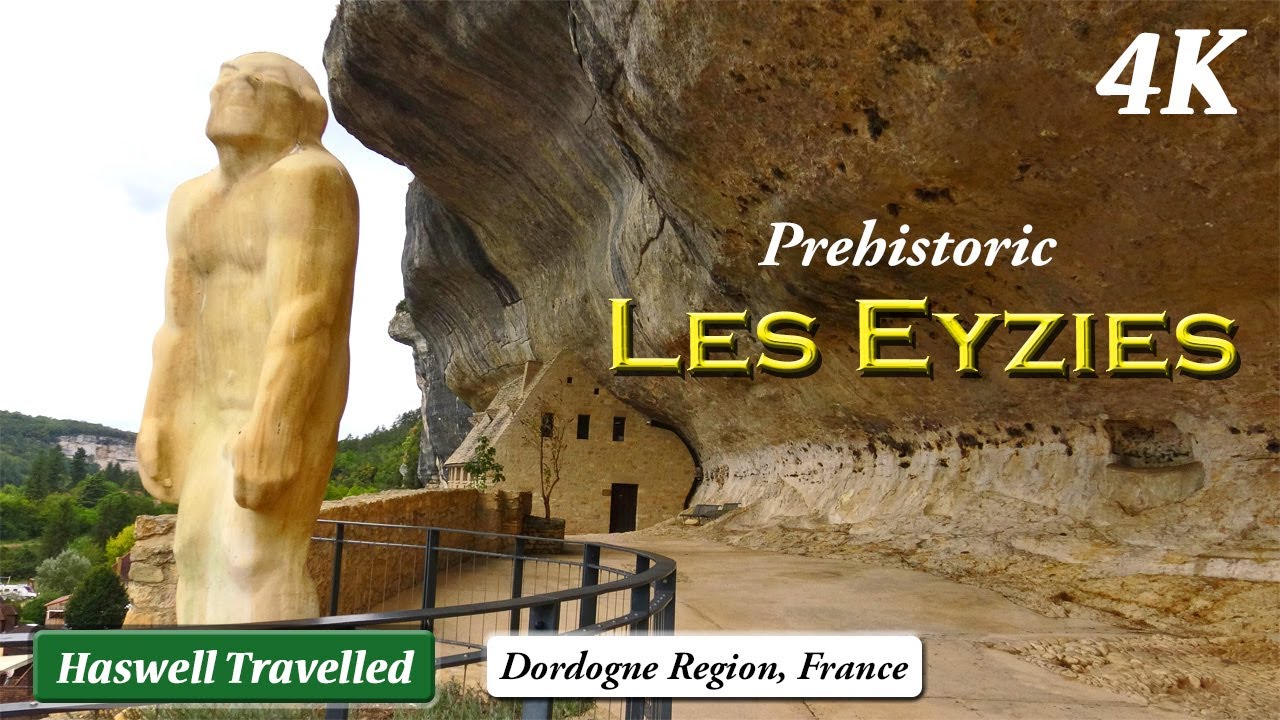
SignBase team visits Les Eyzies (Part 2)
Автор: Stone Age Signs
Загружено: 2026-01-09
Просмотров: 118
Welcome to Stone Age Signs. We are scientists investigating information encoding from the earliest signs in the Paleolithic to the modern day information age. We take you with us on our journey to museums and universities, examining the mobile artefacts in their originals to understand the signs of the stoneage.
One of the grant challenges at the museum in Les Eyzies was to even get an overview of all of the artefacts which are there in the showcases to study, and this is where Catherine Cretin, the collection manager, was extremely helpful to us. She went into the collection with us and removed the artefacts for Ewa to study one-by-one.
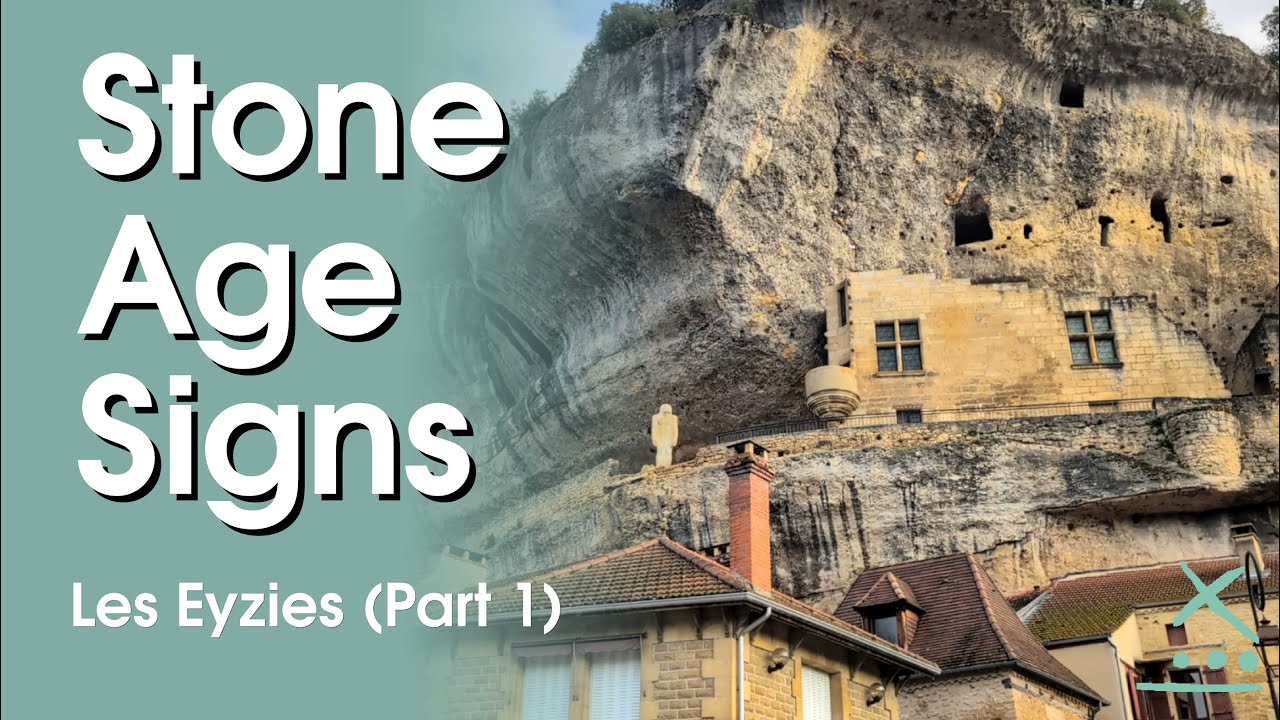
When the museum closed in the afternoon we had time to visit sites. We started with Laugerie-Basse. It is a site renown around the world. It was discovered back in 1864 by Edouard Lartet and Henry Christy. And since then in several excavations more than 500 artefacts have been found that are in the category of art, so statuettes, figurines, different kinds of tools with adornments, and these are spread to museums and collections around the world.
Laugerie-Haut, so the high Laugerie, is up the river in comparison to Laugerie-Basse, which is down the river. Here we were guided by Victor Jante, who works for the Centre des Monuments. And he is in fact a local of the area, he grew up around Les Eyzies. Laugerie-Haute has a long and complex research history, starting with the discovery, again by Edouard Lartet and Henry Christy, in 1863. So just one year before Laugerie-Basse, and since then over the course of the 20th century there were different excavations, by for instance Louis Capitan, Henri Breuil, also Otto Hauser, and later on Denis Peyrony and François Bordes. And Denis Peyrony was the first one to establish a stratigraphy which is still indicated by the historical plates.
So we hiked into the Gorge d'Enfer, literally "hells throat", where you have several sites, for instance, Abri Lartet. This was named after Edouard Lartet and Henry Christy who discovered it in the late 19th century, and here in this Abri, a bone plate was found with rows of points and notches - sometimes interpreted as a moon calendar.
Abri du Poisson is right next to it and - as Victor explained to us - the famous salmon relief in this Abri was almost removed and sold to the Museum in Berlin. This was prevented in the last minute by the local authorities.
La Madeleine is the site that gave the name to the so-called Magdalenian period, so the latest period of the Upper Paleolithic which then dovetails into the Mesolithic.
The Magdalenian is famous for its richness of cultural artefacts, which stands out from anything that has come before in the Gravettian and Aurignacian period.
The Abri is located right next to the Vezere river, at the foot of a sharp rock cliff, in fact, Laure told us that even in historical times, sometimes deer would sometimes drop of the cliff. So you can imagine how for the people of the Upper Paleolithic this was like food raining from the heavens.
In 1926, Peyrony made an exceptional find, the elaborate burial of a two to four year old child.
Authorisation de visiter les peintures du diverticule final de la Grotte de Font-de-Gaume, accordeé a Michel Egloff, signeé par Élie Peyrony.
Video details
0:00 - 0:28 Intro
0:28 - 1:15 Trailer
1:15 - 2:00 Summary Video Part 1
2:00 - 6:40 Work at Museum
6:40 - 8:20 Laugerie-Basse
8:20 - 11:40 Laugerie-Haute
11:40 - 16:10 Abri du Poisson
16:10 - 20:20 Abri de la Madeleine
20:20 - 21:25 Outro
References
The information on archaeological sites either comes from the local experts or the official publications on the sites of the Vézère by the Centre des Monuments Nationaux:
Martinez, Marc & Pinçon, Geneviève (2025). La Vallée de la Vézère. Grottes ornées, abris et sites préhistoriques. Paris: Éditions du patrimoine.
The photo of the salmon relief is taken from the official website of the Centre des Monuments Nationaux. Copyright: Philippe Berthé / Centre des monuments nationaux
Project Description
Spoken language does not fossilize. However, our ancestors have carved visual signs into the surfaces of mobile artefacts and cave walls since several hundred thousand years. Starting with the Lower Paleolithic of around 400 000 years ago to the Late Upper Paleolithic of around 15 000 years ago mobile artefacts with intentional signs such as indeces, icons, and symbols have become more and more abundant. The SignBase team visits museums for first hand analyses of these finds. These digitization efforts aim to enhance our understanding of visual information encoding before the advent of genuine writing.
Further Links:
https://www.signbase.org/
https://www.erc-evine.de/
https://musee-prehistoire-eyzies.fr/
https://www.monuments-nationaux.fr/
https://www.sites-les-eyzies.fr/decou...
Science Vlog
#archaeology #science #language

Доступные форматы для скачивания:
Скачать видео mp4
-
Информация по загрузке: