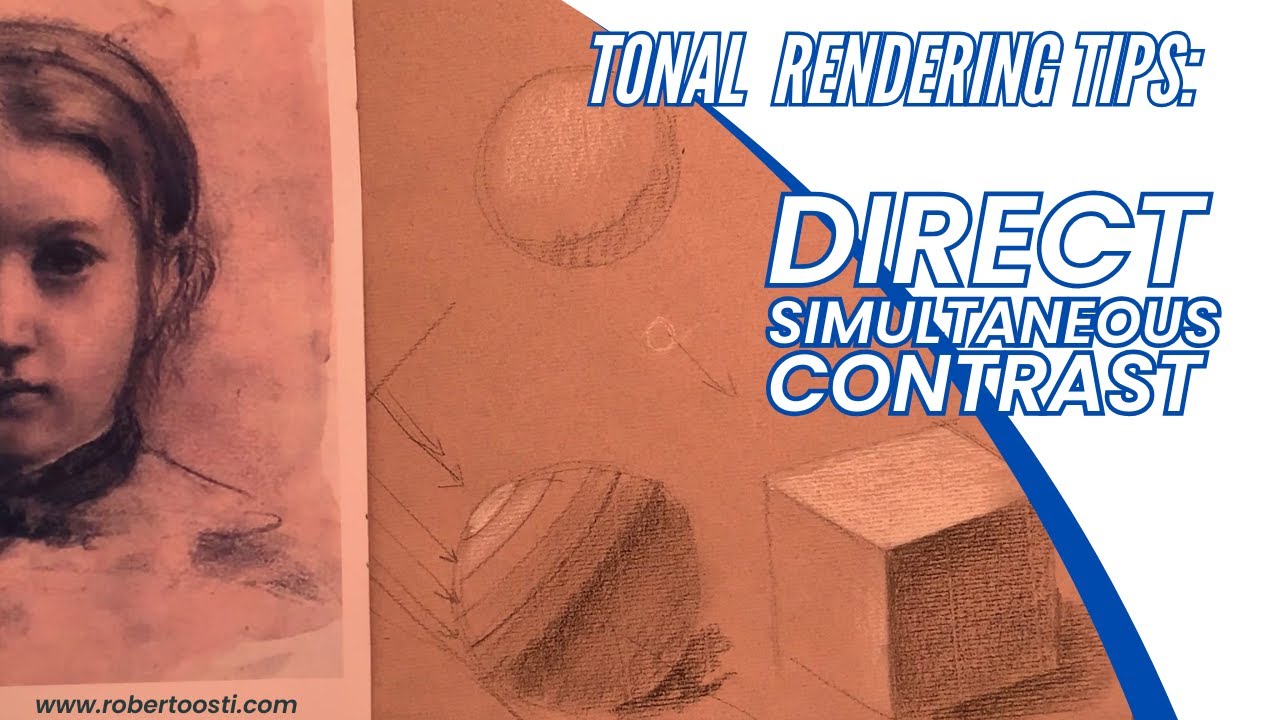
Tonal rendering tips: direct simultaneous contrast
Автор: Roberto Osti
Загружено: 2023-12-17
Просмотров: 527
In this video, Roberto Osti demonstrates how to create a tonal rendering of a sphere and a cube. He starts by drawing the outline of the sphere and the cube, and then blocks in the shadows and highlights. He then uses a variety of techniques to create a smooth transition between the light and dark areas. He also discusses the concept of direct simultaneous contrast, which is the way that the perceived brightness of an area is affected by the brightness of the areas around it. Finally, he demonstrates how to create the illusion of reflected light on the sphere and the cube.
00:00 Introduction
00:45 Drawing the Sphere and Cube
02:15 Blocking in the Shadows and Highlights
04:00 Creating Smooth Transitions
06:00Direct Simultaneous Contrast
08:00 Creating the Illusion of Reflected Light
10:00 Conclusion
Tonal rendering tips:direct simultaneous contrast”, demo from my new Renaissance atelier course “Portrait Drawing Foundation Intensive"
https://robertoosti.com/course/portra...
This course is specifically designed to give the students interested in portraiture, a solid foundation on the subject and practice a variety of techniques.
In these three hours sessions, online course, we will, create artworks working from photos of models and casts or sculpture and, both male and female, creating a number of portraits in a variety of dry media and techniques essential for portraiture such as: graphite, charcoal, Conte crayons, reduction technique. The students will also be encouraged to work from life preparing self-portraits or portraits of family and friends as homework assignment, continuing practicing the techniques studied in class and further develop technical skills.
The techniques we will practice during these 4 weekly sessions, each lasting 3:00 hours, include those that are traditionally used for portraiture to obtain a good level of realism and detail but also quick preliminary sketches to study subject and composition, utilizing also modern approaches and materials such as markers, ballpoint pen and so on.
In addition to the techniques mentioned above, we will study the fundamentals of structure and anatomy of the head, measuring techniques, tonal rendering, effects of light on form, correct positioning of the facial features and their structural characteristics. A variety of drawing materials will also be discussed and used.
Доступные форматы для скачивания:
Скачать видео mp4
-
Информация по загрузке:


