Life lessons from Thus Spoke Zarathustra by Friedrich Nietzsche
Автор: Lexicon Vitae
Загружено: 2024-09-16
Просмотров: 1600
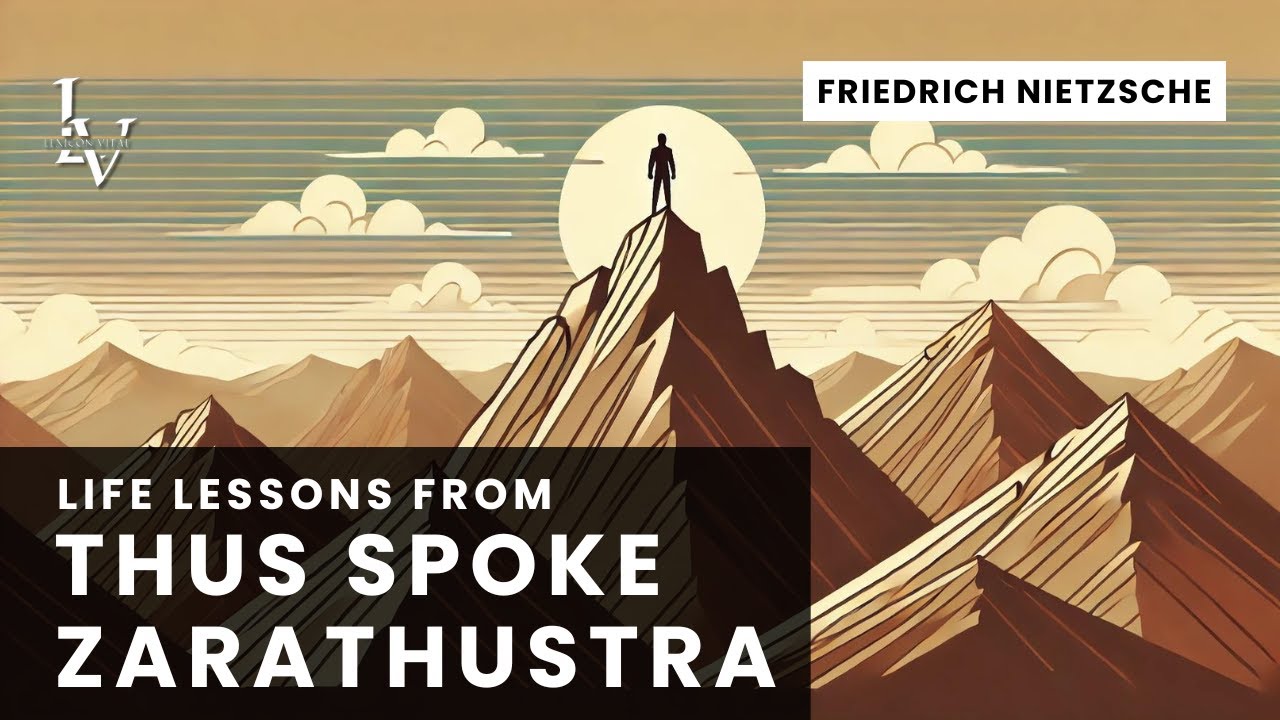
"Thus Spoke Zarathustra" is a philosophical novel by Friedrich Nietzsche, written between 1883 and 1885. It centers around the character Zarathustra, a prophet who descends from his mountain retreat to share his wisdom with humanity. Zarathustra preaches the coming of the Übermensch (Overman or Superman), a higher state of human existence that transcends traditional morality and embraces life’s struggles and uncertainties. This Overman embodies self-overcoming, creativity, and independence from societal norms.
Zarathustra criticizes religion, particularly Christianity, for promoting ideals like meekness, humility, and submission. He argues that these values prevent individuals from reaching their full potential. Instead, Zarathustra calls for a "revaluation of all values," where individuals reject inherited morality and create their own values based on personal experience and self-determination. He emphasizes the importance of embracing suffering and conflict as necessary for growth and self-realization.
The novel also explores Nietzsche’s idea of eternal recurrence, the belief that every event in life will repeat infinitely. Zarathustra grapples with this idea, urging humanity to live in such a way that they would embrace living the same life repeatedly, suggesting a life of purpose and fulfillment. This cyclical view of existence challenges the reader to think deeply about their choices and the meaning they derive from life.
Throughout the book, Nietzsche uses Zarathustra as a mouthpiece to present his critique of traditional metaphysical and moral beliefs, particularly the dualistic view of good and evil. Zarathustra teaches that humans must go beyond these dichotomies and learn to embrace life in its entirety, both its joys and its sorrows. This requires rejecting the pursuit of a distant, otherworldly ideal, and instead focusing on affirming life as it is.
In the end, Zarathustra concludes that to become the Overman, one must engage in constant self-overcoming. This process requires independence, courage, and the will to embrace one's own unique path in life, free from societal expectations or religious dictates. Zarathustra’s message is ultimately one of empowerment, urging individuals to take control of their destiny and create meaning in an indifferent universe.
Life Lessons from "Thus Spoke Zarathustra":
Self-Overcoming is Essential
Nietzsche emphasizes the importance of constantly improving oneself and striving to overcome limitations. Growth and progress come through struggle, and true greatness lies in transcending both external constraints and personal weaknesses.
Create Your Own Values
Nietzsche encourages people to reject the values imposed by society, religion, or tradition. Instead, individuals should forge their own path and develop a personal code of ethics that reflects their true nature and aspirations.
Embrace Suffering and Difficulty
Life is full of challenges, and Nietzsche suggests that instead of avoiding pain, one should embrace it as a catalyst for growth. Suffering leads to wisdom and strength, and is an inevitable part of the journey toward becoming a stronger, more authentic person.
Live Life Fully in the Present
The concept of eternal recurrence asks individuals to live as if every moment will repeat endlessly. This calls for a life lived with purpose, intention, and joy, with an emphasis on fully engaging with the present instead of deferring happiness to the future.
Reject Conventional Morality
Nietzsche challenges the reader to question the conventional distinctions between good and evil. True freedom comes from rejecting dogma and societal expectations, and from creating one’s own moral framework based on personal experience, intuition, and a deep love for life itself.
Доступные форматы для скачивания:
Скачать видео mp4
-
Информация по загрузке: