Carbon Dots as Novel Cargo for Drug Delivery in Modern Medical Healthcare
Автор: Advanced Materials Congress Lectures
Загружено: 2021-05-02
Просмотров: 884
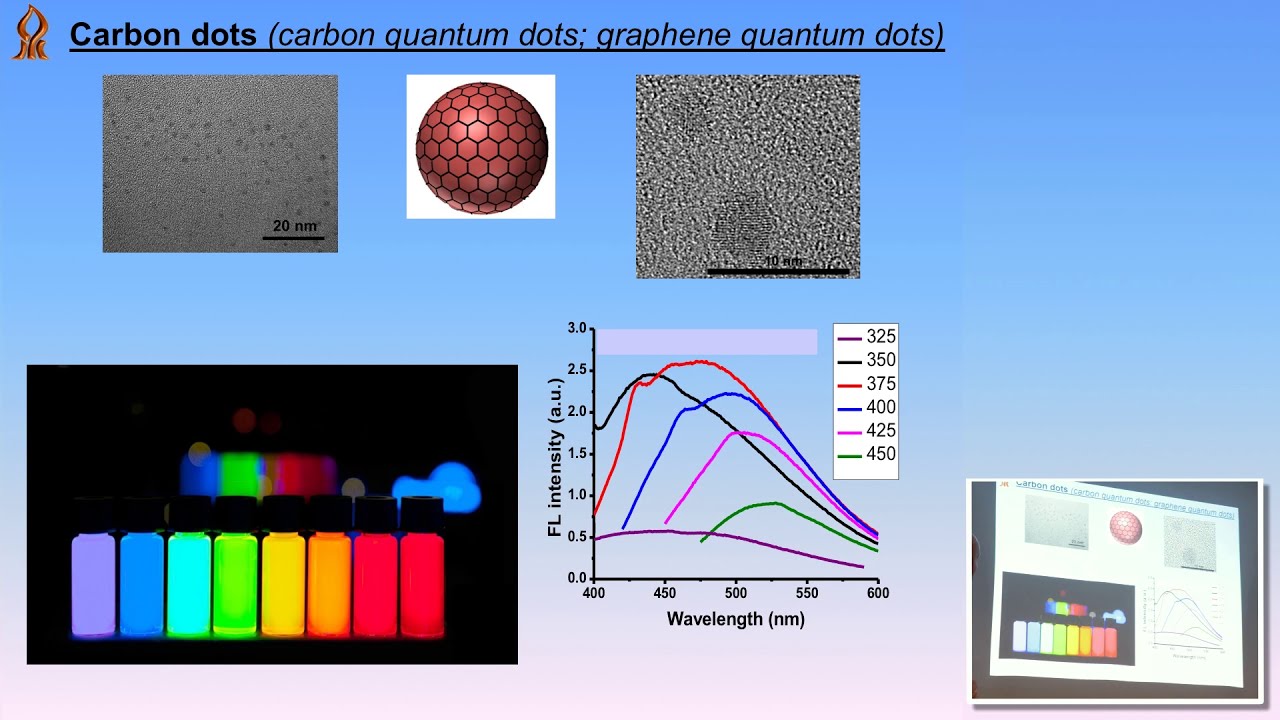
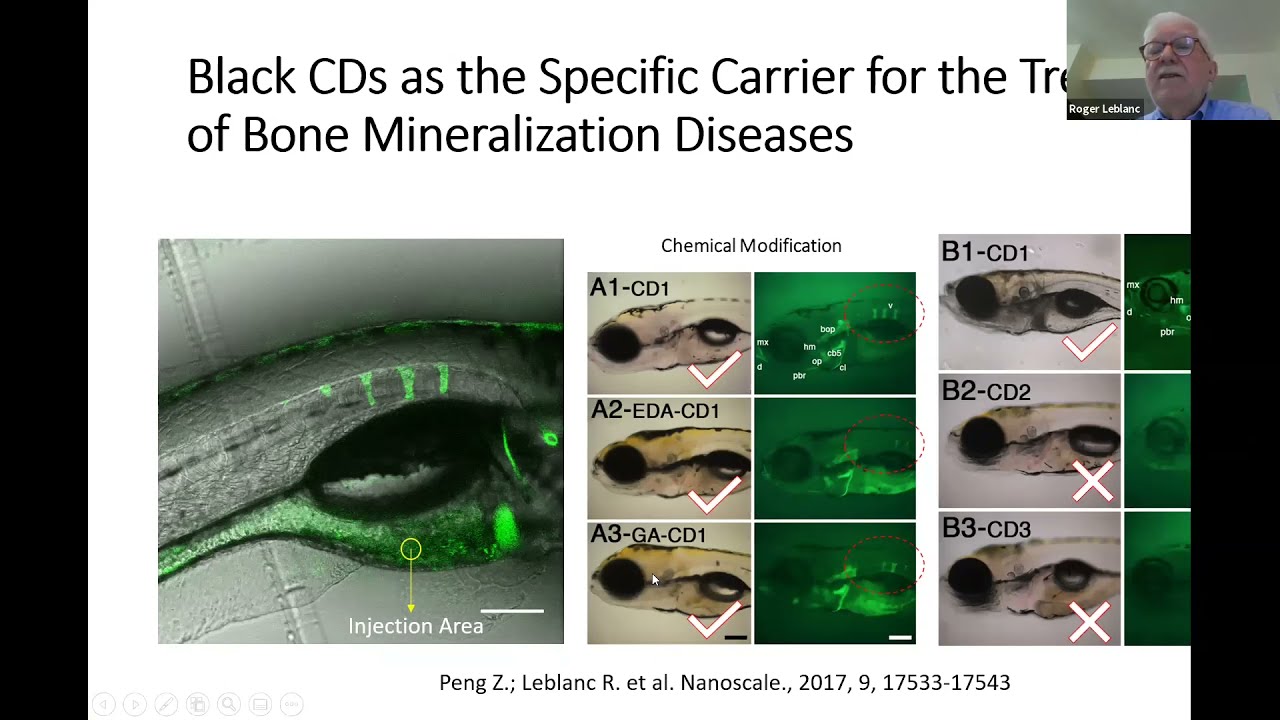
Abstract: Carbon dots (CDs) with size less than 10 nm have recently triggered great attention in the research of material science and biomedical engineering due to their unique properties such as small size, excellent photoluminescence (PL), high water-dispersity, biocompatibility, nontoxicity and abundant surface functionalities.1 They have been widely explored for applications in printing, photocatalysis, bioimaging, sensing, drug delivery, and nanomedicine.2, 3 In this presentation, I will discuss about the diverse preparations and characterizations of different types of CDs. These CDs were prepared from either “top-down” or “bottom-up” strategies and rigorously characterized by spectroscopies (UV/vis, fluorescence, FTIR and XPS), microscopies (AFM and TEM) and other commonly used techniques such as mass spectroscopy, TGA and zeta potential. I will also discuss about various applications of the CDs developed in our lab. (1), a major medical challenge one faces to treat central nervous system (CNS) related diseases is to cross the blood-brain barrier (BBB). Recently, in vivo experimental observations suggested that plenty of CDs developed in our group could cross the BBB to enter the CNS of zebrafish and rats with different mechanisms; (2), thanks to the abundant carboxyl groups on the surface, CDs prepared with carbon nanopowder could be conjugated with transferrin and two anticancer drugs to construct a triple-conjugated drug delivery system. The system showed a synergistic effect on the treatment of glioblastoma brain tumor; (3), our study has shown that CDs prepared with carbon nanopowder bind to calcified bone structures of live zebrafish larvae with high affinity and selectively. Furthermore, we have observed this property is unique to the CDs developed from carbon nanopowder and other CDs preparations did not show any interaction with the bone. These observations support a novel and revolutionary use of CDs as highly specific drug delivery carrier; (4), CDs have constantly shown the capability to inhibit beta-amyloid (Aβ) secretion and fibrillation, which exhibits a great potential of CDs as an effective nanomedicine and drug nanocarrier to treat Alzheimer’s disease (AD); (5), a pilot study showed a versatile nanocarrier could be assembled via the direct conjugation between distinct CDs to fulfil multitasks.
Keywords: Carbon Dots; Drug Delivery; Spectroscopy; Microscopy; Zebrafish.
Citation of Video Article
Vid. Proc. Adv. Mater., Volume 2, Article ID 2021-02112 (2021)
DOI: 10.5185/vpoam.2021.02112
Full Video Article: https://www.proceedings.iaamonline.or...
Доступные форматы для скачивания:
Скачать видео mp4
-
Информация по загрузке: