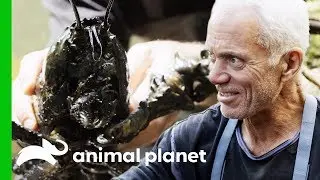
Australian Lobsters Fighting For Survival in Tasmanian Rivers
Автор: Stories Lived
Загружено: 2017-02-01
Просмотров: 38739
http://www.storieslived.com/ The giant Tasmanian freshwater lobster looks tough but it needs protection. The Wilderness Society needs your help.
Written directed and produced by Mark Pearce
Executive producers Warrick Jordan and Maritza Schafer
Production manager Tom Claxton
Production Coordinators Elspeth Mcintosh and Liz Johnstone
Featuring Todd Walsh
Also featuring Giant Tasmanian Freshwater Lobsters
Cinematographers Nick Hayward and Joe Shemesh
Camera Assist and production stills Fraser Johnston
Edited by Mark Pearce
Special thanks Wildiaries and Rianrex
Post sound Michael Slater
"The Limits of Rationality" by Stephen Root and Ian Livingstone
"Brave one" by Magnum Opus
Copyright Balangara Films 2016
This is the largest freshwater invertebrate on the planet. The giant tasmanian freshwater lobster is only found in the northeast and northwest of Tassie, and that it's it, it's just that small coastal strip extending along there to Bastripe. So even in Tasmanian they
are only found in probably 15% of the state.
If you're protecting lobsters you're protecting the whole creek and then the right perion zone for 30 40 50 meters either side of the creek the whole thing comes into play.
I grew up catching lobsters as a young Tasmanian boy. I went and worked the mainland for 15 years in aquaculture. I've got the background to understand how the ecological system works and just a general feel for the bush.
That's madness for people to think you want to stop everything, well no I don't. You just want to have a decent bit of bush there mate. You don't have to be a rapid greeny to say well I think I'd like to see this river in good condition in 100 years.
At the moment we're on the brink of making a choice. We can either keep creating all these headwaters and basically having a hybrid system in Tazzie where lobsters are that are for sentiment or we can stop and have some river systems that are going to be sentiment free and look like they're supposed to look before European settlement. Nowadays we've got most of the low land stuff done so they are heading into the headwater systems which is up in the hills abit. The problem with that is as the sentiment gets into the head waters and runs downstream, and it doesn't matter what you're doing downstream if you're stuffing upstream, you're stuffing the whole river system. And that's what's happened, sentiment is by far and away the biggest killer of these animals. I'm not saying they're not and shouldn't be listed as vulnerable, but they should, they've been decimated. In a small creek on a hot day with no shallow the water hits 25 and the lobsters die. The canopy supplies the food the shelter and the shade. Everything comes from the bush. What I do nowadays is more just the tagging and researching of populations just to see how they're traveling. He's right about 1.7 kilo
he's got these scars from fighting, here's a nice scar there where he's had his antennae taken off, so he's been
quite an active boy. For me it's just walking through the main ford to get to these beautiful rivers in the middle of nowhere
with clean water and clear rocky bottoms. Big myrtles, big black woods, all over the place is shade. You've got these
fantastic animals living in them. They're a great part of the world. Why shouldn't we look after it?
We can look at our world but it's got to be balanced. If a head water goes, that's it. You cannot put the whole thing back
and make a river, and I'll say three quarters of the river systems in the north of the state have got sentiment issues.
The ones that are left are slowly dwindling and if we start trashing those waters there is no coming back from that.
It'll just be another ditch. If that's what people want, that's fine. It's up to them but if we don't make the choice
now we're gone. Our systems are stuffed.

Доступные форматы для скачивания:
Скачать видео mp4
-
Информация по загрузке: