Microbiology 53 = Sterilization (Part-01) | Sterilization Process for Microorganism Methods & Types
Автор: Solution- Pharmacy
Загружено: 2021-06-14
Просмотров: 32157
Download "Solution Pharmacy" Mobile App to Get All Uploaded Notes, Model Question Papers, Answer Papers, Online Test and other GPAT Materials - https://play.google.com/store/apps/de...
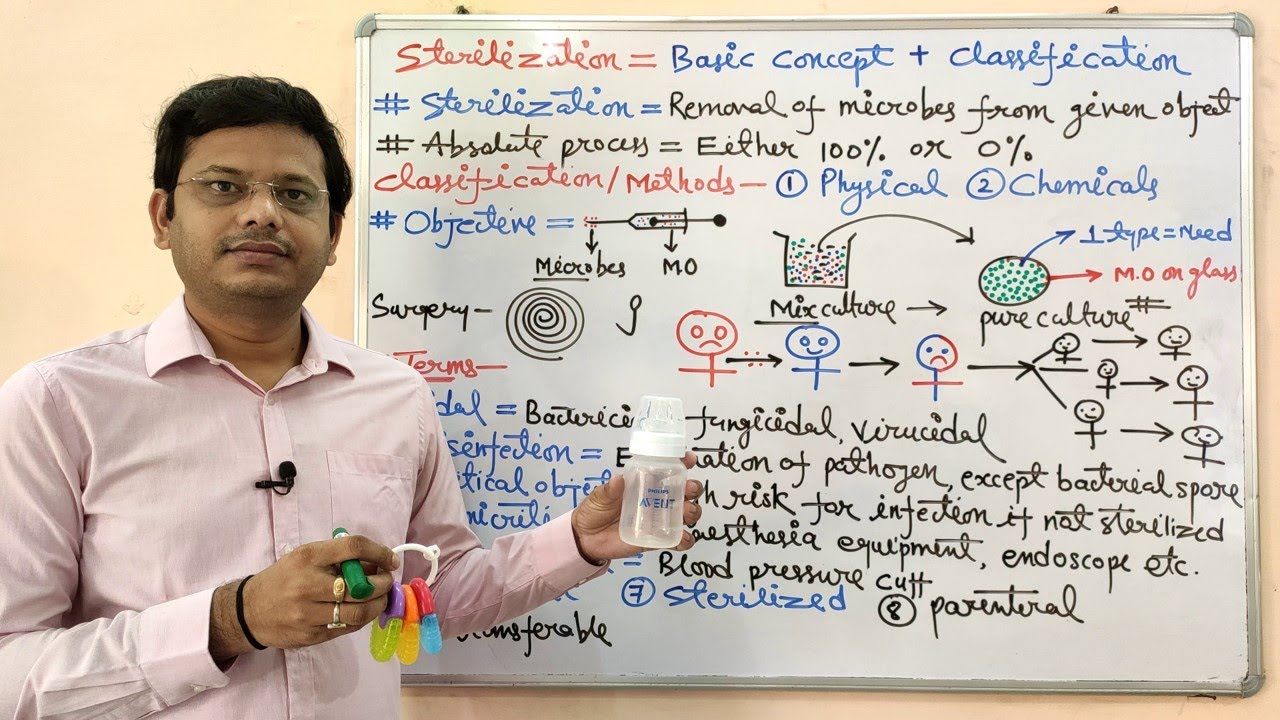
Sterilization refers to any process that removes, kills, or deactivates all forms of life (in particular referring to microorganisms such as fungi, bacteria, spores, unicellular eukaryotic organisms such as Plasmodium, etc.) and other biological agents like prions present in a specific surface, object or fluid, for example, food or biological culture media
Sterilization can be achieved through various means, including heat, chemicals, irradiation, high pressure, and filtration. Sterilization is distinct from disinfection, sanitization, and pasteurization, in that those methods reduce rather than eliminate all forms of life and biological agents present. After sterilization, an object is referred to as being sterile or aseptic.
Sterilization can be achieved by a combination of heat, chemicals, irradiation, high pressure, and filtration like steam under pressure, dry heat, ultraviolet radiation, gas vapor sterilants, chlorine dioxide gas, etc. Effective sterilization techniques are essential for working in a lab and negligence of this could lead to severe consequences, it could even cost a life.
Heat Method: This is the most common method of sterilization. The heat is used to kill the microbes in the substance. The extent of sterilization is affected by the temperature of the heat and the duration of heating. On the basis of the type of heat used, heat methods are categorized into-
(i) Wet Heat/Steam Sterilization- In most labs, this is a widely used method that is done in autoclaves. Autoclaves use steam heated to 121–134 °C under pressure. This is a very effective method that kills/deactivates all microbes, bacterial spores, and viruses. Autoclaving kills microbes by hydrolysis and coagulation of cellular proteins, which is efficiently achieved by intense heat in the presence of water. The intense heat comes from the steam. Pressurized steam has high latent heat and at 100°C it holds 7 times more heat than water at the same temperature. In general, Autoclaves can be compared with a typical pressure cooker used for cooking except in the trait that almost all the air is removed from the autoclave before the heating process starts. Wet heat sterilization techniques also include boiling and pasteurization.
(ii) Dry heat sterilization- In this method, specimens containing bacteria are exposed to high temperatures either by flaming, incineration or a hot air oven. Flaming is used for metallic devices like needles, scalpels, scissors, etc. Incineration is used especially for inoculating loops used in microbe cultures. The metallic end of the loop is heated to red hot on the flame. The hot air oven is suitable for dry materials like powders, some metal devices, glassware, etc.
(3) Filtration is the quickest way to sterilize solutions without heating. This method involves filtering with a pore size that is too small for microbes to pass through. Generally filters with a pore diameter of 0.2 um are used for the removal of bacteria. Membrane filters are more commonly used filters over sintered or Seitz or candle filters. It may be noted that viruses and phage are much smaller than bacteria, so the filtration method is not applicable if these are the prime concern.
(4) Radiation sterilization: This method involves exposing the packed materials to radiation (UV, X-rays, gamma rays) for sterilization. The main difference between different radiation types is their penetration and hence their effectiveness. UV rays have low penetration and thus are less effective, but it is relatively safe and can be used for small area sterilization. X-rays and gamma rays have far more penetrating power and thus are more effective for sterilization on a large scale. It is, however, more dangerous and thus needs special attention. UV irradiation is routinely used to sterilize the interiors of biological safety cabinets between uses. X-rays are used for sterilizing large packages and pallet loads of medical devices. Gamma radiation is commonly used for the sterilization of disposable medical equipment, such as syringes, needles, cannulas and IV sets, and food.
(5) Chemical method of sterilization: Heating provides a reliable way to get rid of all microbes, but it is not always appropriate as it can damage the material to be sterilized.
Доступные форматы для скачивания:
Скачать видео mp4
-
Информация по загрузке: