Why Old American Bridges Lasted 100+ Years While Modern Ones Collapse Early
Автор: ProjectArchives
Загружено: 2025-12-01
Просмотров: 2
Why Old American Bridges Lasted 100+ Years While Modern Ones Collapse Early
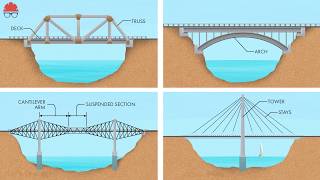
This video tells the overlooked story of America’s early bridges, the stone arches, riveted steel trusses, and heavy industrial spans built from the late 1800s through the early 1900s that routinely survived a century or more of weather, traffic, and natural disasters — while many modern bridges fail within decades. The episode will cover why early engineers insisted on thick steel members, multi-layer riveted joints, and massive safety margins, how bridge builders of the era relied on slow, labor-intensive craftsmanship, and why the construction standards of the time prioritized long-term durability over speed and cost-cutting.
The video then explores how these bridges performed once they entered service — the stone arches that have stood firm for more than 120 years, the steel truss bridges that resisted rust and fatigue thanks to overbuilt components, and the riveted connections that distributed stress far more effectively than modern welded joints. We’ll highlight real examples of 19th- and early 20th-century bridges still carrying traffic today, contrast them with modern spans that crack, corrode, or collapse early, and explore the engineering decisions that made older structures so resilient.
The video ends by examining the long-term legacy of America’s early bridge builders, why their methods continue to outperform many contemporary designs, and how old-world craftsmanship created infrastructure far stronger than what most modern budgets allow. Ultimately, these bridges proved that heavy materials, careful design, and massive safety factors could produce structures capable of outlasting entire generations — while newer ones struggle just to survive.
Like & Subscribe

Доступные форматы для скачивания:
Скачать видео mp4
-
Информация по загрузке: