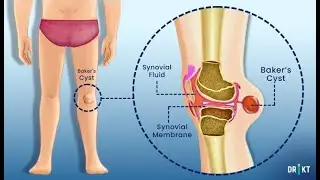
pigmented villonodular synovitis; synovial lining of a joint overgrows, forming a tumor‑like mass
Автор: Abuja Orthopedics
Загружено: 2026-01-14
Просмотров: 3
Pigmented villonodular synovitis (PVNS) is a rare, benign but locally aggressive condition where the synovial lining of joints or tendon sheaths overgrows, forming nodular or villous masses. It most often affects the knee joint, causes pain, swelling, and stiffness, and can lead to bone erosion and arthritis if untreated.
🔍 What is PVNS?
Definition: PVNS is a proliferative disorder of the synovium (joint lining).
Nature: Not cancerous, but progressive and destructive if untreated.
Typical Site: Knee (most common), but can also affect hip, ankle, shoulder, or elbow.
Forms:
Localized PVNS: Affects a small area of synovium.
Diffuse PVNS: Involves the entire synovial lining, more aggressive.
⚕️ Pathology & Features
Synovial thickening with villous (finger-like) and nodular projections.
Pigmentation: Hemosiderin deposition gives the tissue a brownish color.
Microscopy: Multinucleated giant cells, foam cells, and hemosiderin-laden macrophages.
🩺 Clinical Presentation
Symptoms:
Joint pain and swelling
Stiffness and reduced range of motion
Recurrent effusions (often blood-stained)
Progression: Can erode adjacent bone → arthritis.
📊 Diagnosis
Clinical suspicion: Chronic painful swelling in a single joint (often knee).
Imaging:
MRI: Shows synovial thickening with villous/nodular projections, low signal on T1 due to hemosiderin.
X-ray: May show bone erosions in advanced cases.
Arthrocentesis: Brown fluid due to hemosiderin.
Biopsy: Confirms diagnosis.
✅ Management
Surgical synovectomy:
Localized → arthroscopic removal.
Diffuse → open or combined synovectomy.
Radiotherapy: Sometimes used as adjunct for diffuse/recurrent PVNS.
Targeted therapy: Newer biologics (CSF1 receptor inhibitors) are being explored.
⚠️ Prognosis & Complications
#synovialfluid

Доступные форматы для скачивания:
Скачать видео mp4
-
Информация по загрузке: