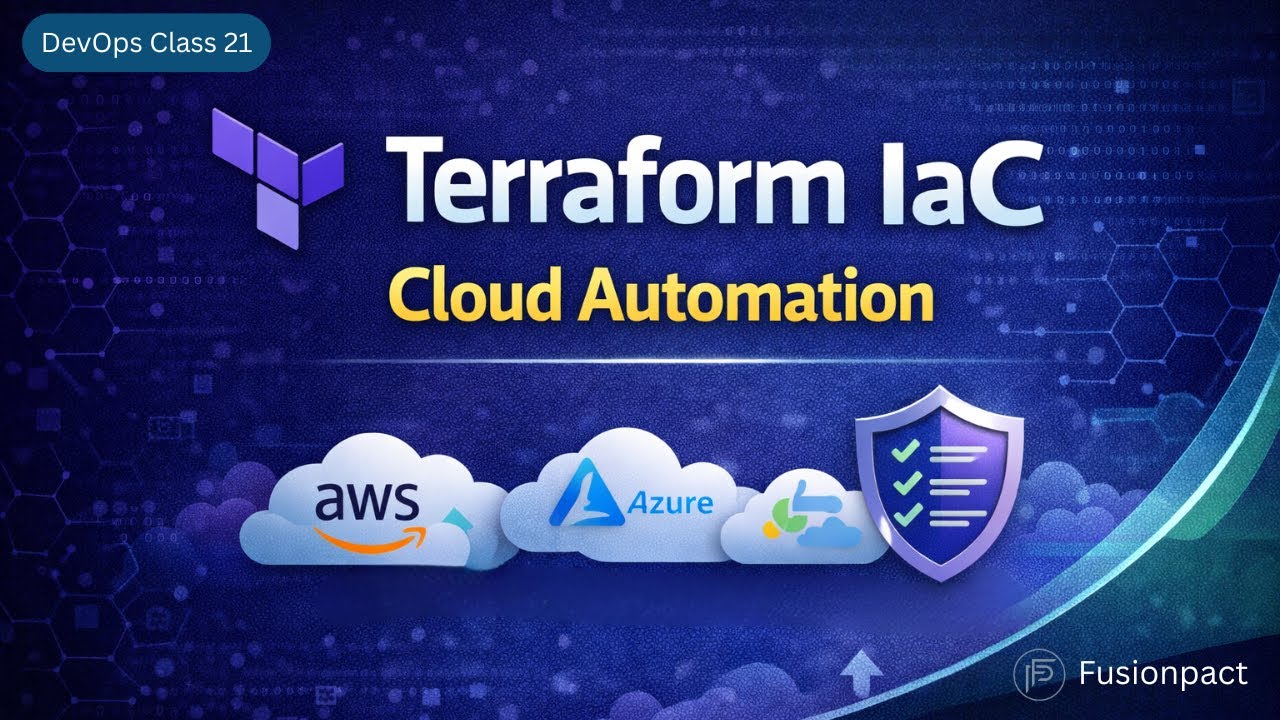
Terraform Explained | Infrastructure as Code (IaC) Tutorial | DevOps Class 21
Автор: Fusionpact
Загружено: 2026-01-08
Просмотров: 6
Welcome to FusionPact DevOps Daily Classes – Class 21 🚀
In this session, we explain Terraform, one of the most powerful Infrastructure as Code (IaC) tools used by DevOps teams to automate cloud infrastructure across AWS, Azure, and Google Cloud.
Terraform allows you to define infrastructure using simple .tf files, version-control it using Git, and deploy scalable, consistent cloud resources with minimal effort.
📌 What You’ll Learn in DevOps Class 21
What is Terraform and why it is used
Infrastructure as Code (IaC) explained in simple terms
Why Terraform is cloud-agnostic
Terraform providers, resources, and state files
Terraform workflow: init, plan, apply, destroy
Local vs remote state management
Using variables, outputs, and modules
Real-world DevOps use cases with Terraform
How Terraform prevents duplicate infrastructure
Scaling infrastructure safely using code
⚙️ What is Terraform?
Terraform is an open-source Infrastructure as Code (IaC) tool that allows DevOps engineers to define cloud infrastructure using code and deploy it automatically.
Instead of manually creating servers, networks, and security rules, Terraform lets you describe what infrastructure you want, and it takes care of creating it across multiple cloud platforms.
🌍 Why Terraform is Popular
Cloud-agnostic (AWS, Azure, GCP supported)
Declarative syntax (simple & readable)
Version-controlled infrastructure
Prevents duplicate resource creation
Scalable and reusable infrastructure
Faster provisioning with fewer errors
🧱 Core Components of Terraform
1️⃣ Providers
Used to connect Terraform with cloud platforms like:
AWS
Azure
Google Cloud
2️⃣ Resources
Actual infrastructure objects such as:
EC2 instances
VPCs
Security Groups
Virtual Machines
3️⃣ State File
Tracks infrastructure history and prevents duplication.
4️⃣ Terraform CLI
Commands used to manage infrastructure:
terraform init
terraform plan
terraform apply
terraform destroy
5️⃣ Variables & Outputs
Variables help create reusable infrastructure
Outputs display information like IP addresses
6️⃣ Modules
Reusable templates to deploy infrastructure at scale.
🔄 Terraform Workflow Explained
Write infrastructure code in .tf files
Run terraform to initialize providers
Run terraform plan to preview changes
Run terraform apply to create infrastructure
Use terraform destroy to clean up resources
📦 State Management
Local State: Stored on local machine
Remote State: Stored in S3 for collaboration
State locking prevents multiple users from creating conflicts
🚀 Key Benefits of Terraform
Faster infrastructure provisioning
Reduced human errors
Consistent environments
Easy scaling by editing code
Supports CI/CD pipelines
Ideal for modern DevOps workflows
🎯 Final Takeaway
Terraform empowers DevOps teams to build, manage, and scale infrastructure using code, ensuring reliability, repeatability, and speed across cloud environments.
🔔 Subscribe to Fusionpact for Daily DevOps Classes
📘 Learn real-world DevOps concepts step-by-step
🌐 Fusionpact
Skills • Trust • Impact
Доступные форматы для скачивания:
Скачать видео mp4
-
Информация по загрузке:





![Как устроен эскалатор? [Veritasium]](https://image.4k-video.ru/id-video/MIlDmkGn4Qc)


