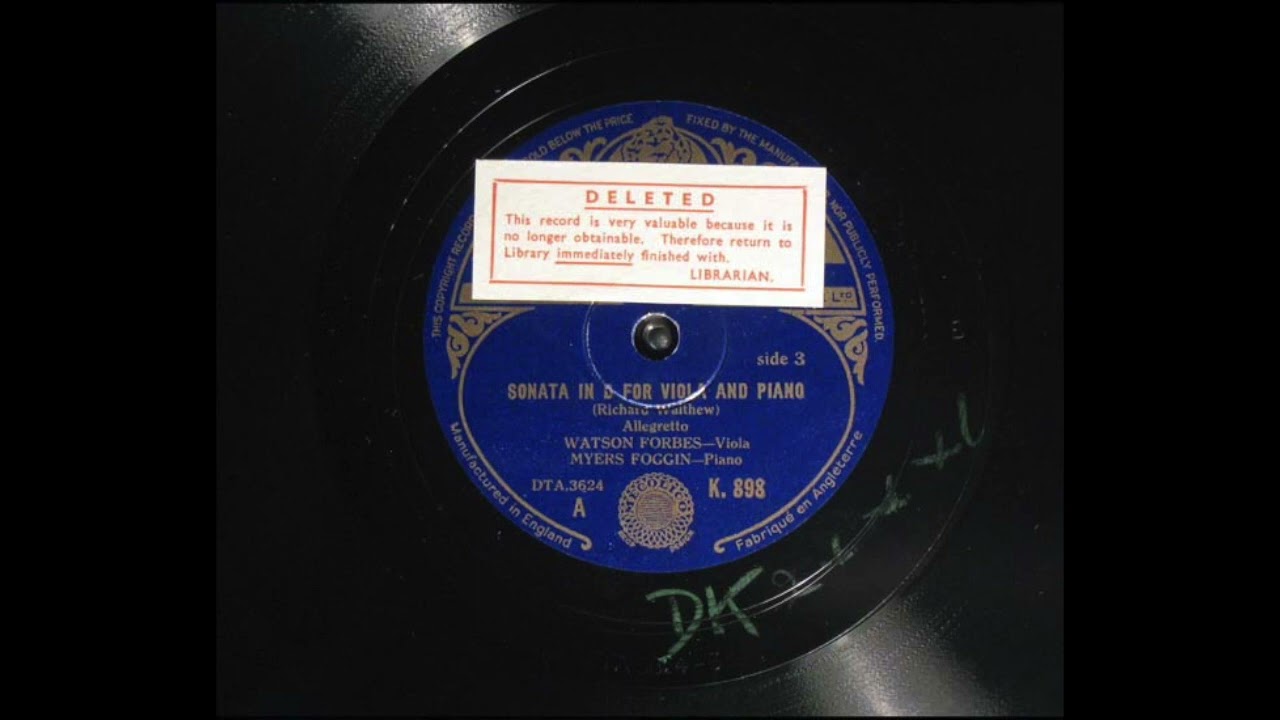
Frederick Grinke & Watson Forbes play Bach: 4 Duets (BWV 802-805) arr Ferdinand David
Автор: operahip
Загружено: 2022-01-20
Просмотров: 478
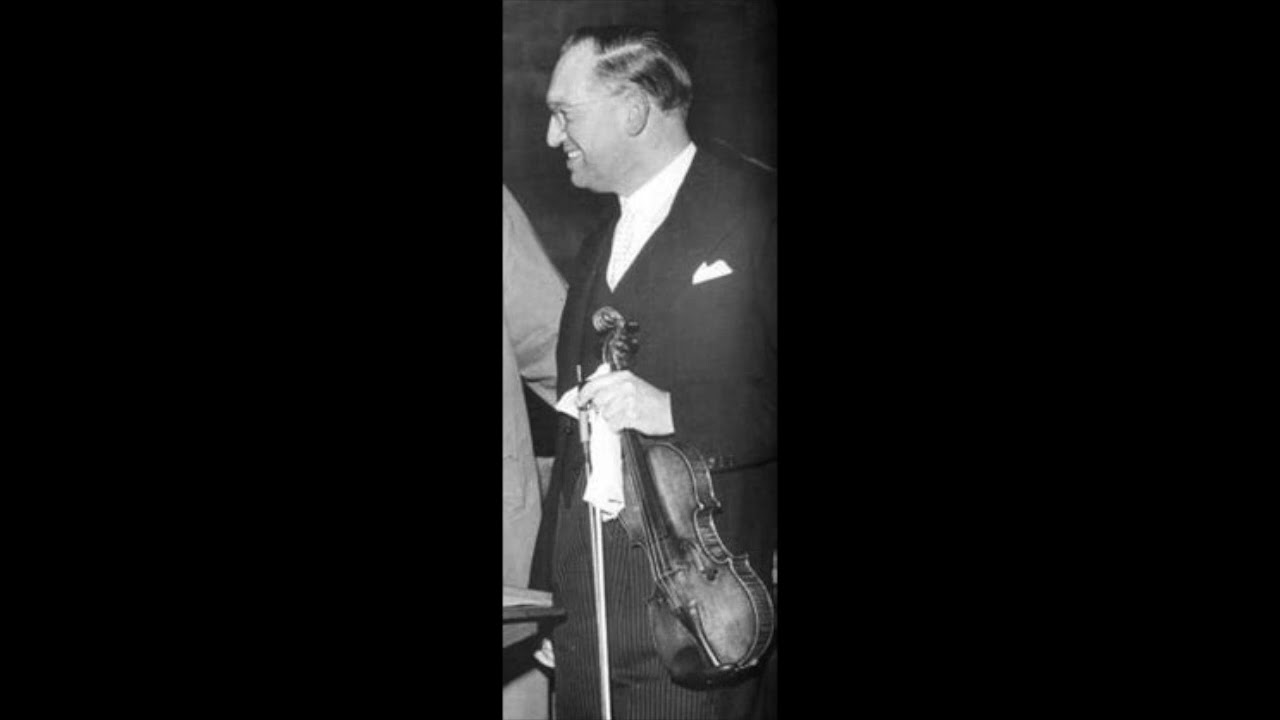
Frederick Grinke - Violin
Watson Forbes - Viola
Bach: 4 Duets (BWV 802-805) arranged by Ferdinand David.
Duet no 1 in E minor BWV 802
Duet no 2 in F Major BWV 803
Duet no 3 in G Major BWV 804
Duet in 4 in A Minor BWV 805
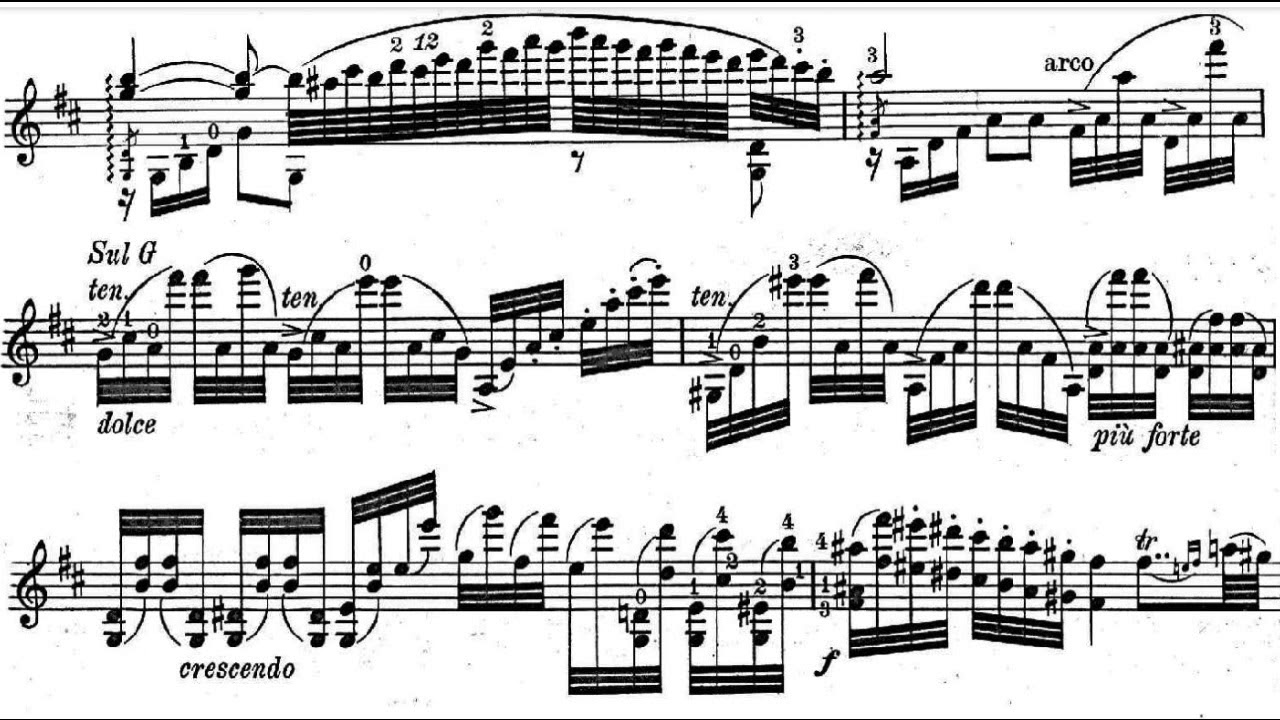
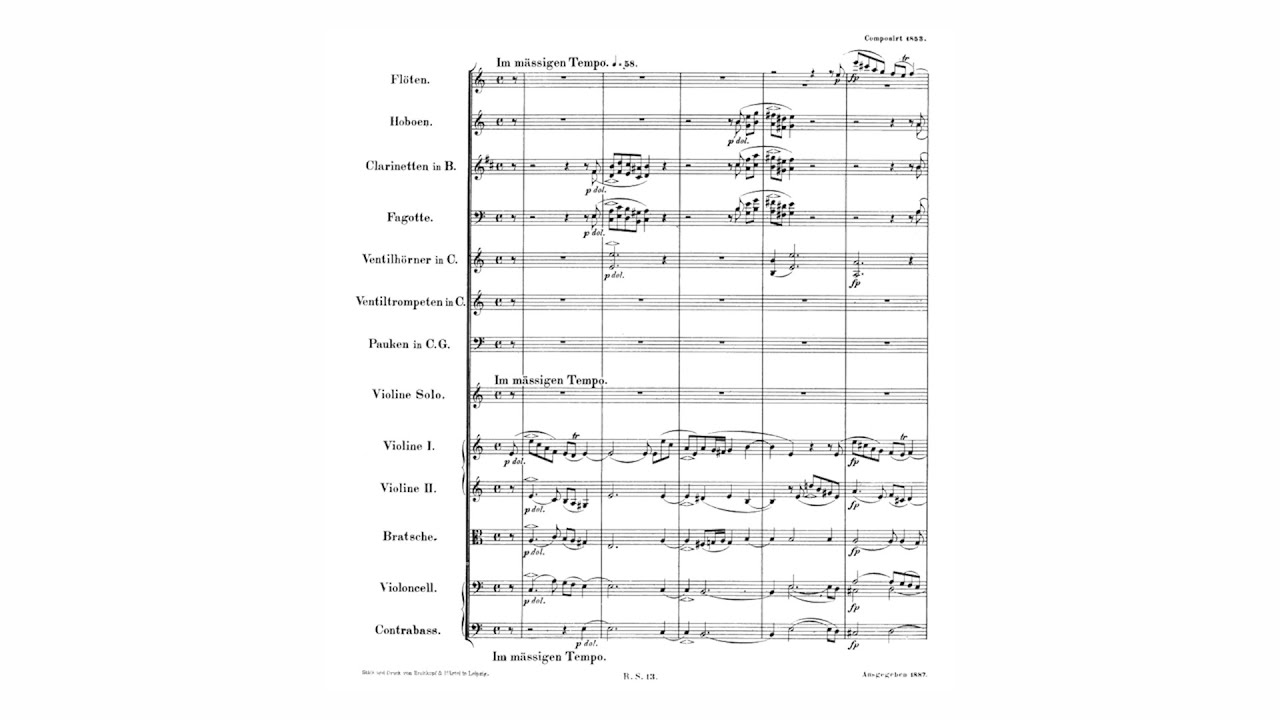
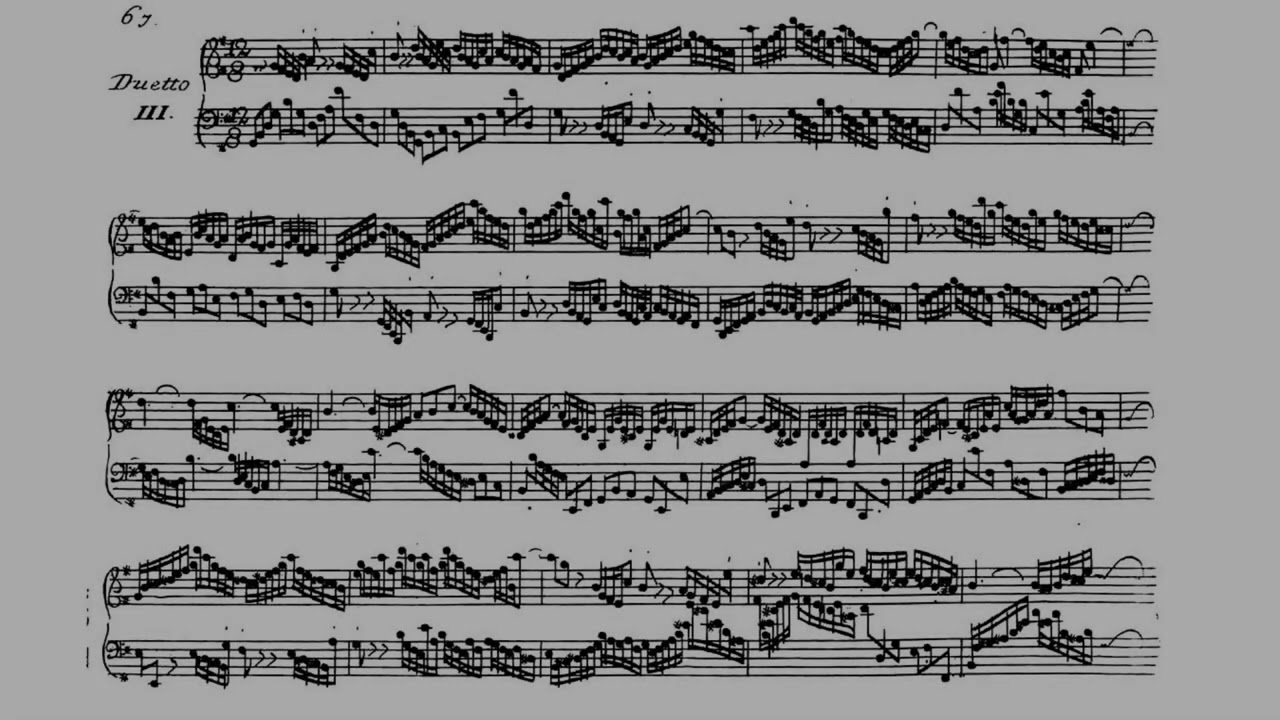
I can't confirm that this is the arrangement made by Ferdinand David but listening with the score it does appear to be so. The score in the video is the original keyboard score on which these arrangements are based.
Frederick Grinke and Watson Forbes were two exceptional musicians who have been unjustly neglected when it comes to the rerelease of their recordings. To my knowledge, this particular recording has never been re-released since it was first published, neither on LP or CD.
Frederick Grinke CBE (1911 – 1987) was a Canadian born violinist who had an international career as soloist, chamber musician, and teacher. After initial studies in Canada, he won a Dominion of Canada scholarship award to the Royal Academy of Music in London, where he studied with Rowsby Woof, continuing his studies in Belgium and London with Carl Flesch.
In 1937 he became concertmaster of the Boyd Neel Orchestra. His first performance with them was Salzburg Festival in 1937, giving the premiere of Variations on a Theme of Frank Bridge by Benjamin Britten. He remained concertmaster with the Orchestra until 1947, performing in Europe, USA, Australia and New Zealand, and at the London Proms, Salzburg and the Edinburgh Festival. He resigned from it to pursue his solo career.
During the later 1940s, Grinke made numerous recordings, mainly for Decca, many of which were originally released in the last years of 78rpm records. His recordings of John Ireland's chamber music include the Phantasie Trio of 1908, the 1938 Trio no 3 in E major, and The Holy Boy (with Florence Hooton (cello) and Kendall Taylor (piano)), and the Violin Sonata no 1 of 1909 with the composer at the piano.
Ralph Vaughan Williams dedicated his Sonata in A minor, written in 1952, to Grinke, who recorded the composer's Concerto Accademico in D minor, and The Lark Ascending, with the Boyd Neel Orchestra. He made a broadcast of the Arnold Bax concerto from Australia.
He also premiered and recorded works by Arthur Benjamin, Benjamin Dale, Lennox Berkeley, Kenneth Leighton, Edmund Rubbra, York Bowen, Howard Ferguson, Arthur Bliss, Béla Bartók, Beethoven, Handel, Rachmaninoff and Smetana, often accompanied by Ivor Newton.
Watson Douglas Buchanan Forbes (1909 – 1997) was a Scottish violist and classical music arranger. From 1964 to 1974 he was Head of Music for BBC Scotland. He first learnt the violin from his father, who was a Scottish country fiddler. Showing promise, at the age of 16 he was sent to the Royal Academy of Music in London, where he studied violin and viola, gradually specialising on the viola,
In 1930, he went to Pisek in Czechoslovakia to study with Otakar Ševčík. "Sevcik taught me how to practise and how to tackle difficult passages." Following this concentration on technique, Forbes had lessons from Albert Sammons. "He was marvellous. He taught me how to perform - how to put music across to an audience."
An invitation to join the Stratton Quartet set the direction of his career. The Stratton was Elgar's preferred quartet, and their recordings in 1933, of his String Quartet and Piano Quintet were the music he chose to listen to on his deathbed. Forbes remained with the Stratton for the rest of its existence as such.
At the start of the Second World War, Forbes was joint leader of the London Symphony Orchestra, but from 1940 onwards he joined the RAF Symphony Orchestra which contained a number of small groups of chamber music players. He toured the UK in a piano quintet which included Denis Matthews, Frederick Grinke and James Whitehead. He also made many appearances in Myra Hess's concerts at the National Gallery. After the war he continued with the Stratton quartet, but now, following the departure of George Stratton, renamed the Aeolian Quartet. He also played with other groups, and as a soloist. In 1954 he became professor of viola and chamber music at the Royal Academy of Music in London. In his recitals, he often played on the rare Stradivarius Archinto viola (1696) owned by the Royal Academy.
In 1964 Forbes moved to Glasgow to take up the post of Head of Music for BBC Scotland. There he safeguarded and expanded the BBC Scottish Symphony Orchestra, and fostered the Scottish musical culture of the day Throughout his working life, but especially in retirement he worked on one of his most enduring legacies as a musician, namely an extensive series of arrangements to expand the viola repertoire, and a series of educational collections for other instruments. In 1970 he was made an honorary Doctor of Music by the University of Glasgow and in 1972 was awarded the Cobbett Memorial Prize for services to chamber music.
Notes taken from Wikipedia.
Доступные форматы для скачивания:
Скачать видео mp4
-
Информация по загрузке: