How to Start Web Scraping in Python (Robots.txt, Rate Limits, Status, Requests, & More)
Автор: Ryan & Matt Data Science
Загружено: 2025-06-23
Просмотров: 1337
🧠 Don’t miss out! Get FREE access to my Skool community — packed with resources, tools, and support to help you with Data, Machine Learning, and AI Automations! 📈 https://www.skool.com/data-and-ai-aut...
Are you new to web scraping and not sure where to start? In this beginner-friendly tutorial, we'll break down the essential concepts every aspiring scraper must understand before sending their first request.
This tutorial consists of robots.txt, rate limits, status, requests, and more! Perfect if you want to jump into web scraping with the help of python.
Code: https://ryanandmattdatascience.com/we...
🚀 Hire me for Data Work: https://ryanandmattdatascience.com/da...
👨💻 Mentorships: https://ryanandmattdatascience.com/me...
📧 Email: ryannolandata@gmail.com
🌐 Website & Blog: https://ryanandmattdatascience.com/
🖥️ Discord: / discord
📚 *Practice SQL & Python Interview Questions: https://stratascratch.com/?via=ryan
📖 *SQL and Python Courses: https://datacamp.pxf.io/XYD7Qg
🍿 WATCH NEXT
Python Web Scraping Playlist: • Python Website Scraping
In this video, I walk you through the fundamental concepts you need to know before diving into website scraping with Python. We cover essential topics including HTTP status codes (200, 403, 404), how to check robots.txt files to understand scraping permissions, rate limits and crawl delays, using headers to bypass basic blocks, and testing website accessibility.
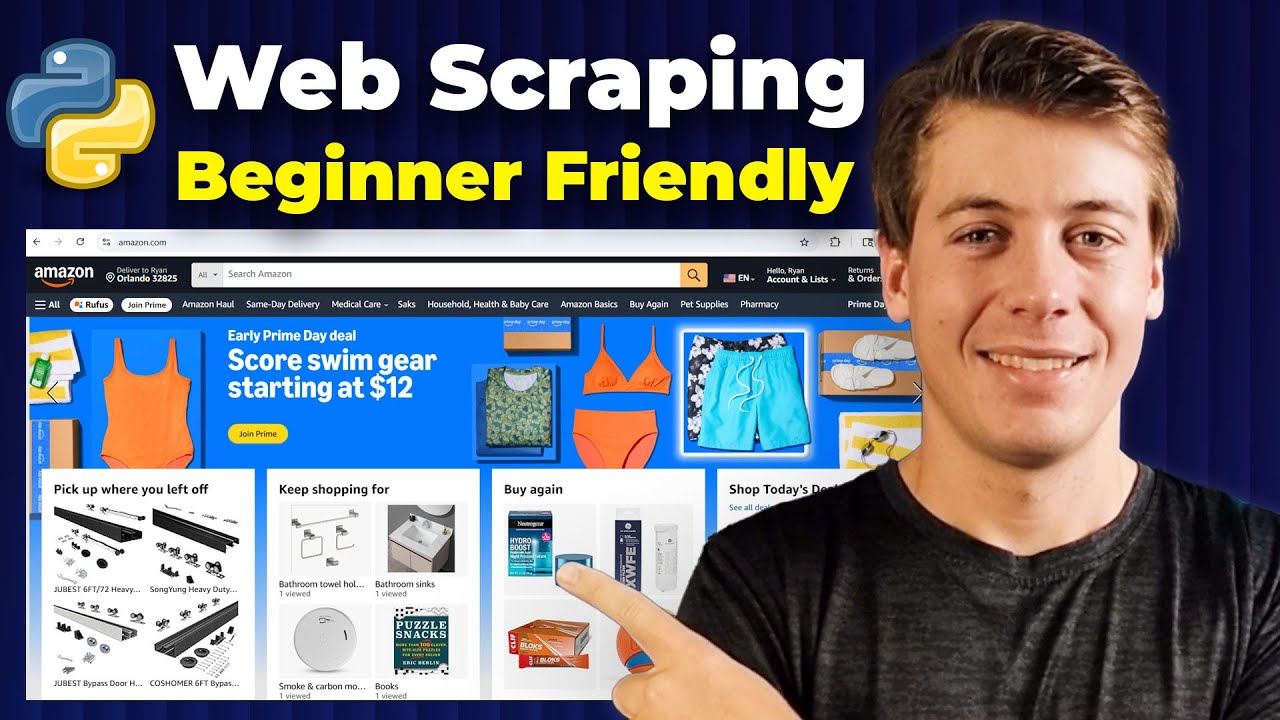
I demonstrate real examples using websites like Books to Scrape, Amazon, and Baseball Reference to show you exactly what happens when you make requests to different sites. You'll learn how to identify whether a page can be scraped, understand the robots.txt file structure, check for crawl delays, and use different user agent headers to improve your success rate. This is the first video in my comprehensive web scraping series where we'll progressively build from Beautiful Soup basics to advanced techniques including AI-powered scraping with large language models.
By the end of this video, you'll understand the ethical considerations and technical requirements for web scraping, setting a solid foundation for the more advanced scraping techniques we'll cover in upcoming videos. I'm publishing two videos per week in this series, and I also take on freelance web scraping projects, so feel free to reach out via email or Discord if you need help with your scraping needs.
TIMESTAMPS
00:00 Introduction to Web Scraping Series
01:14 Getting Started with Basic Imports
01:52 Part 1: Getting Your First Page
03:01 Understanding Response Codes (200, 403, 404)
05:17 Testing Failed Requests with 403 Errors
08:03 Example of 404 Page Not Found
09:21 Part 2: Checking the robots.txt File
11:04 Viewing Amazon's robots.txt File
12:00 Example 3: Looking for Crawl Delay
13:06 Example 4: Checking If You Can Scrape a Page
15:11 Example 5: Using Headers to Bypass Errors
17:32 Final Review and Key Takeaways
OTHER SOCIALS:
Ryan’s LinkedIn: / ryan-p-nolan
Matt’s LinkedIn: / matt-payne-ceo
Twitter/X: https://x.com/RyanMattDS
Who is Ryan
Ryan is a Data Scientist at a fintech company, where he focuses on fraud prevention in underwriting and risk. Before that, he worked as a Data Analyst at a tax software company. He holds a degree in Electrical Engineering from UCF.
Who is Matt
Matt is the founder of Width.ai, an AI and Machine Learning agency. Before starting his own company, he was a Machine Learning Engineer at Capital One.
*This is an affiliate program. We receive a small portion of the final sale at no extra cost to you.
Доступные форматы для скачивания:
Скачать видео mp4
-
Информация по загрузке: