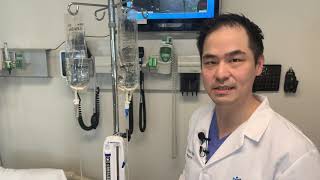
External Ventricular Drain EVD
Автор: EmpoweRN
Загружено: 2025-05-05
Просмотров: 7692
In this video we are going to learn how to take care of a patient with an external ventricular device. -Also known as an EVD drain.
An external ventricular drain is a temporary drain that both invasively measures Intracranial pressure or ICP and removes excess cerebrospinal fluid also known as CSF. It is typically used when the ICP is increased, for example in the case of hemorrhage, large strokes, tumors or severe head trauma.
Because the volume of the skull is fixed, brain swelling, hemorrhage, or an obstruction in CSF flow can increase the intracranial pressure. As the intracranial pressure rises the cerebral perfusion will decrease - too much of a decrease in the cerebral perfusion pressure can cause the brain cells to die. Having the EVD drain inserted may reduce morbidity and mortality, by helping relieve some of the pressure in the skull.
Now that we know what an EVD is, let's talk about some of the things you might encounter as a nurse when taking care of a patient with an EVD drain. You may need to help set up the drainage system, this would include attaching the transducer to the drain and priming the drain, unless the physician wants to prime the drain with CSF.
For this, these are the supplies that you would need to gather:
Supplies you will need:
EVD Drainage device - in this video we will be using the Natus - but if you want to see other EVD devices, please comment below.
We also need a Transducer
Pressure cables
Sterile preservative free normal saline
PPE - which include a Mask, Hat sterile gloves
EVD Dressing supplies - occlusive transparent dressing biopatch, steristrips) sutures, cranial access kit, duraprep
Priming the EVD:
The first thing that you will need is preservative free normal saline, we will use this to prime to EVD. We will also need a transducer from a regular pressure kit, but we will only be using the transducer, not the tubing that comes in the kit. We will also need sterile caps, a pressure cable and a hair cap, mask and sterile gloves.
First we will attach the transducer to the panel stop clock at the zero point
Now you're ready to prime the system.
Priming the EVD is done prior to connecting the drain to the patient.
With the normal saline, prime the tubing from the pressure transducer first towards the tubing that will be attached to the patient and then toward the burette which is also known as the EVD drip chamber. Inspect the line for air bubbles. Once you're finished priming, remember to cut this tab.
Your EVD is now primed and ready to attach to the IV pole!
To attach, first anchor the suspension cord to the top of the pole, then secure the drainage system to the IV pole by pressing the white clamp and finally, secure the panel mount to the IV pole.
Once the EVD is inserted, the next step will be to level the drainage system to the patient.
You will want to attach the leveler to the back of the drainage system. There are many different types of levelers. You can use a string leveler, or you can also use a leveler that looks like a ruler or if you have it, you can use a laser light leveler. All of them use a bubble vial like this and your goal is to get the bubble in the middle of the 2 lines. Once you have the bubble in the appropriate place now you're ready to measure the patient. You start at the zero pressure reference point and go to the external auditory canal of the patient's ear. And then adjust the EVD as needed to level to the external auditory canal.
NEED TO RECORD THIS*****Now that your EVD is leveled, we can connect it to the monitor. We will do that using the pressure cable. Connect it to the transducer attached to the EVD and then connect it to the monitor and zero it. You zero it by opening the transducer to air by removing the cap here and then pressing zero on your bedside monitor.
Now let’s talk about the nursing care associated with a patient with an EVD. Besides the leveling that we just went over, one of the most important things you need to know is the appropriate stopcock positionings for intracranial pressure analysis and for continuous draining.
First, we must be able to differentiate between millimeters of mercury and centimeters of water. Your provider will write orders to the appropriate centimeters of water or MMHG and with this order you will adjust the height of your EVD drip chamber by loosening this nob and moving the burette up or down.
To zero the transducer you will turn the transducer stopcock off to the system and turn the EVD stopcock off to drainage. Then you'll open the transducer to air, press zero on your bedside monitor and then place a new red cap.
The transducer on the EVD must be zeroed to the bedside monitor with insertion, when connecting to a transfer monitor, at the change of shift, whenever the transducer cable has been disconnected from the monitor, or when troubleshooting the system.
In this video we use the Natus EVD drain

Доступные форматы для скачивания:
Скачать видео mp4
-
Информация по загрузке: