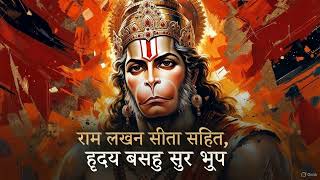
108x पवनतनय संकट हरन मंगल मूरति रूप
Автор: Eternal Ember Echo
Загружено: 2025-12-21
Просмотров: 25
The Chalisa starts with guru invocation and 40 verses praising Hanuman's glories, culminating in this intimate prayer. It transforms recitation into sadhana—not just hymn, but inner transformation. This "seal" shifts focus from external miracles to God's eternal dwelling within, fostering protection, auspiciousness, constant remembrance, faith, peace, and grace.
The Hanuman Chalisa by Goswami Tulsidas ends with this profound doha:
पवनतनय संकट हरन मंगल मूर्ति रूप ।
राम लखन सीता सहित हृदय बसहु सुर भूप ॥
Literal Meaning:
पवनतनय : Son of the wind god Vayu.
संकट हरन : Remover of crises and obstacles (hence Sankat Mochan).
मंगल मूर्ति रूप : Embodiment of auspiciousness and benevolence.
राम लखन सीता सहित: Along with Shri Ram, Lakshman, and Sita.
हृदय बसहु : Dwell in the heart.
सुर भूप : King of the gods.
Translation: "O Son of the Wind, Remover of troubles, auspicious form! O King of gods, reside in my heart with Ram, Lakshman, and Sita."
This is direct, humble plea for Hanuman's eternal presence in the devotee's heart, accompanied by the full Ram darbar.
Symbolic Depth: Hanuman represents awakened prana (life force), destroying ego, fear, and negativity. As Shiva's avatar, his "mangal murti" radiates pure goodness (Shiva means auspicious). The request for him to reside "with Ram, Lakshman, and Sita" references the Ramayana episode where Hanuman tore open his chest, revealing Ram and Sita eternally in his heart—symbolizing unwavering devotion.
Inviting Hanuman thus opens the gateway to Ram bhakti: surrender to the perfect devotee (das) grants union with the Lord. Ram symbolizes the soul, Sita the mind/devotion, Lakshman vigilance—complete divine presence through Hanuman.

Доступные форматы для скачивания:
Скачать видео mp4
-
Информация по загрузке: