Exploring Gyokuro | An Introduction to this Powerful Shaded Tea
Автор: Tezumi
Загружено: 2025-01-30
Просмотров: 20782
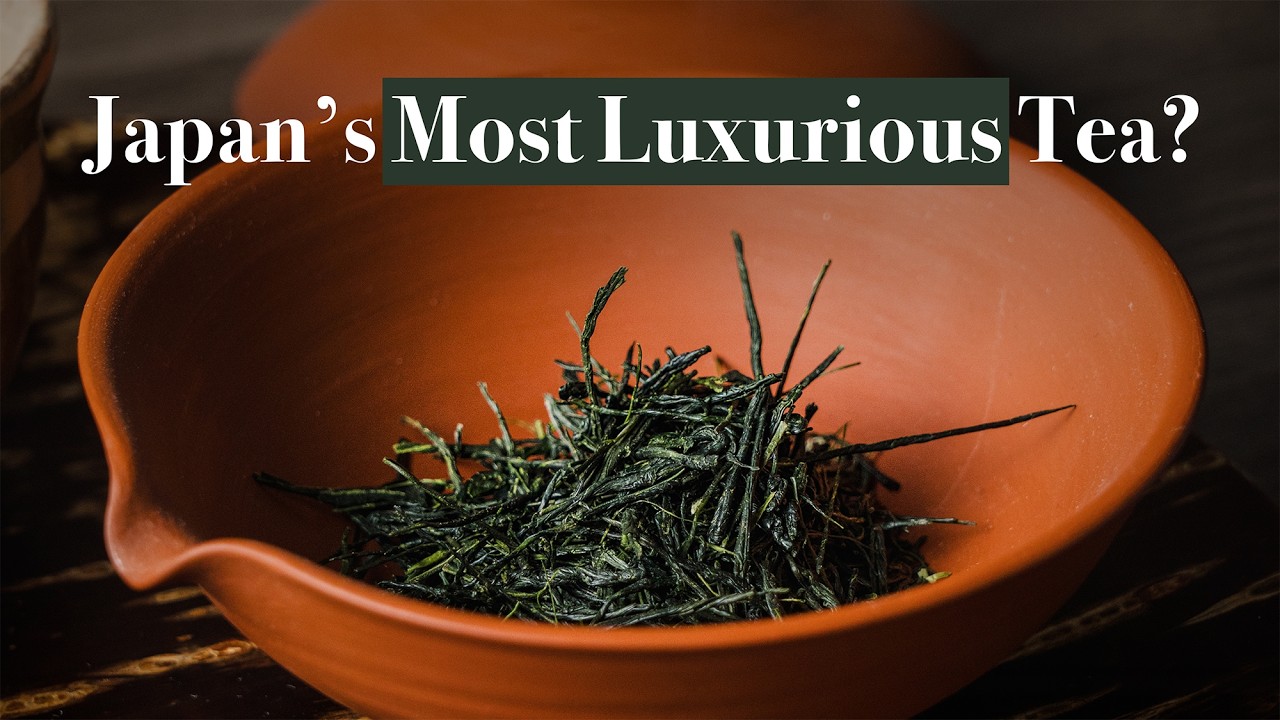
As one of Japan’s most luxurious and exquisite styles of tea, gyokuro demands a careful and unique approach to brewing to get the best out of these precious jade leaves. This tea is produced through much the same process as sencha, but using leaves that have been shaded for 20-40 days before harvesting.
Shading the tea plants from the sun forces them to produce more chloroplasts and chlorophyll to harvest more sunlight, causing the leaves to develop a deep, vibrant green colour. These extra chloroplasts switch from producing bitter-tasting catechins which typically protect the leaves from excessive sun, and instead make sweet and savoury amino acids such as L-theanine along with aromatic compounds such as benzaldehyde which result in the unique ‘shaded aroma’ or ooika (覆い香). Learn more about the science of shading here.
Compared to sencha, gyokuro leaves tend to be much darker, glossier, and greener in colour, with slightly thicker, less tightly rolled needles. Though produced similarly to sencha, gyokuro is brewed quite differently, using a small amount of warm water and a relatively large amount of leaves. The cooler water temperature extracts the amino acids without extracting the more bitter compounds, while the higher leaf to water ratio increases the concentration of these sweet and savoury compounds, producing a decadent, thick, umami rich liquor.
Today, almost all gyokuro is either grown in Uji, Kyoto, or Yame, Fukuoka, with the two regions fighting annually for the top prize at the national competitions.
About the invention of gyokuro: There are a few theories which I'll attempt to summarise here.
1.) The 'prototype' for gyokuro was developed in 1835 by Yamamoto Kahei of the Yamamotoyama tea company (yes, that one! they're still around) as an offshoot of tencha (the raw material for matcha) and named it 玉の露 (Tama no Tsuyu). The tea seller Shigejuro Eguchi began selling it under the name 玉露 (Gyokuro [same kanji, different reading]) in 1841.
2.) The founder of the Ogawara School of senchado (煎茶道 - sencha ceremony), Ogawara Kashin picked some leaves from a tencha field and like the taste. He then asked tea producer Seiichi Kosaka to produce more for him, thus creating gyokuro.
These are the most popular theories, but there are a few more, one involving the 8th Generation Asahi-yaki kiln master, who is also credited with the development of the houhin.
You can find my written blogs on brewing gyokuro here:
https://www.tezumi.com/blogs/tezumi-i...
And on the process of tea shading here:
https://www.tezumi.com/blogs/tezumi-i...
And on the biochemical science of tea shading here:
https://www.tezumi.com/blogs/tezumi-i...
Kōyō Gyokuro: https://www.tezumi.com/products/koyo-...
Gyokko Shiboridashi: https://www.tezumi.com/products/japan...
Links:
https://www.tezumi.com
Find us here:
Instagram: / tezumitea
Twitter: / tezumitea
00:00 - Introduction
00:14 - What is Gyokuro?
01:35 - Why shade tea?
02:29 - Styles of Shading
04:29 - Where is gyokuro produced?
05:29 - How it's made
07:03 - Brewing Theory
07:43 - Teaware for Gyokuro
09:00 - Brewing Koyo
11:45 - Tasting Gyokuro
12:32 - Further Infusions
14:45 - Salad Time
13:37 - Refining Overview
15:36 - Final Notes
Доступные форматы для скачивания:
Скачать видео mp4
-
Информация по загрузке:


