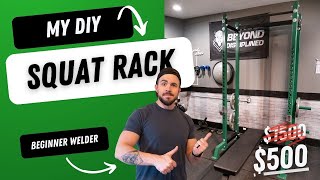
Squat Rack Specs Explained (Dimensions, Upright Size, Steel Gauge & more)
Автор: Horton Barbell
Загружено: 2022-03-17
Просмотров: 4104
Squat Rack Specs can be complicated and confusing. I break down each squat rack spec - what they are and what you should be looking for when purchasing a squat rack for your own home gym.
Specs to look for include:
Tubing Size
The uprights on a squat rack are referred to as uprights, vertical beams or sometimes just tubes. The three common tubing sizes for squat racks are 2 x 2, 2 x 3 and 3 x 3.
These numbers signify the width and depth of each upright, in inches. So, 3 x 3 tubing means that each upright is 3″ wide and 3″ deep.
This matters for two reasons. The bigger the upright, the stronger. Pretty simple really. More steel equals a stronger rack.
The second reason is much easier to overlook though. The size of your tubing plays a big factor into what rack attachments, like dip bars and j hooks, will fit your rack. The size that will give you the biggest availability of compatible attachments? 3 x 3.
Steel Gauge Size
Steel gauge is the thickness of the steel of the uprights. The lower the number, the thicker the steel. The thicker the steel, the more weight capacity the rack will have.
11 gauge steel racks are pretty universally considered the gold standard when it comes steel gauge. 12 is acceptable in my opinion, but anything thinner than that starts to become a red flag for me.
Pro Tip: If you’re ever looking at a squat rack and they don’t list the steel gauge anywhere on their product page, it’s probably not good.
Hardware Size
This is the size of the hardware, the nuts and bolts that hold the rack together. This will also tell you the hole size which you’ll need to know (along with the tubing size) when buying attachments.
The two most common hardware sizes is 5/8″ and 1″. I think 5/8″ is really more than enough for almost any home gym.
1″ hold spacing is more common on commercial racks as opposed to a home gym power rack.
But, if you do get a squat rack with 1″ hardware (like some of the racks listed above have), you have a rack that’s going to hold up to pretty much anything and everything.
Hole Spacing
This is the amount of space between the holes of a rack. The most common hole spacing on squat racks is 1″, 2″ and Westside hole spacing.
Westside hole spacing is 2″ at the bottom and top of the squat rack, but 1″ apart through the bench pressing and rack pulls zone. This allows you to get very precise when working those movements.
When you’re racking and unracking weight for exercises like bench press or you’re trying to be precise with your starting point for rack pulls, even small differences is height can make a huge difference.
In my opinion, it’s not only more convenient, but it’s also safer as well.
Rack Attachments
I’ve mentioned attachments multiple times in this article and for good reason. Rack attachments play a huge role in the overall versatility of your rack.
Weight plate storage, dip bars, pull up bars, safety pins – all of these attachments (and those are just a few) are designed to fit a particular size rack. Whether it’s a 3 x 3 vs a 2 x 3 or a 5/8″ hole size or 1″ hole size – it’s something you definitely want to be mindful of when selecting your rack.
Best Squat Rack For a Home Gym: https://hortonbarbell.com/best-squat-...

Доступные форматы для скачивания:
Скачать видео mp4
-
Информация по загрузке: