USMLE Cardiovascular 2: Heart Conductance Physiology and ECGs
Автор: LY Med
Загружено: 2017-08-04
Просмотров: 10807
Want to support the channel? Be a patron at:
/ lymed Welcome to LY Med, where I go over everything you need to know for the USMLE STEP 1, with new videos every day.
Follow along with First Aid, or with my notes which can be found here:
https://www.dropbox.com/sh/xisbr5u8re...
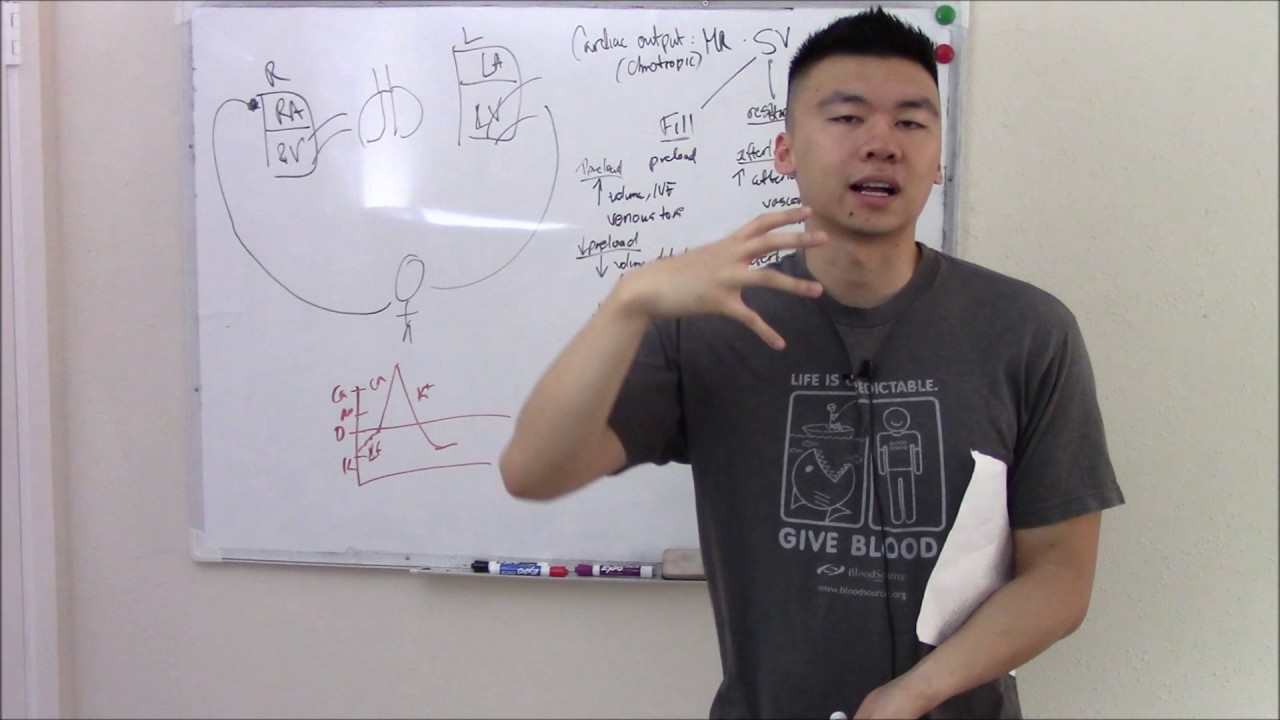
So in our last video, we said the heart is a four chambered pump. How does it pump? How does it contract? Well some important things to know about the heart is that it can self depolarize as well as contract in a synchronized fashion via the gap junctions. How does it do this? Well it all starts with the sinoatrial node (SA node) which spreads the signal to the atria and cause contraction. It will also send the depol to the ventricles via the atrioventricular node. The AV node helps slow down the conductance as well as cause the ventricles to contract. Your AV node sends the signal to the Bundle of His which has a left branch and a right branch that runs down the ventricles. Blockage here causes a AV heart block, left bundle block, and right bundle block. Your Bundle of His will meet your Purkinje fibers and causes the ventricles to contract. Now how do they test this information on the USMLE STEP 1? Some ways they like to test it is by asking which part of the heart has the fastest speed of conduction. By order it goes from Purkinjes all the way down to the AV node. Another way they like to ask this information is by knowing the order of pacemakers. Your SA node is the natural pacemaker, but if there is a RCA infart, it may lose function. Your AV node will take it's place etc. The last way they like to ask questions on the test is by asking you which part of the pathway beats the fastest. SA nodes has the fastest BPM.
Our next topic: how does the heart self-depolarize in the first place? Well remember depolarization depends on the resting potential of your cell membrane which is kept via the Na/K+ pump. Normally the membrane is negative and waits for depolarization. However in nodal tissue, there is a special channel called the funny sodium channel. This makes the membrane less stable as it approaches the threshold. It can then self depolarize and cause the L-Ca channels to open and pull in calcium and depolarize further. After a certain point, your potassium channels will open and cause repolarize. Eventually your potassium channels will close and your Lf channels will open again and the cycle starts again. Now non-nodal cells go through a different pathway. These cells don't have Lf channels and so must wait for a signal. Once it get's that depolarization signal, it will open sodium channels to open and depolarize. Eventually sodium closes and potassium opens to repolarize. However L-ca stops it and causes a plateau. Your L-ca will ultimately close and K+ is unopposed and repolarizes the cell. This leaves you back to the resting potential. Know the different phases of conductance!
You can measure the health of conductance with an electrocardiogram or ECG. The ECG consists of:
P wave: atrial depolarization and contraction
PR interval: period it takes for the conductance to reach your AV node and ventricles.
QRS complex: ventricular depolarization and atrial repolarization and relaxation
T wave: ventricular repolarization
Thats the basics of ECG - explained. Done! Next video will be on arrhythmias.

Доступные форматы для скачивания:
Скачать видео mp4
-
Информация по загрузке: