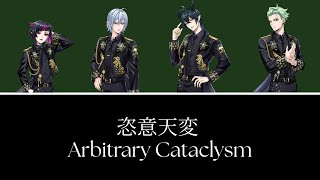
Royal Scandal - Once Upon a Time [ワンスアポンアタイム] Lyric Video (Kanji, Romaji, English)
Автор: Mitsua
Загружено: 2024-11-04
Просмотров: 5160
(A repost since the first one has a lot of mistakes and I just can't stand that)
Royal Scandal - Once Upon a Time [ワンスアポンアタイム] English Translation
Original : • ワンスアポンアタイム
Kanji : https://www.uta-net.com/song/279700/
Please ask for permission and credit me if you want to use my translations. Translation notes below.
Translation Notes :
¹支援[ささえ]る
The kanji read as shien means to support. 支 means support/sustain/provide and 援 means to aid/assist. Meawhile inside the bracket is [sasae]ru ([支え]る/[ささえ]る) means to support (verb). I don't know why Kanon69 would use 支援 rather than just 支える. The difference between the two is that 支援 is usually referring to a formal/organized support rather than 支える which is supporting in general.
There is another shien with different set of kanji 私怨 meaning personal grudge, personal enmity, a resentment strong enough to justify retaliation.
In the end, I translated it as 'cared for' to fit it more into the context that the King is ill, rather than 'supported'.
²Poder = Amor = Feliz = Riqueza
There are multiple lines about this so to see it better I'm going to write down all of it here.
Poder = Amor = Feliz = Riqueza
This is when they were summoned by the king and vowed before him.
They all equal.
Poder ≠ Amor ≒ Feliz ≠ Riqueza
This is when they are fighting.
Poder is not equal to Amor.
Amor is almost equal to Feliz.
Feliz is not equal to Riqueza.
≒ means approximately equal or almost equal, though we use ≃ more commonly outside of East Asia.
Poder ≠ Amor ≠ Feliz ≠ Riqueza
This is when they all cursed then died.
They are not equal to one another.
³穢[うつく]しい
The kanji read as kegare. '穢'しい means filthy, stained. Meanwhile the inside the bracket is [utsukushi]i ([美]しい/[うつく]しい) means beautiful.
⁴宝具
The kanji read hōgu. 宝 means precious, treasure, valuable and 具 means tool, equipment. So it literally means precious tool. In some context, it could also mean magical artifact. I eventually decided to translate it as treasures.
⁵哀愁[かなし]む
The kanji read as aishū. 哀 means sorrow and 愁 means worry, anxiety. Meanwhile inside the bracket is [kanashi]mu ([悲し]む) means sad. I once again don't know why Kanon69 would use 哀愁. 哀愁 refers to deeper sorrow or melancholy rather than just 悲し.
There is another aishū with different set of kanji 愛執 meaning affection, attachment, the act of fastening thing together. 愛 means love, affection and 執 means tenacious, take hold, grasp. Take it with a grain of salt.
⁶兄弟[きさま]
The kanji read as kyōdai means brothers. 兄 means older brother and 弟 means little brother. Meanwhile inside the bracket is kisama. きさま is a very rude way to say 'you'. Like cursing you, insulting you.
⁷美[けがれ]い
Opposite of ³.
⁸荒廃[すた]れ
The kanji read as kōhai means devastation, ruin, deterioration. Meanwhile inside the bracket is [suta]re ([廃]れ) meaning to decline, to fall into disuse, to become obsolete.
⁹祝[おもて]
The kanji read as [iwa]i from 祝い, meaning celebration festivity. It also used in 祝福 (shukufuku) meaning blessing. I choose to translate it as 'blessing'.
Meanwhile inside the bracket is omote (表) meaning the surface, the front, the face.
¹⁰慾[ほ]しい
The kanji read as yoku, meaning desire, greed, lust. Meanwhile inside the bracket is hoshii ([欲]しい) also mean want and desire. However 慾 usually used to refer to excessive desire and sometimes has negative connotation rather than 欲しい.
¹¹呪[うら]
The kanji read as [noro]i from 呪い meaning curse. Meanwhile inside the bracket is ura (裏) meaning the reverse, the back, the innerside, the hidden part.
¹²宝具 [ロイヤルカード ]
The kanji read as hōgu, the same as ⁴. Meanwhile inside the bracket is Royal Cards.
¹³権力 [Poder] 愛 [Amor] 幸福 [Feliz] 富 [Riqueza]
All of that read as : Kenryoku (Poder/Power), Ai (Amor/Love), Kōfuku (Feliz/Happiness), and Tomi (Riqueza/Fortune).
![Royal Scandal - Once Upon a Time [ワンスアポンアタイム] Lyric Video (Kanji, Romaji, English)](https://ricktube.ru/thumbnail/NhvisIwfUJc/hq720.jpg)
Доступные форматы для скачивания:
Скачать видео mp4
-
Информация по загрузке:


![[Mirror] Queen of Hearts x Anti-Queen of Hearts](https://ricktube.ru/thumbnail/tJt9FtoiX44/mqdefault.jpg)