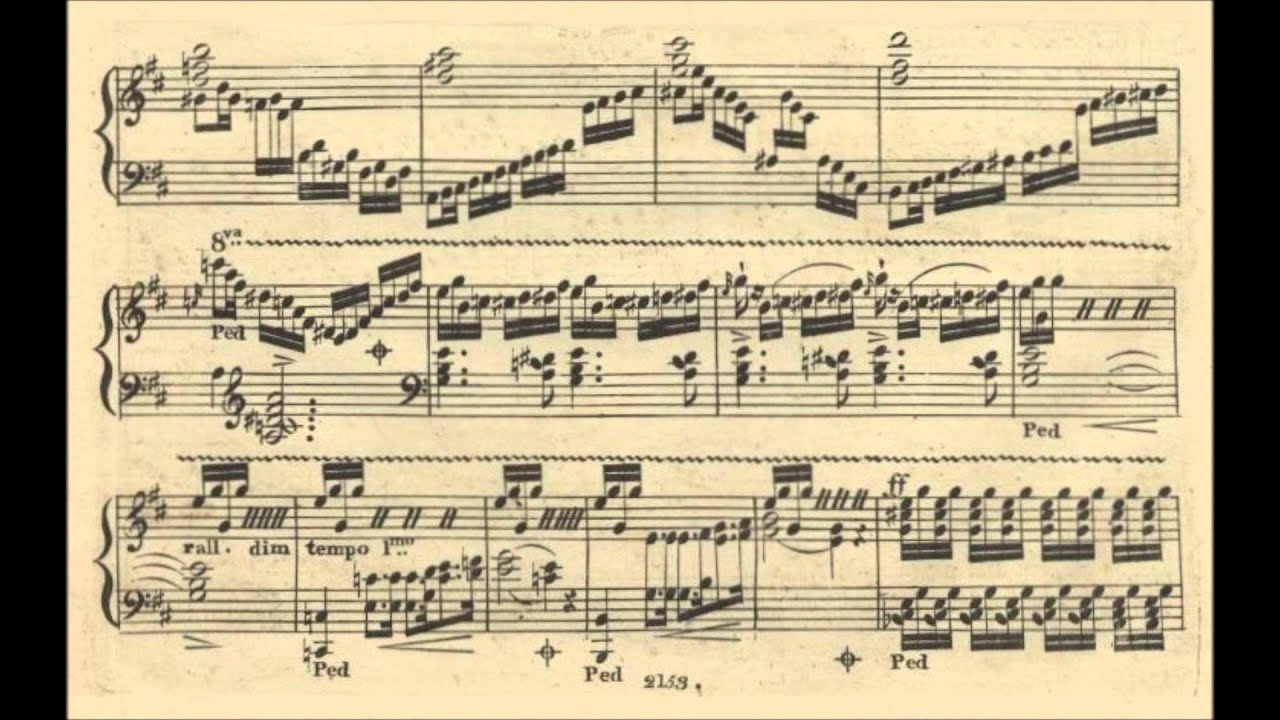
Henri Herz - Variations brillantes on Rossini's 'Cenerentola', Op. 60 (1830) {Earl Wild}
Автор: Bartje Bartmans
Загружено: 2023-11-19
Просмотров: 4736
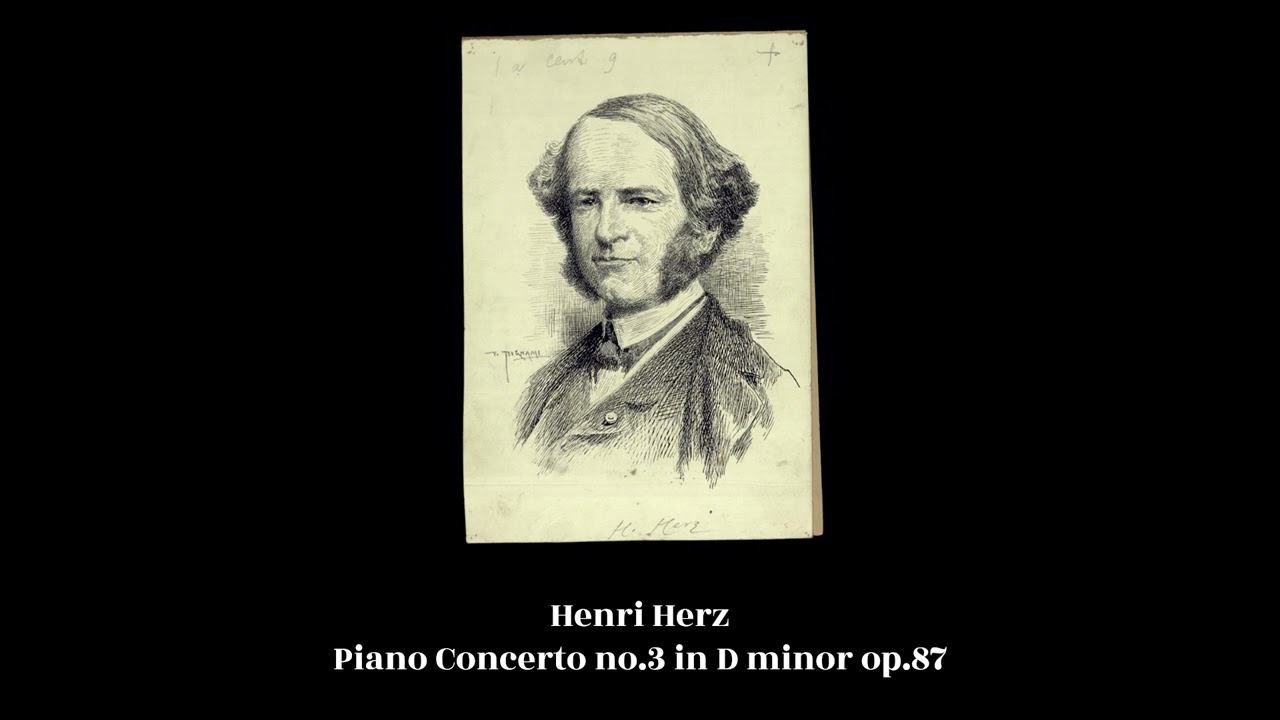
Henri Herz (6 January 1803 – 5 January 1888) was a virtuoso pianist, composer and piano manufacturer, Austrian by birth and French by nationality and domicile. He was a professor in the Paris Conservatoire for more than thirty years. Among his major works are eight piano concertos, a piano sonata, rondos, nocturnes, waltzes, marches, fantasias, and numerous sets of variations.
Please support my channel:
https://ko-fi.com/bartjebartmans
Variations sur une cavatine de 'La Cenerentola' de Rossini, Op. 60 (1830)
Dedication: à Miss Anna Herrisson
Earl Wild, piano
n 1816 Herz entered the Conservatoire de Paris, where he studied piano with Louis-Barthélémy Pradher, harmony with Victor Dourlen and composition with Anton Reicha. He won first prize in piano in 1818. Herz's style of playing was, by his own admission, strongly influenced by Ignaz Moscheles.
In 1825, Herz joined the piano workshop of Henri Klepfer et cie as a partner, but that connection proved unsuccessful, and in 1839 he founded his own piano factory, which became one of the three most important factories in France, the others being Erard and Pleyel. All three were awarded the "Médaille d`honneur" for "Pianos d'une sonorité très-remarquable" at the Paris World's Fair in 1855. Among important developments of Herz's early time as a piano maker in the 1820s and 1830s was the change from a single-layered hammer to one that was multi-layered, on the inside two layers of leather, several layers of fabric, and rabbit fur; on the outside wool felt in up to nine layers of decreasing hardness. The characteristic sound of Frédéric Chopin's grand pianos, to which the labor-intensive, hand-made hammers after Herz's patents make a distinctive contribution, disappeared with mid-century developments in the USA (Steinway). The Herz hammer sets have the drawback that pianos cannot be played quite as loud, because the hammers are less densely pressed, but the dynamics and colorfulness – in combination with traditional materials of wrought iron strings (before the invention of Bessemer steel) – are very finely graduated and fiery. In the second half of the 19th century, simplification and impoverishment of the piano's sound variety occurred with two-layer, industrially produced Dolge hammers. To Herz's work as a piano maker can also be attributed the implementation of a simplified version of Sebastian Erard's double repetition. Through the "Herz spring" (Repetierfeder) the mechanics of the instrument found their modern form.
Herz was possibly married to Pauline Thérèse Lachmann (or Esther Lachmann), a French courtesan known as La Païva. It is generally believed that they married in London, but it is not clear that this actually occurred. In any case, such a marriage would have been bigamous, as she was already married. By him she had a daughter. Her extravagant spending nearly ruined Herz's finances, and he traveled to America in 1848 to pursue business opportunities. While he was away, Herz's family turned Thérèse out of the house.
Herz composed many pieces, the opus numbers of his published works reaching 224, according to Laure Schnapper's catalogue (Henri Herz, magnat du piano, 2011, p. 270–280). Virtually all are for the piano, including eight piano concertos. Among his many musical works, he was involved in the composition of Hexaméron (the fourth variation on Bellini's theme is his). Many, however, found his piano style showy and shallow. Robert Schumann was among those who criticized it, but his wife Clara saw in it the praiseworthy quality that it could challenge a performer's interpretation.
Herz was also an inventor of a mechanical device he named a dactylion, designed to loosen and strengthen a pianist's fingers. The device consisted of two parallel wooden bars, where the bottom one could be attached under a keyboard to fix the dactylion in place; and the top bar had ten rings hanging on strings for individual fingers to provide certain resistance while playing the piano. The dactylion had a considerable success then. He patented the dactylion in France in 1835. In the period 1843-1866 he also registered several patents related to construction and fabrication of pianos.

Доступные форматы для скачивания:
Скачать видео mp4
-
Информация по загрузке: