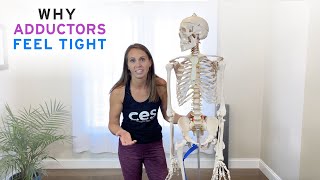
Glute Activation Test
Автор: Core Exercise Solutions
Загружено: 2020-09-03
Просмотров: 13263
Have you ever noticed a pocket or divot that forms on the side of the hip? And have you ever wondered why some people have more of a pocket than others, or why you seem to be different on each side?
Let’s take a look at how we can change that pocket by focusing our intention (what muscles we are thinking about contracting) before doing an exercise.
What happens to the pocket behind your femur when you contract your glutes?
Is the pocket the same on both sides, or does one side appear deeper than the other?
Those pockets can give you clues about deep hip rotator tightness, glute medius to glute max balance, and hamstring dominance vs glute dominance. One of those may be causing your femur to be more forward in the socket and could be contributing to other issues in the area, like the pelvic floor, IT Band Syndrome, piriformis pain, etc.
Now let's play around with how you go about contracting your glutes to see if we can keep the deep hip rotators from kicking in and get those pockets to decrease.
How did it go? Did adding in the adductor squeeze make any difference?
Next week we’re going to work through both passive and active exercises to help your femur slide back in the socket! So, please stay tuned. 💃
*There are other reasons for pocket differences. We’re just working through a few muscular issues here and starting to think about solutions.
--------------- ⬇️ ⬇️ ⬇️ ---------------
👩🏻🏫 Check out our CEU courses for Health and Fitness Professionals:
👩🏻💻 PCES - Pregnancy & Postpartum Corrective Exercise Specialist
www.coreexercisesolutions.com/pces
👩🏻💻 Pelvis Pro
www.coreexercisesolutions.com/pelvis-pro
-----
00:00 Intro
00:31 Glute Activation Test
01:31 Femur Too Far Forward
02:01 Engage Adductors with Glutes
03:15 Summary

Доступные форматы для скачивания:
Скачать видео mp4
-
Информация по загрузке: