Mastering Quadratic Equations and Graphs: An Edexcel GCSE Guide
Автор: Math Revision LM
Загружено: 2026-01-22
Просмотров: 2
Beyond the X: 5 Surprising Truths Hidden in Your Quadratic Equations
1. Introduction: The Algebra Anxiety Pivot
For many, encountering a quadratic equation feels like stumbling into a legacy codebase of arbitrary rules—a confusing string of x^2 terms and coefficients designed to be solved once and never thought of again. This "algebra anxiety" is common, but it stems from a fundamental misunderstanding. We’ve been taught to see these equations as obstacles rather than interfaces.
When we pivot from the mechanical grind of symbol manipulation to the visual logic of geometry, the perspective shifts. Quadratic equations are not just homework; they are high-fidelity "maps" describing the physical world. From the arc of a ball to the structural integrity of a bridge, these formulas are the rendering engine for the curves that define our reality.
2. The X-Marks the Spot: Roots as Physical Destinations
In the abstract, we talk about finding the "roots" or "solutions" of an equation. In the physical map of a graph, these are actual destinations: the precise locations where a curve intersects the horizontal x-axis.
Take the equation x^2 + x - 6 = 0. By factorising this expression, we translate it into (x + 3)(x - 2) = 0. This process acts as a bridge between a flat formula and a visual path. These brackets are essentially "coordinates in disguise," revealing exactly where the curve y = x^2 + x - 6 will make landfall. By setting the factors to zero, we find our destinations at x = -3 and x = 2.
"If a quadratic equation can be factorised, the factors can be used to find the roots of the equation."
3. The Mystery of the Missing Solution
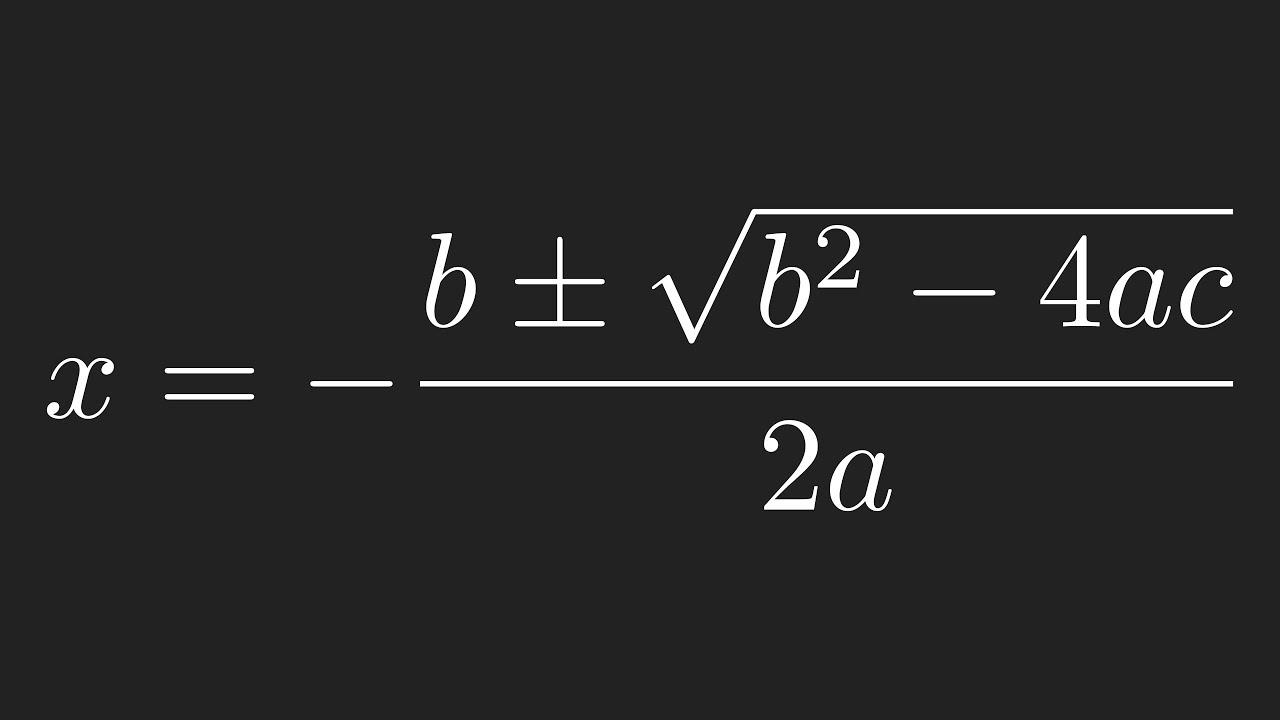
In the world of mathematics, a "dead end" is often as descriptive as a clear path. Consider the equation x^2 + 2x + 5 = 0. When processed through the quadratic formula, the calculation hits a hard limit: the square root of -16.
"It is not possible to find the square root of a negative number, so the equation has no solutions."
This isn't a failure of the math; it’s a vital piece of spatial metadata. Visually, it tells us that the curve simply refuses to touch the x-axis. The entire parabola is suspended above the line, never making contact. In the language of quadratics, a "no solution" result is the graph's way of defining its boundaries and its refusal to intersect with a specific baseline.
4. Completing the Square is a "GPS" for Curves
If factorising tells us where a curve lands, Completing the Square serves as the GPS for the journey itself. It identifies the curve's Turning Point—the peak or valley where the trend reverses direction—and the Line of Symmetry that splits it perfectly in half.
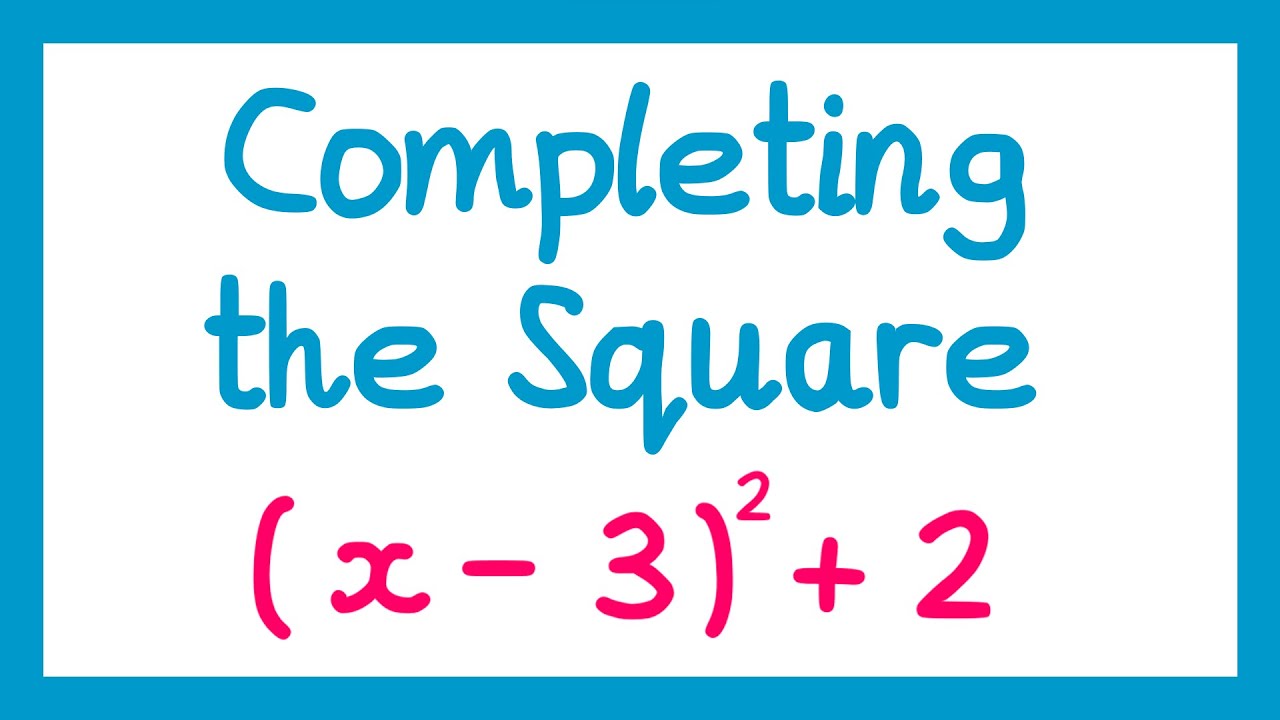
By transforming the standard form into the "map" format of (x + b/2)^2 - (b/2)^2 + c, we can extract the literal "longitude and latitude" of the graph. For the function y = x^2 - 6x + 4, completing the square yields y = (x - 3)^2 - 5. In this form, the (x - 3) identifies the Line of Symmetry at x = 3, while the -5 indicates the vertical "elevation" of the curve's lowest point. This gives us a Turning Point at the coordinates (3, -5). For anyone analyzing data trends, this is the ultimate tool for pinpointing exact minimum or maximum values.
5. The "Loop" Method: Solving the Impossible via Iteration
Sometimes, equations grow too complex for the elegant shortcuts of factorising or the quadratic formula. When we move into the territory of cubic equations like x^3 + 5x = 20, we encounter the limits of standard algebraic manipulation. To solve these, we use "Iteration"—a recursive logic that feels more like computer programming than traditional math.
"Iteration means repeatedly carrying out a process. To solve an equation using iteration, start with an initial value and substitute this into the equation to obtain a new value."
By rearranging x^3 + 5x = 20 into the iterative formula x = \sqrt[3]{20 - 5x}, we create a feedback loop. Starting with an initial value like x_0 = 2, you feed the result back into the formula over and over, "homing in" on the answer with increasing precision. Modern calculators automate this via the "ANS" button: type \sqrt[3]{20 - 5 \times ANS}, and each press of the equals sign brings you closer to the truth. It is the mathematical version of a self-correcting algorithm.

Доступные форматы для скачивания:
Скачать видео mp4
-
Информация по загрузке: