3D Structural Modelling for Enhanced Peptide-MHC and TCR Specificity predictions
Автор: Unravelling T Cell Recognition
Загружено: 2025-11-17
Просмотров: 79
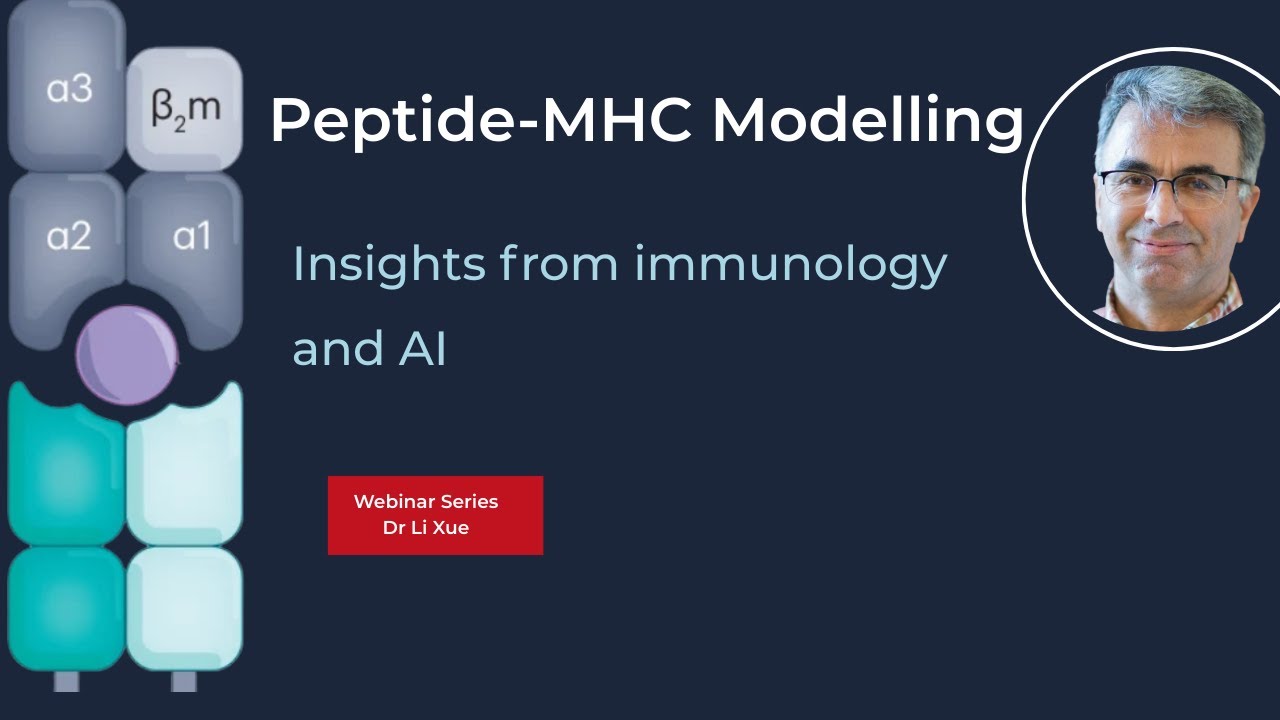
Prof Li Xue from Radboud University Medical Center (Radboudumc).
Abstract
Cancer immunotherapies hold tremendous promise, yet their progress is often constrained by high costs, long development timelines, and off-target toxicities. A major challenge lies in accurately identifying tumor-specific mutated peptides that bind strongly to MHC molecules and elicit targeted T cell responses. Existing predictive models have achieved limited success, largely due to incomplete coverage of the diverse TCR-peptide-MHC interaction space and a reliance on one-dimensional (1D) sequence-based representations.
To address these limitations, we introduce 3D structure-based AI methods, which capture rich spatial and physicochemical features that enhance predictive accuracy and generalizability. In this talk, I will present our recent advances in peptide–MHC binding and TCR specificity prediction enabled by these 3D approaches. Specifically, I will introduce SwiftMHC, our ultra-fast AI simulator capable of generating 3D pMHC structures and predicting binding affinities within milliseconds (excluding file writing), and SwiftTCR, a physics-based modeling tool that constructs TCR–pMHC complexes within minutes using only CPUs. I will conclude with a discussion on future directions for integrating structural modeling and deep learning to decode the principles of TCR recognition and guide next-generation immunotherapy design.
Доступные форматы для скачивания:
Скачать видео mp4
-
Информация по загрузке: