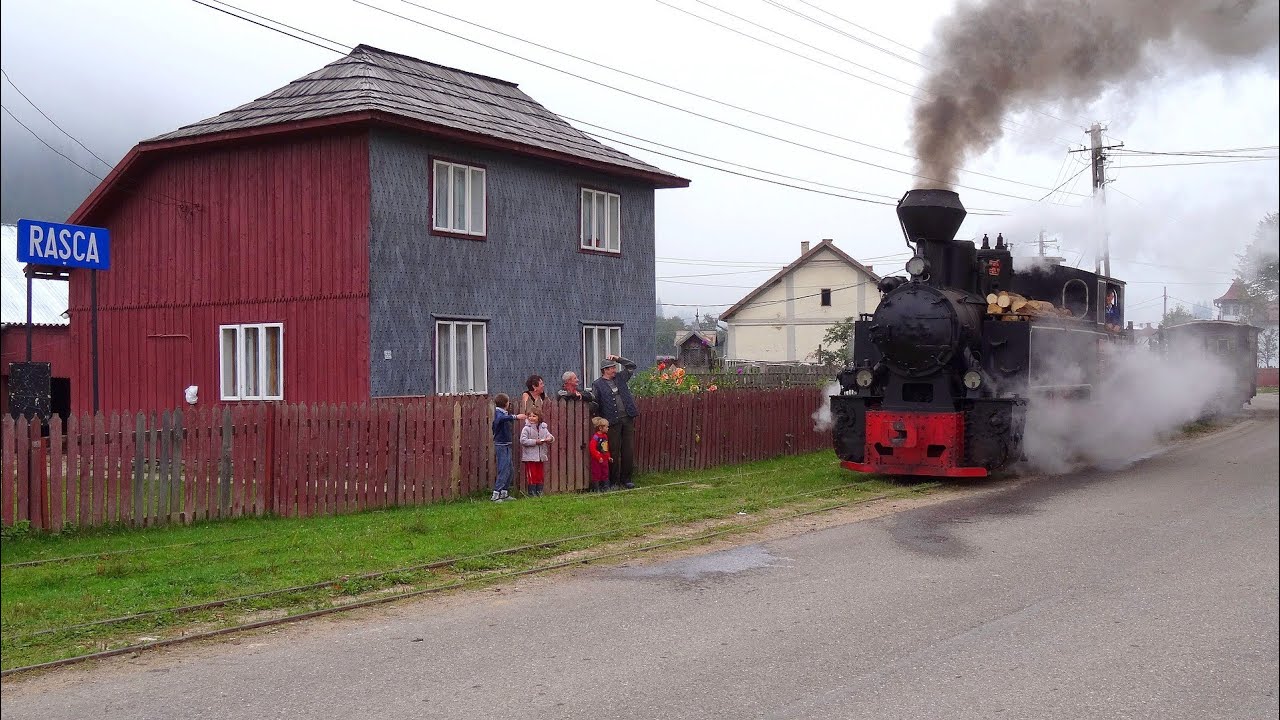
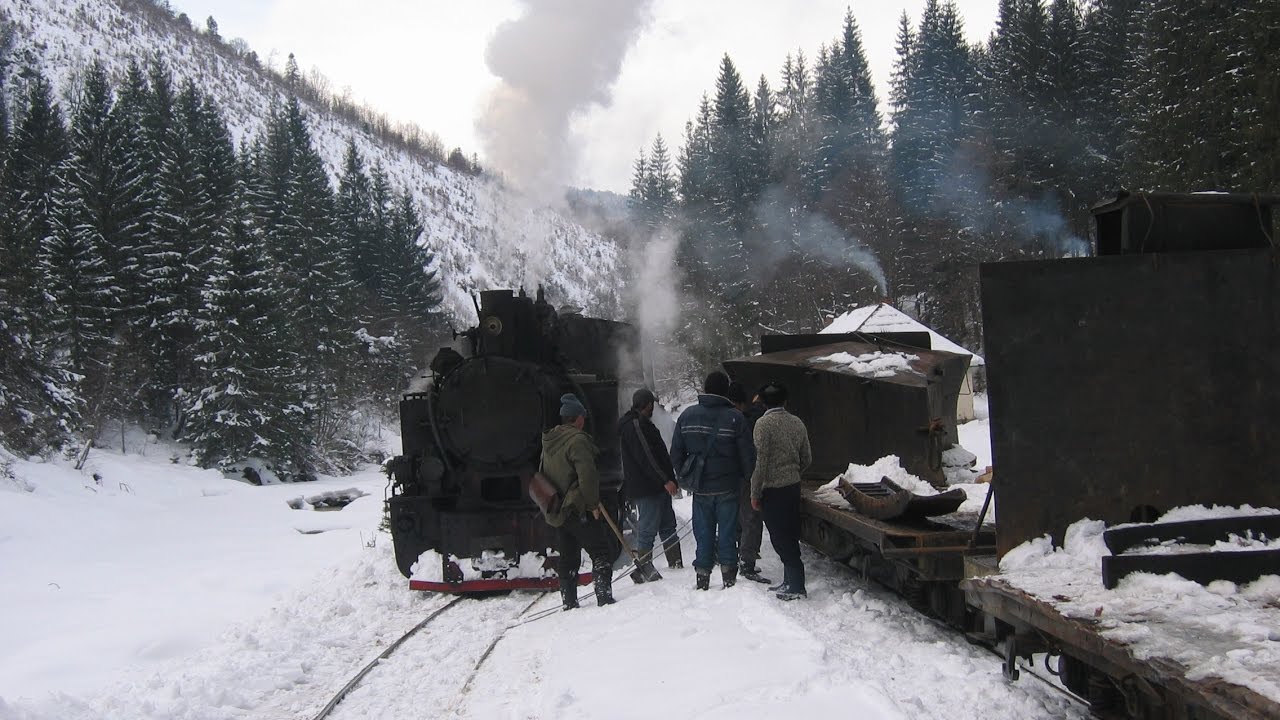
20130907 15 ROUMANIE 2/6 VISEU DE SUS 2
Автор: Le Monde Vu Du Train ex France Vue du Train
Загружено: 2014-01-05
Просмотров: 11731
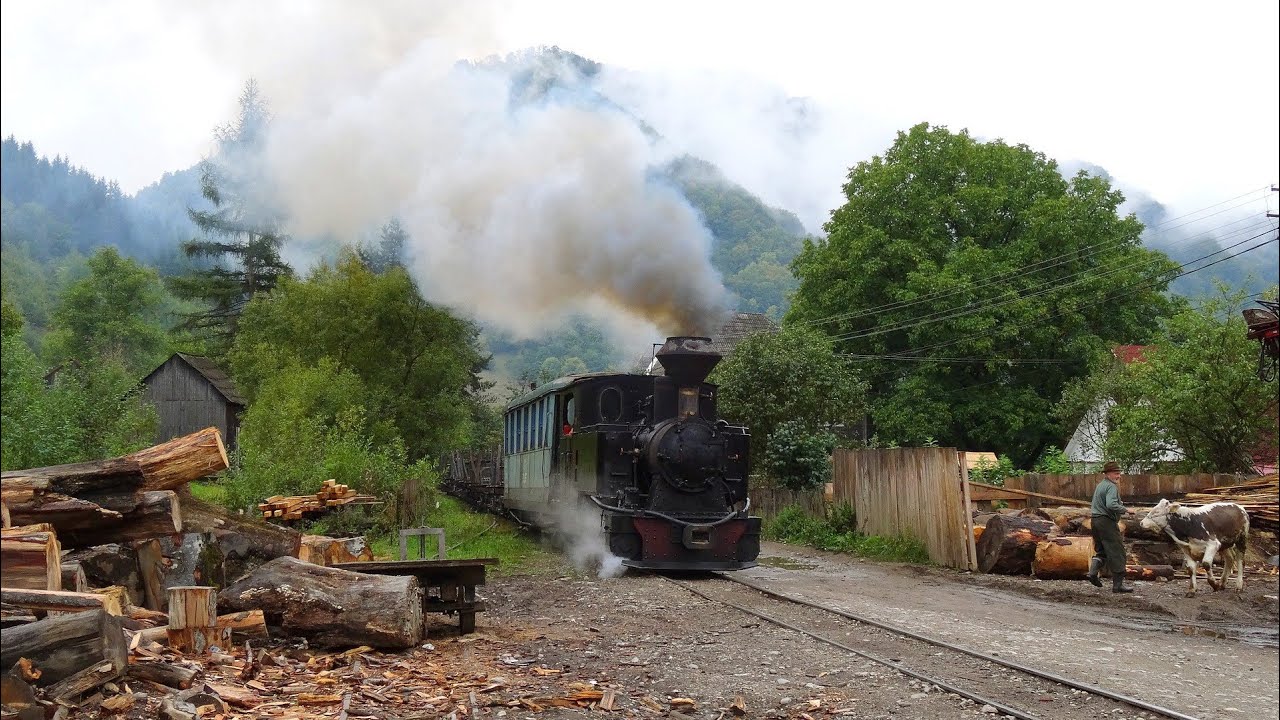
Ligne Forestière Viseu de Sus (traduit du texte B.Seiler FarRail Tours)
En 1932 débute de la construction d'un chemin de fer forestier de Viseu de Sus le long de la rivière Vaser. Une branche de 13 km le long du Valea Novatului a été ouverte en 1952.
En 1982 de grosses inondations ont détruit plusieurs sections de voies, demandant de nombreux mois de travail avant la réouverture de la ligne. Le pont sur la Vaser au PK13 n'a jamais été reconstruit, condamnant ainsi l'embranchement. En 1987-88 une nouvelle branche fut ouverte au-dessus de Faina. En 2008 une autre inondation endommageât plusieurs KMS de lignes, heureusement reconstruite.
À Viseu de Sus, il y a une grande scierie, un dépôt et un atelier de réparations bien équipé.
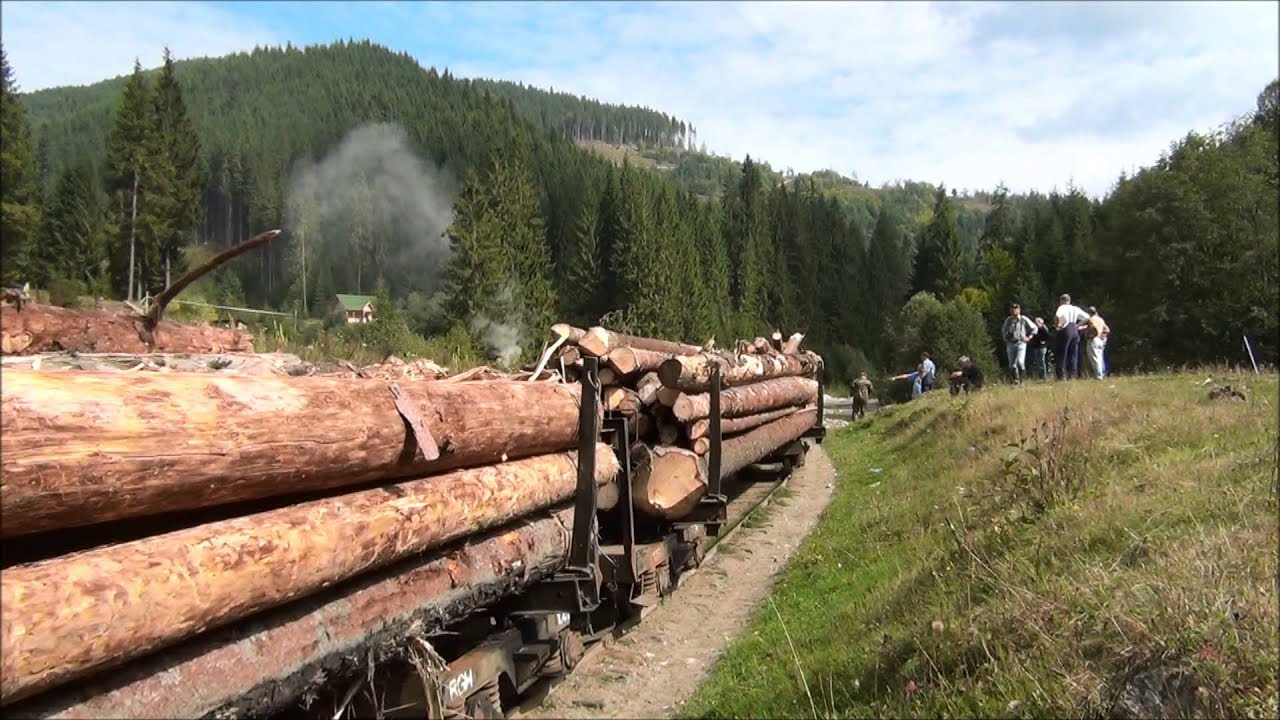
Le chemin de fer forestier de Viseu de Sus avait trois caractéristiques tout à fait uniques. Tout d'abord, il y a trois tunnels sur cette ligne. Deuxièmement, il y avait un service régulier de passagers jusqu'aux années 1990. Il est destiné principalement aux ouvriers forestiers, mais est aussi bien utilisé par les habitants de la vallée pour qui le chemin de fer était le seul moyen de transport. Le lundi d'habitude trois trains partaient de Viseu le matin, deux trains pour Coman et un pour Ihosa sur l'embranchement. De nos jours la ligne voit un à deux trains par jour, tractés en diesel et n'allant pas au-delà des besoins d'exploitation forestières. Plusieurs « autorails » artisanaux (minibus montés sur des boggies) sont utilisés le service passager.
Les trains transportaient aussi des vivres pour les ouvriers forestiers. Ces vivres étaient déposés dans des « cottage » le long de la ligne. Un « cottage » était un logement rudimentaire, souvent avec un petit magasin accolé « magazin forestiere », où les ouvriers vivent pendant leur semaine de travail dans la forêt.
Il ne reste aujourd'hui en transport passager que le train touristique en été. Les voitures viennent en partie de Suisse et sont peintes en jaune...
L'autre caractéristique unique à Viseu de Sus était sa grue d'eau. Malheureusement endommagée par une inondation, elle ne fut jamais réparée, le diesel opérant la plupart des opérations. Comme la plupart des chemins de fer forestiers suivent une rivière, la procédure de ravitaillement en eau est simple : un tuyau entre les caisses à eau de la machine et la rivière.
********************************************************************************
Forestry Line Vişeu de Sus (text B.Seiler FarRail Tours)
In 1932 the construction of a forestry railway from Vişeu de Sus along the river Vaser started. A 13 km branch along the Valea Novatului was opened in 1952.
Heavy flooding in 1982 washed away large sections of track and it took months before the line could be reopened. The bridge over the Vaser at km 13 was never replaced and its associated branch was closed. A new branch just above Faina was opened in 1987/8.
In 2008 another heavy flood washed away many miles of track and damaged several bridges. Fortunately the line was re-built.
At Vişeu de Sus, there is a large sawmill, a loco depot and a well-equipped repair shop.
The forestry railway at Vişeu de Sus had three quite unique features. First of all, there are three tunnels on this line. Secondly, there was a regular passenger service until the 1990ies. It was intended primarily for the forestry workers, but is also well-used by the inhabitants of the valley for whom the ng railway was once the only means of transport. On Mondays usually three trains left Vişeu in the morning, two heading towards Coman and one for Ihosa on the branch line. Nowadays the line sees one to two trains a day, diesel hauled and not going further up the line than needs of logging requires. Several self-made railcars are used for passenger services.
As well as conveying workers and passengers, these trains also carried food supplies, which were dropped off to the "cabana" along the line. "Cabana" are very simple lodgings, often with an associated shop ("magazin forestiere"), where the workers live during their working week in the forest. The only passenger transport today are the tourist train in the summer. The coaches used coming from other lines, partly from Switzerland. Some of them are painted yellow ...
The other unique feature at Vişeu de Sus was a water crane. It was damaged in a flood at the beginning of the new century and never repaired because diesel took over most of the daily operation. The normal procedure elsewhere at Vişeu de Sus and on all other CFF lines is to drop one end of a long pipe, carried on the locomotive, into the nearest pond or small river to suck water into the tanks. As most forestry railways follow a water course at some stage or another, it is not difficult to find a suitable source of water - whether it be a clear, raging torrent high in the Carpathians as at Vişeu or the murky waters of the "Blue Danube" at Berzasca.
Доступные форматы для скачивания:
Скачать видео mp4
-
Информация по загрузке: