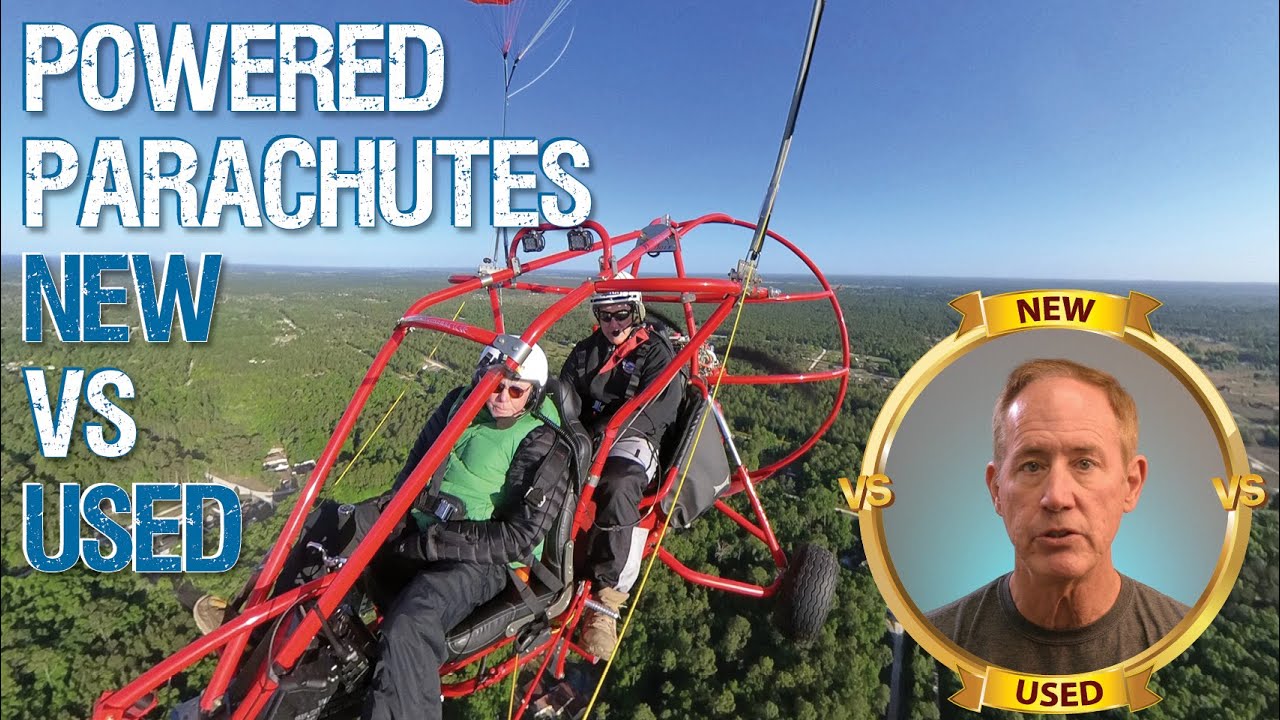
Two Stroke vs. Four Stroke Engines | 2 Cycle vs. 4 Cycle | Powered Parachutes | Easy Flight
Автор: Easy Flight
Загружено: 2021-04-21
Просмотров: 10759
I’ve encluded a video that shows an animated two stroke combustion engine and how it works. The animation came from:
savree.com/en/product/two-stroke-engine/
Thanks so much to the creator for producing the animation and allowing me to use it!
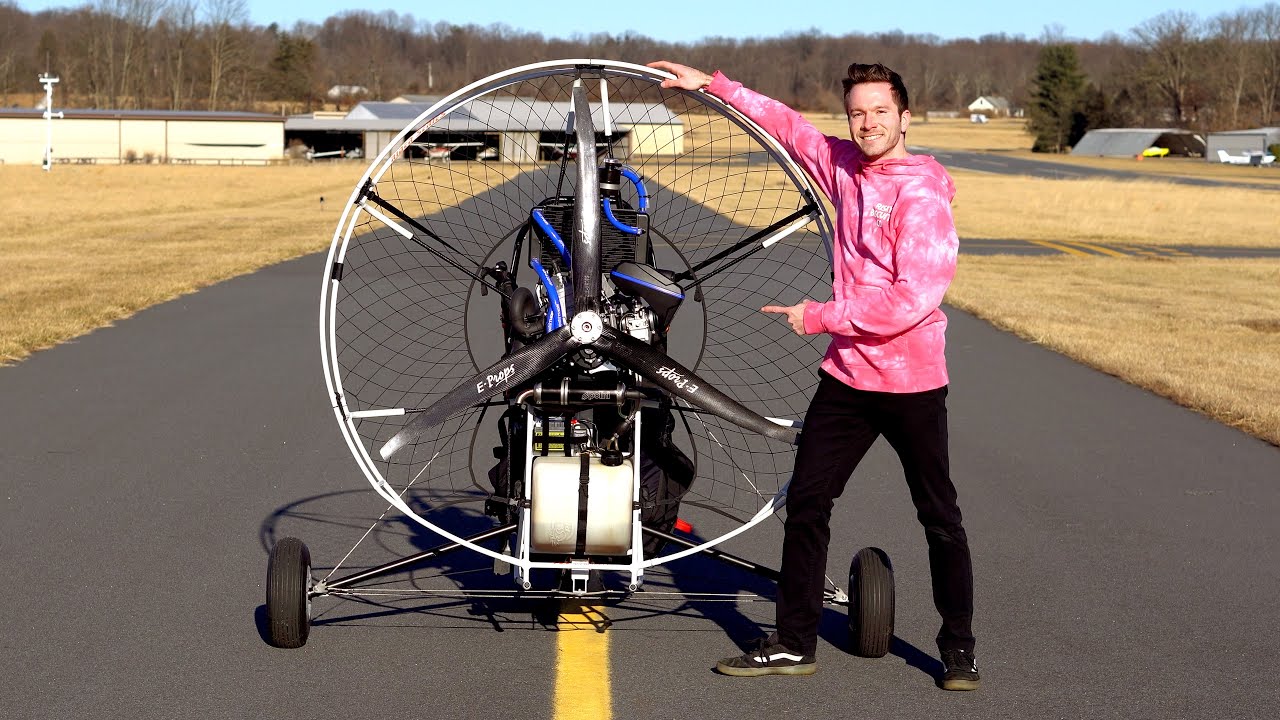
Powered parachutes –and for that matter all aircraft— are concerned with weight and power and reliability. Powered parachutes are particularly power-hungry, though. That has to do with the relatively inefficient nature of our wings. That means that both two-stroke and four-stroke engines have very appealing features.
A stroke is when a piston goes either up or down in an engine cylinder. A cycle is part of the critical process of getting fuel and air into the engine and getting power out of it. Each cycle happens very rapidly in a four-stroke and even more rapidly in a two-stroke.
The Intake starts the process. For a four-stroke engine, this stroke of the piston begins at the top dead center (which is the highest the piston can go up) and ends at the bottom dead center. In this stroke the intake valve must be in the open position while the piston pulls a fuel-air mixture into the cylinder by producing a vacuum in the cylinder through its fast, downward motion. So the piston is moving down and the fuel-air mixture from the carburetor is being sucked in by the downward motion of the piston.
The Compression stroke begins at bottom dead center, or just at the end of the intake stroke, and ends at top dead center. In this stroke the piston compresses the fuel-air mixture in preparation for ignition during the power stroke. Both the intake and exhaust valves are closed during this stage.
The Combustion stroke is the start of the second revolution of the four-stroke engine. While the piston is approaching top dead center —near the end of the compression stroke— the compressed fuel-air mixture is ignited by a spark plug –or two— forcefully pushing the piston down to bottom dead center. It produces the mechanical work from the engine by forcing the crankshaft to turn.
During the exhaust stroke, the piston makes the trip up from bottom dead center to top dead center to clear out the bad air. This time, the exhaust valve is open. The piston pushes the spent fuel-air mixture past the exhaust valve, into the exhaust system and ultimately back to the atmosphere.
A two-stroke engine has only two strokes. One upstroke and one downstroke. How it works is that a two-stroke engine combines the compression and ignition cycles on its upstroke while combining the power and exhaust cycles on the downstroke.
During the Intake/Compression stroke: the piston moves up, draws fuel-air mixture in AND compresses it.
During the Combustion/Exhaust stroke the fuel is ignited, the piston is forced down, AND the exhaust is ultimately pushed out.
The big question becomes, why should we care about two-strokes and four-strokes?
First there is expense.
And as we get into this comparison, it makes sense to point out that over ninety percent of two-seat powered parachutes use Rotax engines.
Therefore it makes sense to focus on those engines for the sake of this discussion.
The most commonly used Rotax two-stroke, the Rotax 582 with a Model E gear box, costs over $8,000 retail.
The most commonly used Rotax four-stroke, the Rotax 912ULS costs over $21,000 retail.
If you consider that most of the powered parachutes available used have used Rotax 582 engines on them, that makes the price of a two-stroke powered parachute even more reasonable.
The power delivered by the Rotax 912 ULS is impressive.
100 hp. The Rotax 582 is 65 hp.
The Rotax 912 ULS weighs approximately 143 lbs.
The Rotax 582 with an E gearbox is about 104 lbs.
That means with the 912 ULS, you’re going to get about .7 horsepower per pound of engine. With a 582, you’re only getting .6 horsepower per pound.
Part of the value of an engine is how long it lasts. Time between overhaul favors the Rotax 912 ULS. A new engine can be run for 1,500 hours or twelve years.
ALL of the Rotax two-stroke engines are only good for 300 hours or five years.
Yes, that means that the Rotax 912 ULS will run five times longer before you need to overhaul it.
Then there are reliability issues.
Now the common knowledge is that two strokes fail more often than four strokes.
Four-strokes are known for being much more fuel efficient, but that seems to be a wash with two-stroke powered parachutes vs. four-stroke powered parachutes.
A big edge to powered parachutes using two-strokes is the nimbleness of the machines. Lighter often equals more fun.
Learn how to fly at https://www.easyflight.com
Roy's Powered Parachute Book: https://www.poweredparachutebook.com
#easyflight #flying #poweredparachutes #pilot #aviation #aircraft #lightsportaircraft #flighttraining #learningtofly #parachute #engines

Доступные форматы для скачивания:
Скачать видео mp4
-
Информация по загрузке: