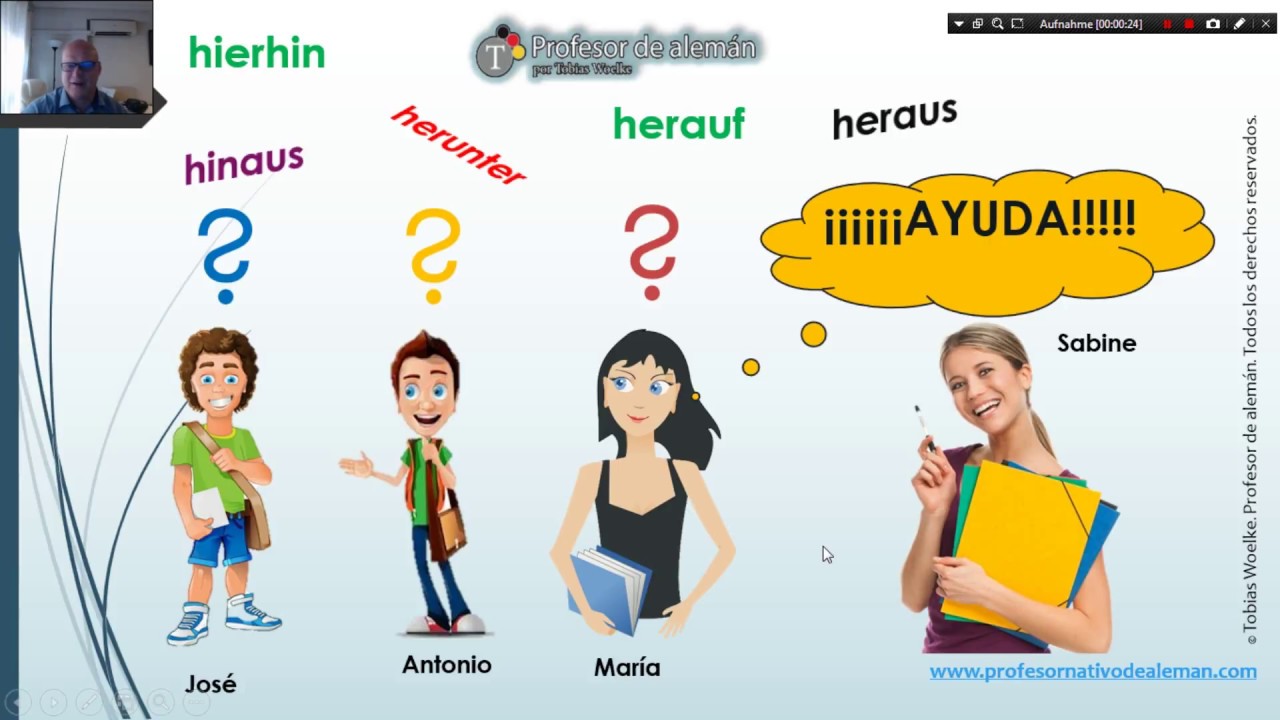
Aprende la diferencia entre HIN y HER en alemán: herunter, hinunter, heraus, hinaus, hinein, herein
Автор: TomAleman
Загружено: 2020-04-11
Просмотров: 14361
En esta lección de alemán vas a aprender las diferencias entre los adverbios alemanas HIN y HER, sus significados principales en español cuando se combinan con preposiciones a verbos (hineingehen, hereinkommen, hinaus, heraus, hinauf, herauf, hinunter, herunter…), ya que son dos de los adverbios más usados en este idioma, especialmente en expresiones comunes en conversaciones en alemán del día a día con las cuales puedes socializar y llegar a un nivel más avanzado en este idioma. Todo está explicado en español fácil y rápido. Vas a aprender sobre los usos de estas importantes palabras en oraciones en alemán. Aprender alemán en YouTube.
Sígueme en Instagram. Tomas.der.Profe:
/ tomas.der.profe
No olvides suscribirte a mi canal aquí:
/ @tomaleman
En Facebook me puedes contactar. Spanisch mit Tomás:
https://www.facebook.com/Tomas.der.Pr...
Transcripción del video:
Hallo hallo, ich bin Tomás
Tu profesor de alemán favorito
Y hoy vamos a aprender dos palabras en alemán muuuuuy importantes…
¿Qué son?
HIN y HER.
Estos son adverbios direccionales alemanes con varios significados y en esta lección nos vamos a enfocar en cuando los usamos para hablar de lugares.
Explicados en forma general, HIN se usa para indicar una dirección que se aleja de la persona que habla: HACIA ALLÁ y HER indica una dirección hacia el hablante, que se acerca a la persona que habla: HACIA ACÁ.
Esto es así sin importar que combinemos HIN o HER con otros adverbios o con verbos.
Aaah por eso es que “¿a dónde?” o “¿hacia dónde?” de dice WOHIN? En alemán y “¿de dónde?” se dice WOHER…
Genau. Exacto.
Por ejemplo “hin und zurück” significa “de ida y vuelta”.
En alemán hay muchos verbos de desplazamiento
Como “kommen, laufen, fahren, gehen, fliegen…”
a los que se les pone un prefijo para indicar la dirección del movimiento. Aunque hay más, muchas veces este prefijo es HIN o HER u otros prefijos que son compuestos por estos dos. Zum Beispiel...
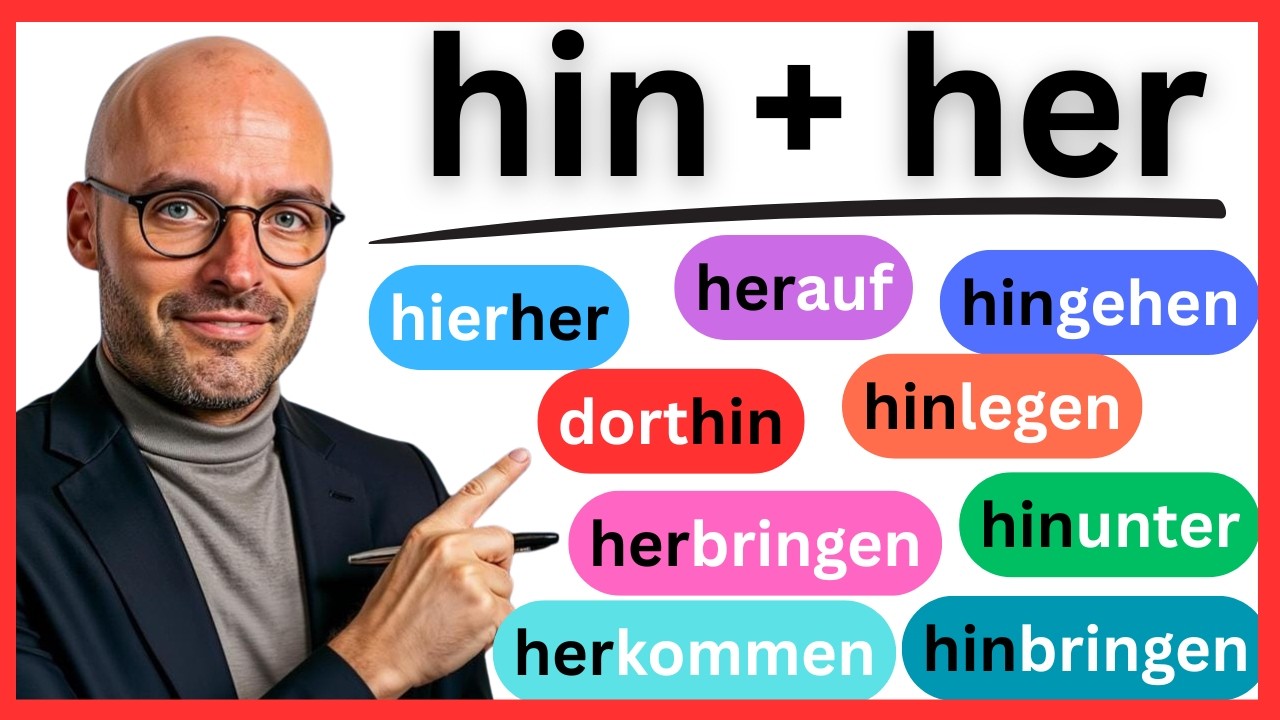
HERKOMMEN (venir aquí)
Kommen Sie her!
Kommen Sie her!
HINGEHEN (ir allí)
Geh hin! Geh hin!
A veces se combina con otros adverbios...
DORTHIN / DAHIN
(allí, hasta ahí…)
Ich will nicht dahin gehen.
Ich will nicht dahin gehen.
HIERHER
(hacia acá, por aquí…)
Fahren wir hierher.
Fahren wir hierher.
También se pueden usar juntos: HIN UND HER
(de un lado para otro)
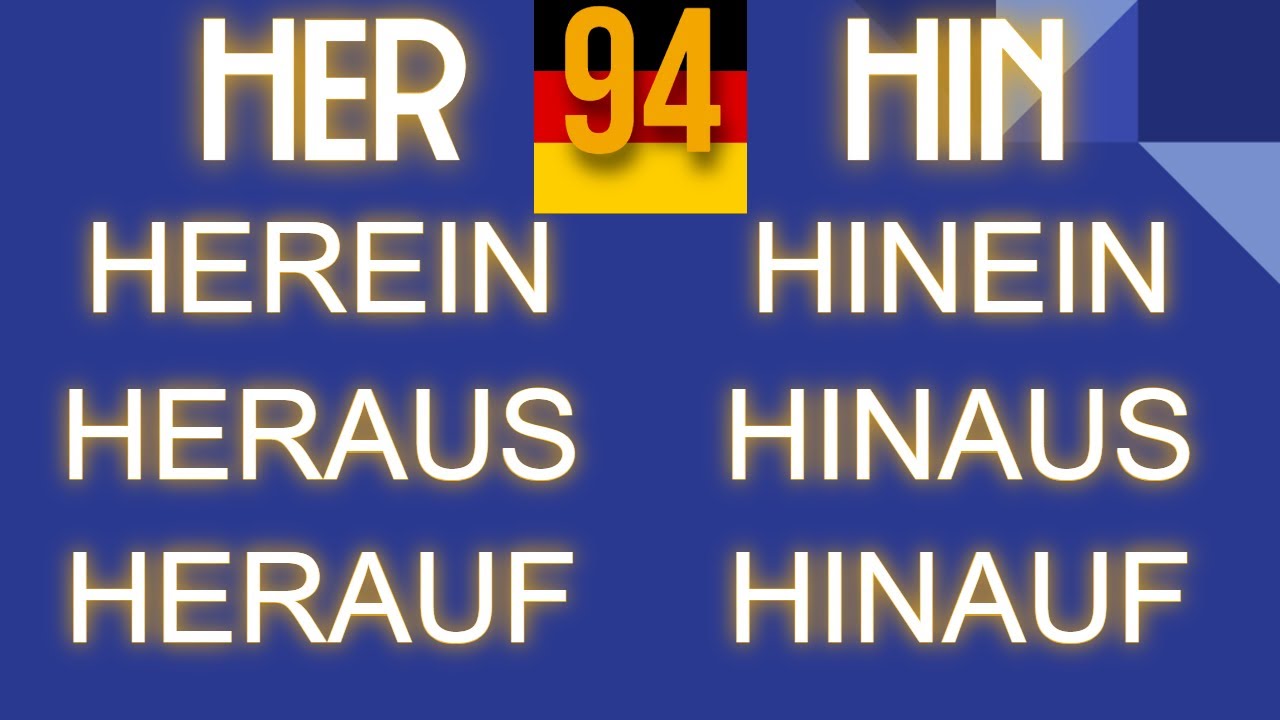
Se puede combinar HER + EIN para decir HEREIN y significa “hacia dentro”
(el hablante también está adentro)
HEREINKOMMEN (entrar), en el sentido de que entres a donde yo también estoy (si yo soy el hablante)
HIN + EIN = HINEIN también significa “hacia dentro”, pero aquí el hablante no está adentro sino afuera.
HINEINGEHEN (entrar), pero entrar a otro sitio en el cual yo no estoy (si yo soy el hablante)
Podemos combinar HER + AUS = HERAUS
Hacia fuera
(el hablante está afuera)
Aaah entonces si digo HERAUSKOMMEN significa que salgas hacia donde mí, porque yo también estoy afuera y si digo HINAUSGEHEN significa que salgas pero a otro sitio en el cual YO NO estoy…
CORRECTO. Es como IR y VENIR en español, HIN y sus combinaciones se usan para hablar de IR a otro lugar y HER y sus combinaciones para hablar de VENIR al sitio a donde estoy.
Y así se combinan también con otras preposiciones, por ejemplo...
HERAUF (hacia arriba), acercándose a mí.
HINAUF (hacia arriba), alejándose de mí.
HERUNTER (hacia abajo), acercándose a mí.
HINUNTER (hacia abajo), alejándose de mí.
En el lenguaje coloquial la gente suele usar una forma corta y simple que es más sencilla y aquí no se hace diferencia con la idea de acercamiento o alejamiento del hablante.
rein = hinein / herein
raus = hinaus / heraus
rauf = hinauf / herauf
runter = hinunter / herunter
rüber= hinüber / herüber
Aaaah pero LEHRER!!! Entonces ESA ES LA FORMA QUE ME VOY A APRENDER!!
Tu siempre de haragán….
DAS IST ALLES FÜR HEUTE!
VIELEN DANK!!
Encuéntranos en Facebook como “Spanisch mit Tomás” y en Instagram como “Tomas.der.Profe”
Y ... SUSCRÍBETE, abonniere
TSCHÜß!!!
Vielen Dank!!
Tomaleman
Alemán con Tomás
aprender aleman con tomas
aprender aleman online para hispanohablantes
#aprenderaleman
#tomaleman

Доступные форматы для скачивания:
Скачать видео mp4
-
Информация по загрузке: