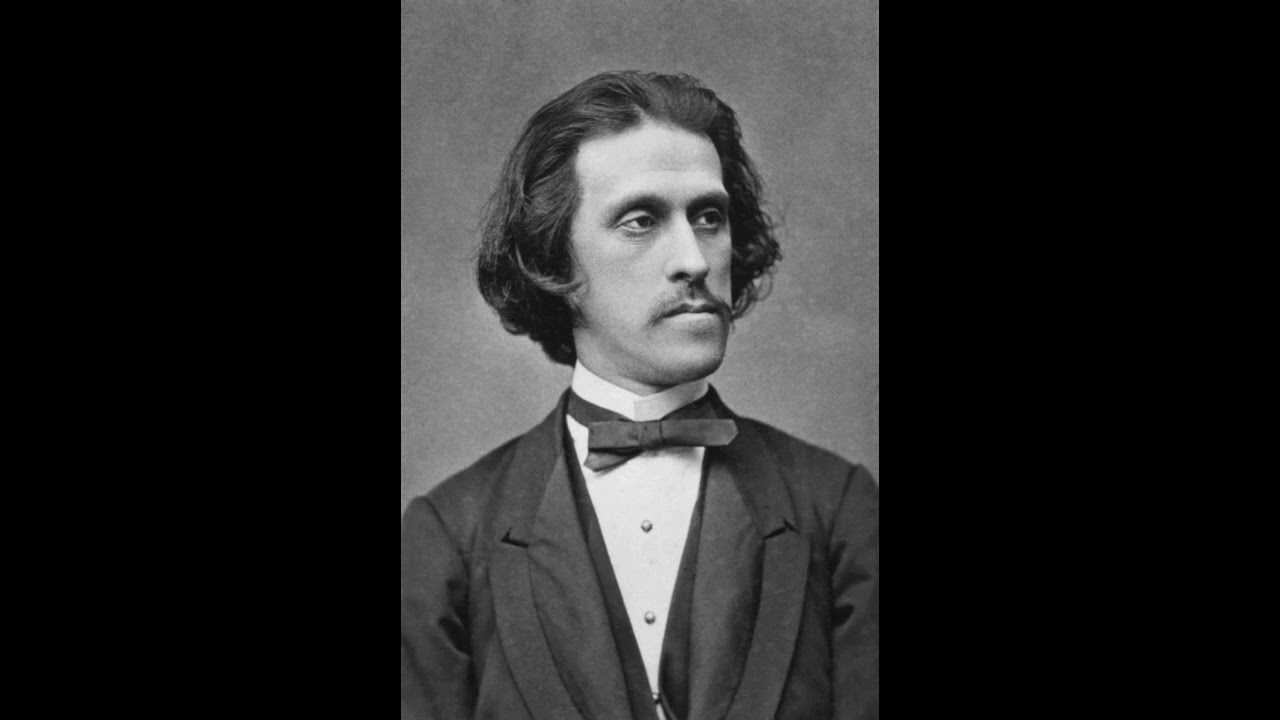
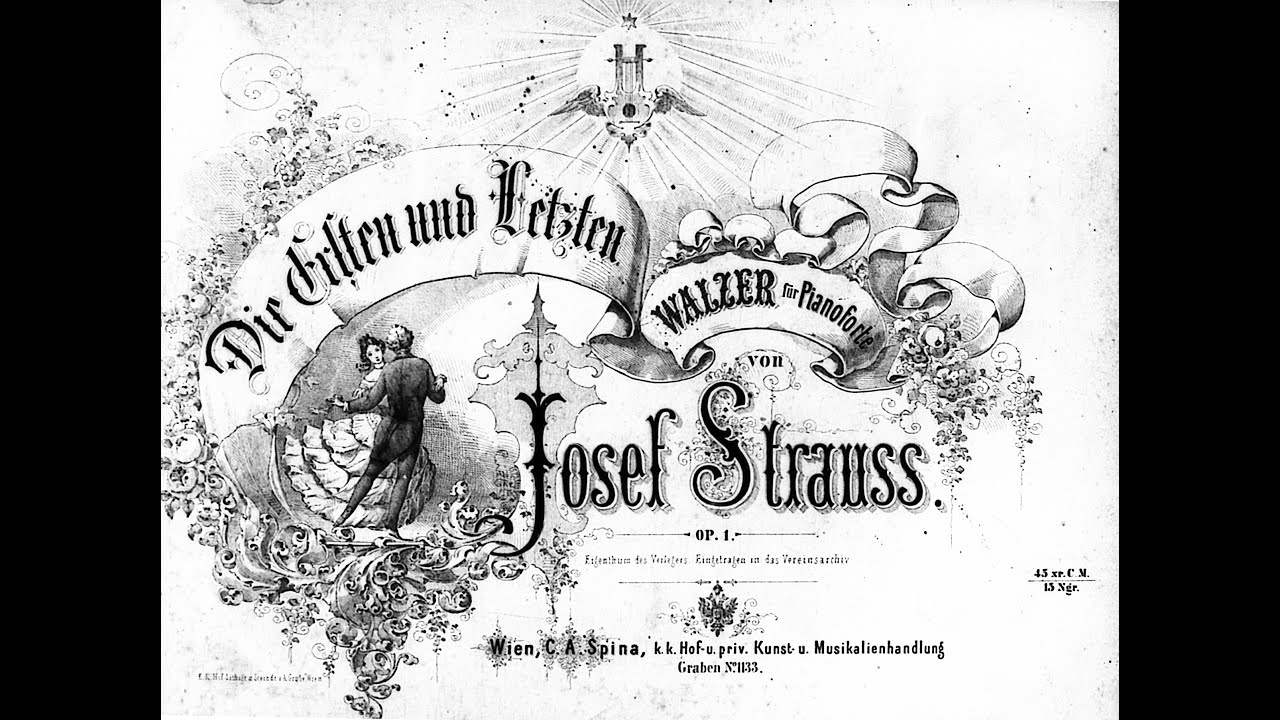
Josef Strauss (1827-1870): Die Ersten und Letzten (The First and the Last 最初で最後) Walzer Op. 1
Автор: Dr. Taka Otagawa
Загружено: 2025-12-13
Просмотров: 249
***Josef Strauβ BICENTENNIAL CELEBRATION (1827-2027) 祝ヨーゼフ・シュトラウス生誕200年***
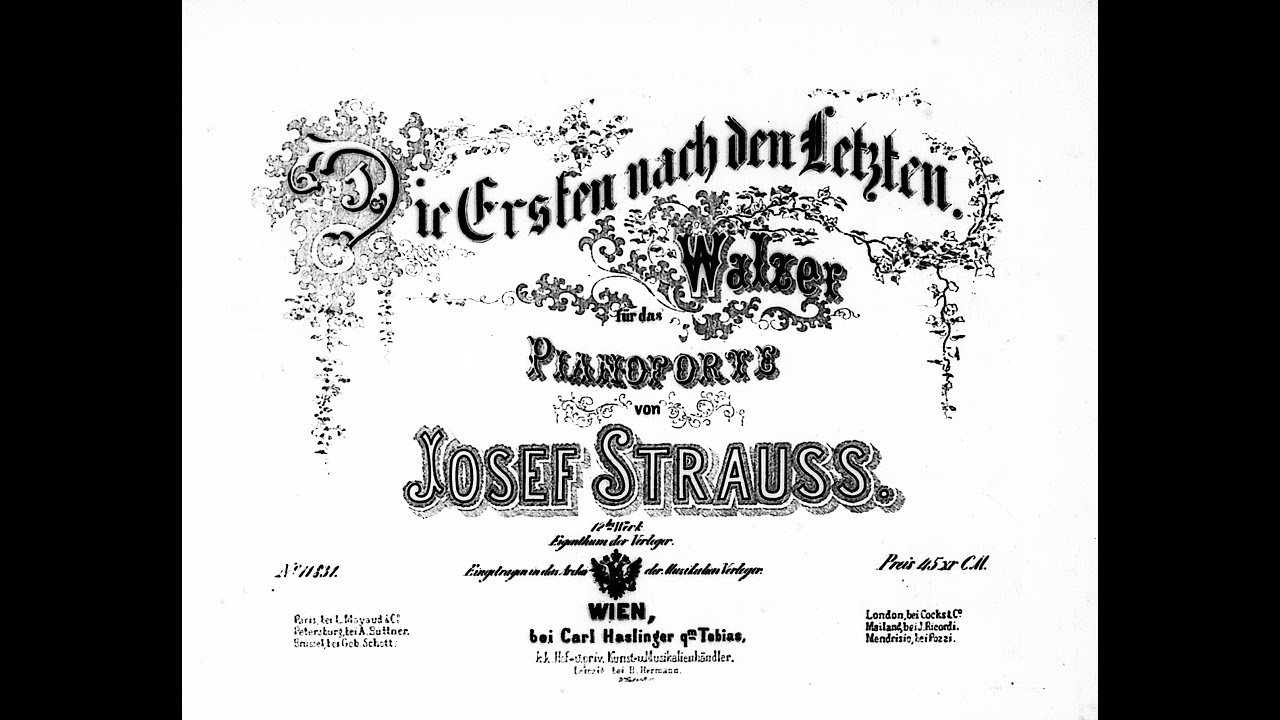
Josef Strauss (1827-1870): Die Ersten und Letzten (The First and the Last 最初で最後) Walzer in D major Op. 1
1st Performance: Monday August 29, 1853 – Parish Festival Ball at Unger’s Casino in the suburb of Hernals – performed by the Strauβkapelle conducted by Josef Strauss
Sources: 1st edition Piano Score published by C. A. SPINA, Wien Plate no. C.S.10,884 (1.23.1856) Josef Strauss Edition “revised” Piano Score - based on the Josef’s original autograph score (or the like) - by Carl Pfleger plate no. J. E. 604. Bd.1 (1900) Strauβ Edition Wien Orchestral Score 2 10A 001 W
The Orchestral Performance: Jos op.1 wav(lossless): https://drive.google.com/file/d/1XOV5... Courtesy of Otto Schulz-Biedermeier Orchestra (1950s)
(1) Josef wrote the Tempo marking of "PRESTO" (very fast !!) for the Introduction, which is very “uncommon” in the STRAUSS Waltzes.
(2) Three (3) waltz sections: Waltzes 1, 2, and 5 are written in ternary form (A-B-A).
(3) In the Waltz 5A Josef employed “Glockenspiel (carillon/chimes)”, which “inspired” Johann II to use “Röhrenglocke (tubular bell)” in the Waltz 5A of • Johann Strauss II (1825-1899): Schallwell...
(4) The principal Waltz 1 is written in the key of D major – the key of the Blue Danube Waltz. It would be of interest to compare with the Eduard’s 1st published Waltz (also in D major) written 9 years later in 1862: • Eduard Strauss: Die Candidaten (The Female... Eduard used “more Minor Chords” (!!)
(5) At the Waltz 3 the key (unexpectedly) changes from “D major” to “E-flat major” (!!)
(6) Johann II’s Three (3) Waltzes (Ländler) written for the Parish Festival Balls at Unger’s Casino:
1851 (op.99): • Johann Strauss II (1825-1899): Frauenkäfer...
1852 (op.119): • Johann Strauss II: Volkssänger (Folk Singe...
1854 (op.157): • Johann Strauss II (1825-1899): Nachtfalte...
From the original Marco Polo CD NOTEs about Die Ersten und Letzten Walzer op.1 [written in 2001 by Professor Franz Mailer (1920-2010) The Book: “Josef Strauss: Genius Against His Will (1985)” https://www.amazon.com/Josef-Strauss-...
Johann Strauss collapsed immediately after his return from an exacting concert tour throughout Germany. According to physicians, his exhaustion was life-threatening. Therefore, his mother, Anna Strauss, determined that Johann’s younger brother, 25-year-old Josef Strauss, should interrupt his career as an architect and join the family’s "waltz business," in order to relieve the ailing Johann. Josef was NOT happy about this decision, but he complied with his mother’s wishes. Before appearing for the first time at the helm of the Strauss orchestra as an "interim director" on 23rd July 1853, he wrote to his fiancée Caroline: The inevitable happened, I play for the first time at ‘Sperl’s.’ I regret with all my heart that this has happened so suddenly.... Two days later, Johann Strauss travelled to Bad Gastein and then to Bad Neuhaus in Lower Styria (present-day Slovenia).
Among the obligations of the Strauss orchestra was to provide the music for the balls in Unger’s Casino on the occasion of the yearly Church festival in Hernals. The date of this festivity, 29th August 1853, was fast approaching, and Johann Strauss still had not composed the new waltz expected for this event, nor sent it to Vienna. Therefore, Josef also had to take over for his brother as a composer. He had often enough watched Johann composing and orchestrating in the Hirschenhaus, so that this was no strange task for him. In order not to disappoint the organizer of the Ball and, as was to be expected, the very numerous audiences, Josef wrote the traditional dedication, a waltz, in the style of a Ländler, but he gave the work the title The First and the Last. In other words, once and never again! Josef Strauss wanted to perform his composition only once, precisely at the Hernals festival on 29th August 1853, but the work was received with enthusiastic applause, and had to be repeated. During the following days, encouraging reviews appeared, such as in the Wanderer of 30th August 1853 (Evening edition): Josef Strauss is a definite musical talent. It would be a pity if he were to retire so soon from public appearances. His waltzes are full of freshness and vitality, of that electricity which seems to be the sole property of the Strauss family. The thunderous applause and the never-ending encores will hopefully encourage Mr. Josef Strauss to write a new composition. Josef Strauss could read similar positive reviews in other newspapers, as well. He let himself be won over, and soon afterwards continued with his career as a composer of Viennese music, thus assuring himself, for the time being against his will, a place in immortality.
Доступные форматы для скачивания:
Скачать видео mp4
-
Информация по загрузке: