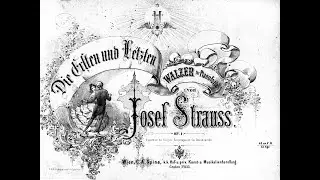
Die Ersten nach den Letzten (The First after the Last 最後の後の最初) Walzer op.12 (1) Piano (2) Orchestra
Автор: Dr. Taka Otagawa
Загружено: 2026-01-10
Просмотров: 131
***Josef Strauβ BICENTENNIAL CELEBRATION (1827-2027) 祝ヨーゼフ・シュトラウス生誕200年***
Die Ersten nach den Letzten (The First after the Last 最後の後の最初) Walzer Ор. 12 – (1) Piano (2) 9:01 Orchestra
1st Public Performance: (most likely) Early June 1854 – Unger’s Casino in the suburb of Hernals - performed by the Strauβkapelle conducted by Josef Strauss [On May 29, 1854 Johann II leaves Vienna for Badgastein for health reasons. On July 27, 1854 Johann II returns to Vienna.]
2nd Public Performance: July 2, 1854 – Concert at the Unger’s Casino in the suburb of Hernals – performed by the Strauβkapelle conducted by Josef Strauss
[1] The Piano:
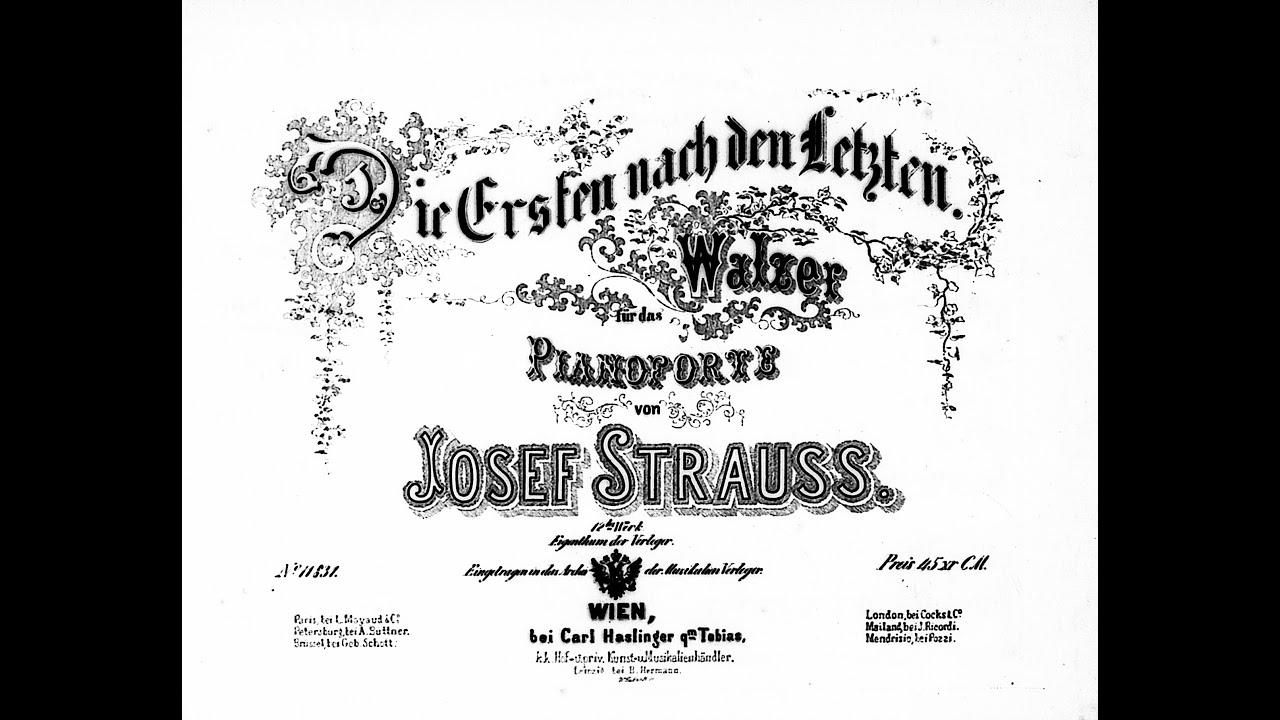
Source: 1st edition Piano Score published by Carl Haslinger qdm. Tobias, Wien Plate no. C. H. 11,831 (5.20.1856)
Performed by Dr. Taka S. [STRAUSS] Otagawa Ph.D. in Physical Chemistry (Texas A&M), US Citizen 小田川 隆朗 理工学博士 (The Pianist) https://drive.google.com/file/d/1Ua5y... Recorded LIVE (7.30.1977) at Herr Karasawa (唐澤俊三)* Residence, Yokohama, JAPAN [* Founder/Director of the Tokyo Johann Strauβ Ensemble] Equipment: Top-of-the-line Yamaha Upright Piano, TEAC Reel-to-Reel Tape Recorder, Professional Recording Microphone ANALYSIS of “The HISTORICAL PIANO RECORDINGS” by Herr Karasawa https://drive.google.com/file/d/1JEPK...
[2] 9:01 The Orchestra:
Source: The Josef Strauss Edition “revised” Piano scores - based on the Josef’s original autograph scores - by Carl Pfleger plate no. J. E. 605. Bd.II (1900)
The Orchestral performance {Restored/Edited by The Pianist} : Courtesy of Otto Schulz-Biedermeier Orchestra (1950s)
From the original Marco Polo CD NOTEs about Die Ersten nach den Letzten, Walzer (The First after the Last, Waltz), Ор. 12 [written in 1995 by Professor Franz Mailer (1920-2010) The Book: “Josef Strauss: Genius Against His Will (1985)” https://www.amazon.com/Josef-Strauss-...
After the serious illness of his brother Johann in December 1852, Josef Strauss was forced to give up his career as an engineer and architect and join the family waltz business. On 23rd July 1853, “Pepi” Strauss appeared for the first time at the head of the orchestra, specifically as a substitute (“acting orchestra director”). In August 1853, at the Hernals church celebration, he found himself having to step in for his brother as a composer as well, because Johann had failed to send the dedication waltzes for the Ball in Unger’s Casino from Bad Neuhaus in the Untersteiermark, where he was on holiday. Josef Strauss, who had acquired the necessary skills at his brother’s side, therefore wrote a suitable waltz piece. But he called the work Die Ersten und Letzten (The First and Last) • Josef Strauss (1827-1870): Die Ersten und ... . That could only mean: “Once and no more”.
But since Josef Strauss had great success with his composition, which appeared later in print as Op. 1, and he had also to continue to direct at the side of Johann at concerts and balls, he was not able to maintain his resolve. As Josef had to take over the direction of the orchestra alone in May 1854 because Johann went on vacation again, he contributed additional compositions to the repertoire of the orchestra. Among them was a new waltz piece, and “Pepi” Strauss had enough of a sense of humour to call it (with a little irony, but also with resoluteness) Die Ersten nach den Letzten. Exactly when this work was presented for the first time cannot be determined. At the concert in Unger’s Casino in Hernals on 2nd July 1854, Die Ersten nach den Letzten was included in the group of Josef’s “newest compositions”. This means that the brilliant set of waltzes was already known to the public at that time. It can be assumed that Josef Strauss, at about the same time that he took up the baton of the Strauss orchestra, had retracted his resolve of the summer of 1853 and therefore presented his second set of waltzes to the public no later than June 1854.
The set of waltzes Die Ersten nach den Letzten first appeared in the spring of 1856, and indeed apparently as Josef’s only composition from the summer of 1854. The other early works from these months remained unpublished and are therefore lost. But it is astonishing how perfect this second set of waltzes by the 27-year-old composer was. The real Strauss can already be appreciated, as well as Josef’s personal character.
Доступные форматы для скачивания:
Скачать видео mp4
-
Информация по загрузке: