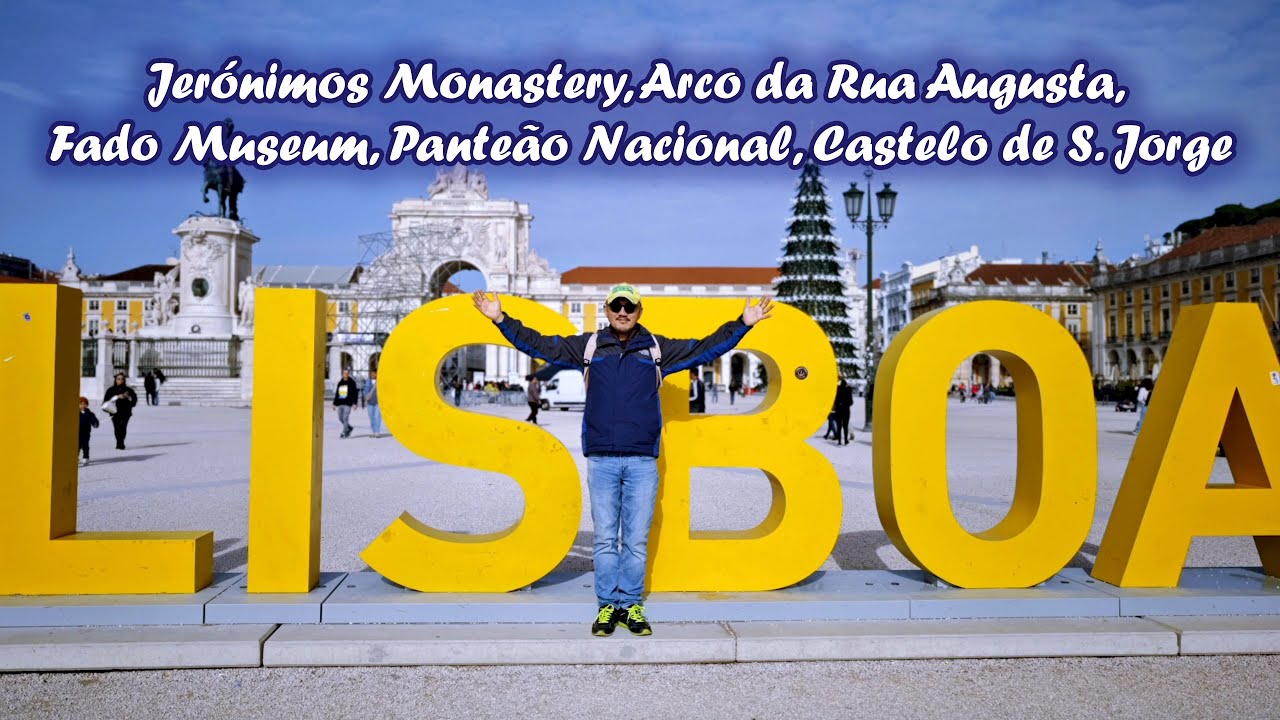
Jerónimos Monastery, Arco da Rua Augusta, Fado Museum, Panteão Nacional, Castelo de S. Jorge
Автор: simplethrills
Загружено: 2026-01-05
Просмотров: 14
Lisbon's historic core reveals its layered past through five iconic sites: Jerónimos Monastery, Arco da Rua Augusta, Fado Museum, Panteão Nacional, and Castelo de S. Jorge. These landmarks collectively trace Portugal's journey from medieval Moorish stronghold and Age of Discoveries powerhouse to a resilient modern capital reborn after catastrophe, blending architectural splendor, cultural heritage, and panoramic vistas that capture the city's seafaring soul, musical melancholy, national memory, and strategic hilltop defenses along the Tagus River.
Jerónimos Monastery stands as one of Lisbon's most magnificent landmarks, a sprawling 16th-century masterpiece in the Manueline style that blends late Gothic elements with maritime motifs celebrating Portugal's era of exploration. Commissioned by King Manuel I after Vasco da Gama's triumphant return from India in 1498, construction began in 1502 using wealth from the spice trade, spanning over a century due to funding fluctuations and royal deaths. The monastery complex features intricate stonework like twisted ropes, exotic fruits, and armillary spheres symbolizing navigation, with highlights including the south portal's ornate carvings, the cloister's two-story arcades supported by whimsical columns, and the nave's barrel vaulting that soars to impressive heights. It houses the tombs of Vasco da Gama, Luís de Camões, and several kings, while adjacent is the Church of Santa Maria, where explorers like Afonso de Albuquerque are buried, all underscoring Portugal's global seafaring legacy as a UNESCO World Heritage Site in the Belém district overlooking the Tagus River.
The Arco da Rua Augusta crowns Lisbon's bustling Rua Augusta pedestrian street, serving as a neoclassical triumphal arch rebuilt after the 1755 earthquake to symbolize resilience and imperial ambition under Pombaline reconstruction. Designed by engineers like Eugénio dos Santos and completed in 1873, its 110-foot height features allegorical sculptures of Glory, Ingenuity, and Valor crowning the structure, with 28 statues of historical figures lining the facade. Ascending via elevator and stairs to the topmost terraces rewards visitors with sweeping vistas across Praça do Comércio's vast square, the Tagus estuary, the 25 de Abril Bridge in the distance, and the undulating rooftops of Baixa and Chiado, offering a prime vantage for grasping Lisbon's topography and post-earthquake urban renewal.
Tucked into Alfama's labyrinthine alleys, the Fado Museum delves deeply into Portugal's soul-stirring musical tradition, born in 19th-century Lisbon working-class neighborhoods as a raw expression of saudade, that bittersweet longing woven into melancholic melodies and poignant lyrics. Housed in an 18th-century mansion, exhibits chronicle fado's evolution from urban folk roots influenced by African rhythms and medieval troubadours, through golden ages spotlighting icons like Maria Severa, Amália Rodrigues, and Carlos do Carmo, to its 2011 UNESCO Intangible Cultural Heritage status. Interactive displays feature vintage gramophones, guitars with their distinctive pear-shaped bodies, period costumes, rare recordings, and multimedia timelines tracing regional variants like Lisbon fado versus Coimbra's more scholarly style, equipping enthusiasts with context for authentic live shows in nearby tascas.
The Panteão Nacional, originally the Church of Santa Engrácia, exemplifies Portuguese baroque grandeur with its soaring dome and octagonal plan, initiated in 1675 by João IV as a votive offering but only finished in 1966 after centuries of delays. This national mausoleum inters luminaries like presidents Óscar Carmona and Teófilo Braga, aviator Gago Coutinho, and fado legend Amália Rodrigues, alongside cenotaphs for figures like Henry the Navigator and Nuno Álvares Pereira, in chapels adorned with intricate azulejo tiles, marble altars, and frescoes depicting ecclesiastical triumphs. A climb to the rooftop terrace unveils 360-degree panoramas encompassing the Tagus, Alfama's sea of rooftiles, and the distant Ponte Vasco da Gama, blending historical reverence with architectural splendor.
Castelo de S. Jorge perches atop Lisbon's highest hill, its origins tracing to a 2nd-century BC Iron Age hillfort, fortified by Visigoths, Moors during their 11th-century occupation, and reconquered by Afonso Henriques in 1147 amid the city's pivotal siege. This medieval stronghold evolved into a royal palace until the 16th century, now revealing layered archaeological digs with Phoenician walls, Islamic cisterns, and Renaissance gardens within its robust ramparts. Eleven towers, including the iconic Camera Obscura for live periscope city projections, frame expansive belvederes overlooking Alfama's colorful mosaics, the shimmering Tagus, and the Seven Hills' silhouette, encapsulating Lisbon's multicultural stratigraphy from prehistoric outpost to Moorish alcázar and Christian bastion.
#Lisbon #Portugal #history
Доступные форматы для скачивания:
Скачать видео mp4
-
Информация по загрузке: