Cervical Spine Examination, Lhermitte's Sign - Everything You Need To Know - Dr. Nabil Ebraheim
Автор: nabil ebraheim
Загружено: 2017-09-07
Просмотров: 141042
Dr. Ebraheim's animated educational video describing Lhermitte's Sign - Cervical Spine Examination.
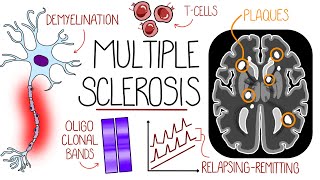
Lhermitte's Sign: electric shock sensation which occurs with neck flexion and often radiates down the spine. In some cases this sensation goes to the extremities. It is associated with cervical myelopathy and multiple sclerosis. It is probably caused by hyperexcitability of the nerves which have become demyelinated.
There is a difference between cervical radiculopathy and cervical myelopathy. In cervical radiculopathy, there is dermatomal pain distribution. If the pain radiates to the thumb and index finger, this is probably C^ nerve root irritation. If the pain radiates to the middle finger, this is probably C7 nerve root irritation. If the pain radiates to the fourth and fifth fingers, this is probably C8 nerve root irritation. If the pain goes to the C7 dermatomal area, then the disc herniation is between C6 and C7. This will affect the C7 nerve root.
Two tests are used frequently during cervical spine examination: these tests could help in the diagnosis of cervical radiculopathy.
1-Spurling’s sign: pain exacerbated by neck extension, neck bending and rotation towards the symptomatic side.
2-The shoulder abduction test:shoulder abduction test is done by putting the hand of the patient above the shoulder, usually above the head and this will relieve the pain. This is a sign of cervical spine radiculopathy. This test differentiates spine pathology from shoulder pathology.
in cervical radiculopathy there will be other findings of nerve root irritation such as numbness, paresthesia, weakness and hyporeflexia.
Cervical myelopathy occurs due to compression of the spinal cord. In cervical myelopathy, pain is usually absent or poorly defined with vague sensory and motor changes. The patient may have discomfort with a dull, aching pain or sometimes sharp pain. The patient will have signs and symptoms of upper motor neuron lesion:
•Gait disturbances: wide or ataxic gait
•Poor hand dexterity: buttoning and unbuttoning a shirt, writing or holding onto a mug is difficult.
•Pathological long track signs will be seen consisting of the Hoffman's sign, Babinski reflex, Clonus sign, Finger Escape sign, Lhermitte’s sign in addition to hyperreflexia. When you examine the patient, the patient will have hyperreflexia and a positive Hoffman’s sign.
What is Hoffman's sign? It is done by flicking the nail of the middle or ring finger. This will produce flexion of the index finger to the thumb.
Positive Babinski sign: lateral stimulation of the plantar surface of the foot elicits toes extension.
A positive clonus sign is a sign of upper motor neuron lesion. The clonus sign is nonvoluntary, sustained movement of the ankle muscles with firm, passive, continuous stretch.
Myelopathic hand syndrome
•Thenar atrophy
•Positive finger escape sign: when the patient tries to keep the fingers extended, the ulnar digits tend to abduct
•Positive grip release test: patient has trouble making a fist and fully extending the fingers (doing this 20 times in 10 seconds is normal)
MRI is the best study for cervical disc disease.
Follow me on twitter:
https://twitter.com/#!/DrEbraheim_UTMC
Donate to the University of Toledo Foundation Department of Orthopaedic Surgery Endowed Chair Fund:
https://www.utfoundation.org/foundati...

Доступные форматы для скачивания:
Скачать видео mp4
-
Информация по загрузке: