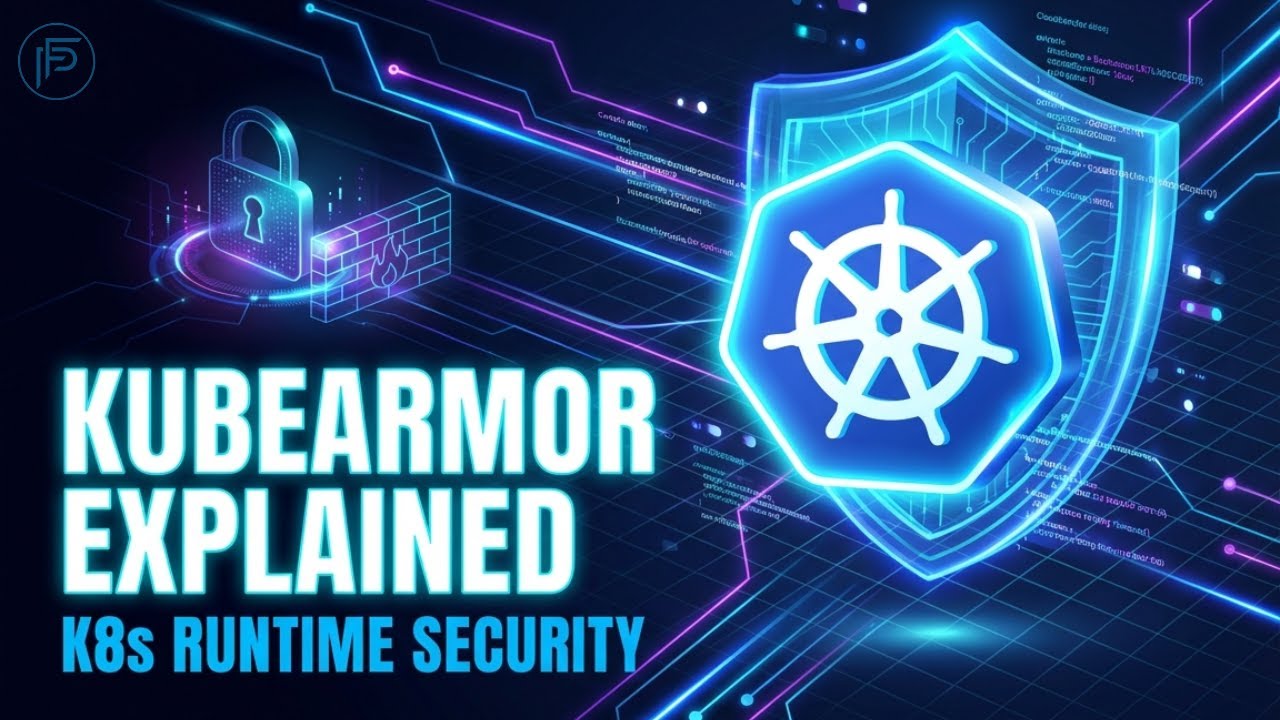
KubeArmor Explained | Runtime Security in Kubernetes | DevOps Class 5
Автор: Fusionpact
Загружено: 2025-12-14
Просмотров: 11
Welcome to DevOps Class 5!
In today’s session, we explore KubeArmor, a powerful cloud-native runtime security tool used to enforce security policies inside Kubernetes workloads.
This class breaks down what KubeArmor is, how it works, and why it plays a crucial role in modern container security.
🔥 Topics Covered in DevOps Class 5:
✔ What is KubeArmor?
Cloud-native runtime security enforcement
How KubeArmor uses eBPF, Linux Security Modules (LSM), AppArmor & SELinux
Kernel-level protection explained
✔ KubeArmor Architecture
KubeArmor Operator: manages policy lifecycle
KubeArmor Relay: forwards logs & events to monitoring tools
Integration with Grafana, Elastic, SIEM systems
✔ Key Features of KubeArmor
Process execution control (allow/block specific binaries)
File access control (prevent folder/file misuse)
Network enforcement
Zero-exploit approach
Privilege escalation prevention
Malware & supply-chain attack mitigation
Unauthorized command prevention
Faster detection of abnormal syscalls
Real-time security alerts
Reducing PCI-DSS audit time by up to 60%
✔ Real-World Example
Using KubeArmor to stop malicious behavior triggered by Log4Shell-like vulnerabilities, blocking unexpected Java executions, and preventing compromised workloads from escalating privileges.
🎯 Why This Session Matters
Kubernetes workloads are vulnerable without runtime policies.
KubeArmor helps enforce tight access restrictions, detect risky behavior instantly, and protect clusters against real-world threats.
If you're learning DevOps, Cloud Security, or Kubernetes in 2025, understanding runtime security is essential.
👍 Like the session
📝 Share your doubts in the comments
🔔 Subscribe for Daily DevOps Classes
Доступные форматы для скачивания:
Скачать видео mp4
-
Информация по загрузке: