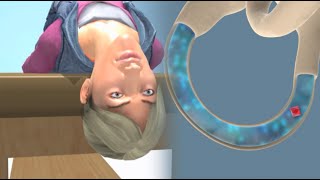
Vertigo: Causes, Pathophysiology and Treatments, Animation
Автор: Alila Medical Media
Загружено: 2022-01-31
Просмотров: 187174
Basis of the vestibular system, causes of vertigo: Benign paroxysmal positional vertigo (BPPV), labyrinthitis, vestibular neuritis, Ménière’s disease - cause, pathology, treatment. For patient education
Purchase a license to download a non-watermarked version of this video on AlilaMedicalMedia(dot)com
Check out our new Alila Academy - AlilaAcademy(dot)com - complete video courses with quizzes, PDFs, and downloadable images.
©Alila Medical Media. All rights reserved.
Voice by : Marty Henne
All images/videos by Alila Medical Media are for information purposes ONLY and are NOT intended to replace professional medical advice, diagnosis or treatment. Always seek the advice of a qualified healthcare provider with any questions you may have regarding a medical condition.
Vertigo is a sensation that you or your surroundings are moving or spinning. It’s not a disease but a symptom of any of the many conditions that impair the body’s balance system – the vestibular system.
The vestibular system consists of peripheral sensory organs located in the inner ear, and central processing centers in the brain. There are 3 semicircular canals that sense head rotations, and 2 otolithic organs that sense head positions and linear motions.
The canals contain a fluid called endolymph. When the head turns, the fluid moves and this movement activates sensory neurons to send information to the brain. The otolithic organs contain calcium carbonate crystals which help detect head orientation in relation to gravity.
Vestibular information is transmitted via the vestibulo-cochlear nerve to various centers in the brain, where it is interpreted and reacted upon.
Vertigo can be caused by a number of conditions that affect the sensory organs, the nerve, or the brain.
Most common causes include: benign paroxysmal positional vertigo; infection or inflammation of the inner ear or vestibular nerve, and Ménière’s disease.
Benign paroxysmal positional vertigo, BPPV, occurs when the crystals in an otolithic organ become dislodged from their normal location, and get trapped inside one of the semicircular canals. This can happen because of an injury to the ear, infection or old age. The crystals disrupt the normal movement of the fluid, sending erroneous, confusing signals to the brain. Symptoms come and go as episodes that last about a minute. The episodes are typically triggered by movements such as lying down, sitting or standing up, walking, or turning over in bed. Apart from dizziness and sensation of spinning, patients may also experience nausea, vomiting and abnormal rhythmic eye movements.
BPPV usually resolves on its own after a few weeks, but symptoms can be very frightening and loss of balance may increase risk of falls and accidents. Alternatively, the condition can be treated effectively with a simple therapy known as particle repositioning procedure (canalith repositioning procedure). The procedure involves a series of changes in the head’s position, designed to move the crystals out of semicircular canals and back into their normal location.
A viral infection of the inner ear can cause inflammation of the vestibular labyrinth - labyrinthitis, or inflammation of the vestibular nerve - vestibular neuritis, both of which can lead to vertigo. The labyrinth also includes the cochlea that is responsible for hearing, so labyrinthitis also results in hearing problems. Other signs may include nausea and vision changes. For both conditions, symptoms appear suddenly and can be severe, but typically improve gradually over several weeks. Some patients recover completely while others may have lingering symptoms and require vestibular rehabilitation exercises to restore vestibular functions.
Ménière’s disease is another common cause of vertigo. The disease is characterized by an abnormally high fluid pressure in the inner ear that affects both balance and hearing. Symptoms include a feeling of ear pressure or fullness, ear ringing, fluctuating hearing, and episodes of vertigo that can last from minutes to hours. The cause is unknown and there is no cure, but the condition usually improves over time, and treatments can help to relieve symptoms.

Доступные форматы для скачивания:
Скачать видео mp4
-
Информация по загрузке: