How the Light Comes, Ariel Dempsey Cyr Wheel
Автор: Ariel Dempsey
Загружено: 2025-07-12
Просмотров: 189
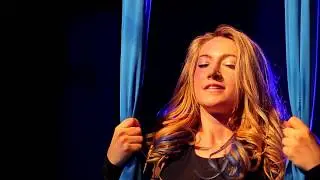
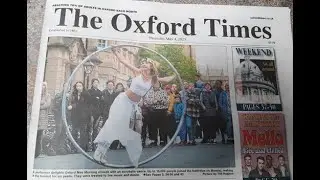
I find a lot of peace in an Orthodox prayer called the “Jesus Prayer.” In this prayer, you work your fingers along the beads of a rope and say “Jesus Christ, Son of God, have mercy on me.” But the point of the prayer isn’t the words. The words are something you give your mind to hold on to so that you can create a space of silence in yourself, a space of silence where you can look at God, and God can look at you. One day I imagined that the circle of my prayer rope was like my cyr wheel, and that my body was the words of the prayer. I wondered, what if I tried to dance this prayer?...and I made a beginning.
The Jesus Prayer is also meant to move a person into their heart and evoke tears—not tears of despondency or despair but what is called a “bright sadness.” In the Orthodox tradition, tears bring you into your heart, in repentance, humility, freedom and joy. The poem, “How the Light Comes,” by Jan Richardson, is about how light breaks into the darkness in unexpected ways. To me, this poem portrays so well a “bright sadness.” I decided to write the dance to its words and the song I chose is “On the Nature of Daylight” by Max Richter, (performed by the Imperial Orchestra.) • Imperial Orchestra - On the Nature of Dayl...
For more on the Jesus Prayer see Kallistos Ware: • Metropolitan Kallistos Ware: The Jesus Pra...
“How the Light Comes” by Jan Richardson
I cannot tell you
how the light comes.
What I know
is that it is more ancient
than imagining.
That it travels
across an astounding expanse
to reach us.
That it loves
searching out
what is hidden
what is lost
what is forgotten
or in peril
or in pain.
That it has a fondness
for the body
for finding its way
toward flesh
for tracing the edges
of form
for shining forth
through the eye,
the hand,
the heart.
I cannot tell you
how the light comes,
but that it does.
That it will.
That it works its way
into the deepest dark
that enfolds you,
though it may seem
long ages in coming
or arrive in a shape
you did not foresee.
And so
may we this day
turn ourselves toward it.
May we lift our faces
to let it find us.
May we bend our bodies
to follow the arc it makes.
May we open
and open more
and open still
to the blessed light
that comes.
Housden, R. (2018). Ten Poems for Difficult Times: New World Library.
Special thanks to my friend Stephen Foote for his kindness and talent in filming and editing videography: www.stephenfoote.co.uk/I find a lot of peace in an Orthodox prayer called the “Jesus Prayer.” In this prayer, you work your fingers along the beads of a rope and say “Jesus Christ, Son of God, have mercy on me.” But the point of the prayer isn’t the words. The words are something you give your mind to hold on to so that you can create a space of silence in yourself, a space of silence where you can look at God, and God can look at you. One day I imagined that the circle of my prayer rope was like my cyr wheel, and that my body was the words of the prayer. I wondered, what if I tried to dance this prayer?...and I made a beginning.
The Jesus Prayer is also meant to move a person into their heart and evoke tears—not tears of despondency or despair but what is called a “bright sadness.” In the Orthodox tradition, tears bring you into your heart, in repentance, humility, freedom and joy. The poem, “How the Light Comes,” by Jan Richardson, is about how light breaks into the darkness in unexpected ways. To me, this poem portrays so well a “bright sadness.” I decided to write the dance to its words and the song I chose is “On the Nature of Daylight” by Max Richter, (performed by the Imperial Orchestra.) • Imperial Orchestra - On the Nature of Dayl...
For more on the Jesus Prayer see Kallistos Ware: • Metropolitan Kallistos Ware: The Jesus Pra...
“How the Light Comes” by Jan Richardson
I cannot tell you
how the light comes.
What I know
is that it is more ancient
than imagining.
That it travels
across an astounding expanse
to reach us.
That it loves
searching out
what is hidden
what is lost
what is forgotten
or in peril
or in pain.
That it has a fondness
for the body
for finding its way
toward flesh
for tracing the edges
of form
for shining forth
through the eye,
the hand,
the heart.
I cannot tell you
how the light comes,
but that it does.
That it will.
That it works its way
into the deepest dark
that enfolds you,
though it may seem
long ages in coming
or arrive in a shape
you did not foresee.
And so
may we this day
turn ourselves toward it.
May we lift our faces
to let it find us.
May we bend our bodies
to follow the arc it makes.
May we open
and open more
and open still
to the blessed light
that comes.
Housden, R. (2018). Ten Poems for Difficult Times: New World Library.
Special thanks to my friend Stephen Foote for his kindness and talent in filming and editing videography: www.stephenfoote.co.uk/

Доступные форматы для скачивания:
Скачать видео mp4
-
Информация по загрузке: