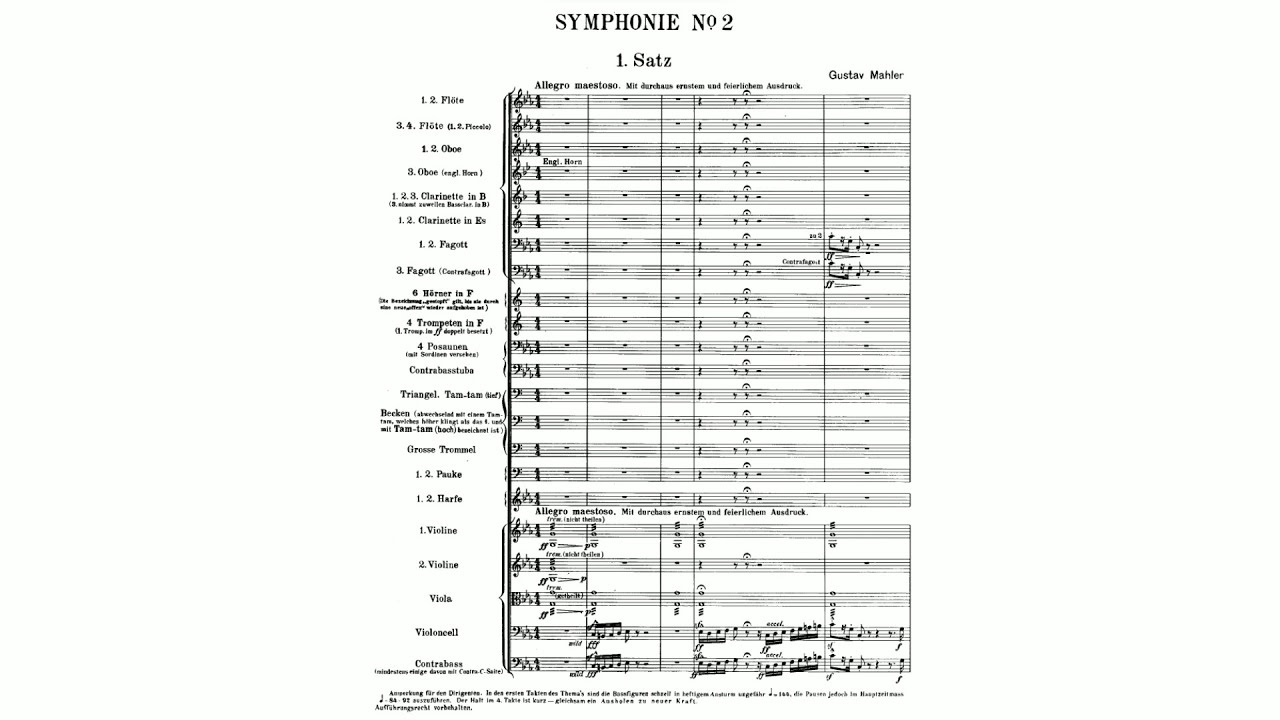
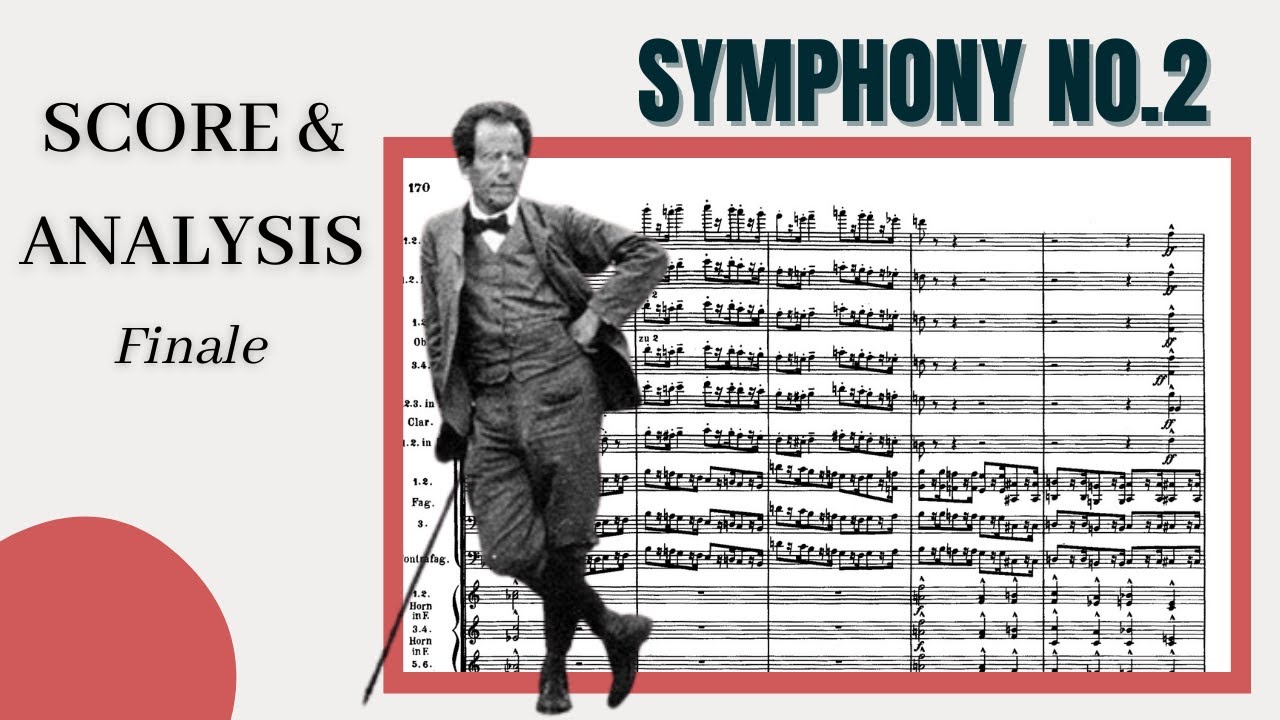
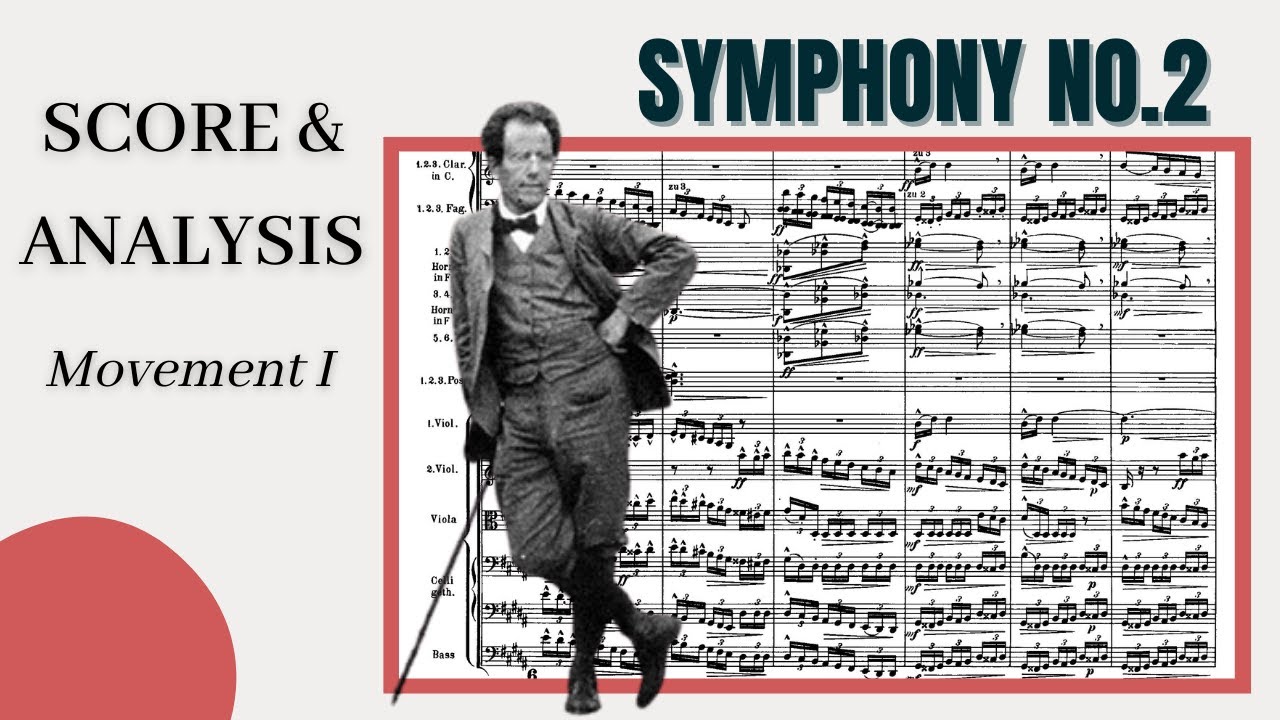
Mahler - Symphony no.2 "Resurrection" (movement 1): Score and Analysis
Автор: Jakob Spindler
Загружено: 2022-03-03
Просмотров: 9609
Analysis of the movement is based on Seth Monahan's book Mahler's symphonic sonatas (Oxford University Press 2015)
Fischer & Budapest festival orchestra
Introduction to the symphony in the pinned comment.
EXPOSITION
0:00 – Theme 1, C minor. The funeral march gradually emerges from the cellos over a dominant pedal tremolo. The march gets already greatly expanded upon before the theme even properly commences with a melody (which is itself a reworking of the march motives) played by the oboe and English horn. Gradually the texture thickens as different instruments join with ever more elaborate variations of the march motive, which is constantly played in its original form by the lower strings.
1:46 – The instruments regroup and reach a climax. A transition follows.
2:17 – Theme 2, highly unstable E major. We’re presented with a gorgeous melody in the violins, but the basses continue to play the funeral march, undermining the second theme with a dominant pedal point.
2:52 – The second theme collapses, failing to secure a stable secondary key. The music instead slips into dark Eb minor, forcing us to repeat the exposition and try again.
EXPOSITION REPEAT
3:04 – Theme 1. The theme starts right away, with much more developed material.
3:32 – For a split second, the music turns into a noble, if distant chorale in Ab major, before returning to the funeral march, which reaches a tragic climax in G minor.
4:25 – Instead of the second subject, we’re met with a new, grim closing theme in G minor. We do attain the previously undermined expositional closure, but under the “wrong” key and theme. The lingering hope for an E-major closure darkens an already somber closing zone.
DEVELOPMENT
5:29 - Unusual start of development with the second theme (in tonic major, no less!); serves in some sense as a large conclusion to the exposition repeat. The march is absent in the basses, but its rhythmic motive appears twice in a transformed state in the brass. After an inversion of the theme in the flutes, we reach a new pastoral theme with a tonic pedal point, along with the return to the lost key of E major.
7:06 – We unnoticeably slip back into the funeral-march space, where a new E-minor lyrical melody forms (with roots in the various march motives).
7:50 – Buildup begins, the new theme merges with previous funeral march motives, before they take over completely.
8:23 – The hints of nobility from the exposition expand into a slightly more stable heroic theme, but the tragic character of the funeral march soon enough takes back control, starts building to a huge climax.
9:23 - Drive to climax was unsuccessful, chaos ensues. The march motive appears in all of its varied forms and the music collapses.
9:46 – Theme 2. Tonally unstable with frequent modulations. March material keeps creeping into the texture, although in transformed forms.
10:54 – The music restarts, with the introduction to theme 1 recapitulating with the greatest violence.
11:29 – The new lamenting melody from the development resumes, now in a duet with other march motives.
12:37 – Over the march, a new, solemn chorale forms. This is in fact the first appearance of “dies irae” - a chorale that will return in the finale.
13:02 – Empowered by the dies irae, the noble and heroic side of the march reaches a breakthrough in Eb major.
13:26 – Dies irae returns with chaotic modulations that return the music into chaos. Violent variations on the march ensue, culminating in
14:45 - Famous dominant with all seven notes of C harmonic minor superimposed!
RECAPITULATION
15:02 – Theme 1 as in the first exposition, shortened.
16:18 – Climax, smoother transition into theme 2
16:31 – Theme 2, still “frozen” in the unchanged expositional key of E major, however, it still lacks the proper four-sharp key signature. The pastoral development theme is also recapitulated.
18:13 – The second theme once again fails at providing a concluding cadence or a resolution, and so we once again slip into the harsh reality of the C minor march world.
CODA
18:34 - C minor is permanently reinstalled. Versions of the march motive from throughout the whole movement return, rising to a climax.
20:01 - Instant receding at the top suggests futility, pointlessness of the preceding buildup. The music slowly dies away in fragments, before one last outburst.
Mahler symphony no.2 playlist: • Mahler - Symphony no.2 "Resurrection" : Sc...
Доступные форматы для скачивания:
Скачать видео mp4
-
Информация по загрузке: